Paper signatures do not stop missiles. The ink is barely dry on the latest ceasefire agreement between Israel and Lebanon, and the mainstream media is already busy polishing a narrative of diplomatic triumph. They want you to believe that a change in Washington or a specific set of border coordinates can override forty years of entrenched proxy warfare.
They are wrong. This isn't a peace deal. It’s a tactical reload masquerading as a humanitarian victory.
If you’re looking at the headlines and seeing the end of a conflict, you’re reading the map upside down. The "lazy consensus" suggests that external pressure and war fatigue have finally forced a permanent shift. In reality, the fundamental incentives for every player on the board remain identical to what they were six months ago. To understand why this agreement is structurally destined to fail, we have to look past the podiums and into the cold mechanics of Middle Eastern power projection.
The Myth of Enforcement
The most glaring flaw in the current discourse is the obsession with "enforcement mechanisms." Pundits talk about international monitors and Lebanese Armed Forces (LAF) deployments as if these entities have suddenly gained the teeth they’ve lacked for decades.
Let’s be precise. The LAF is a state institution that exists in a country where the state does not hold a monopoly on violence. Asking the Lebanese army to disarm or displace the primary paramilitary force in the south is like asking a junior partner to fire the CEO. It doesn't happen because the power dynamic doesn't allow it.
I’ve watched these cycles play out before. In 2006, UN Resolution 1701 was hailed as the definitive solution. It promised a zone free of any armed personnel other than the LAF and UNIFIL. What did we get? A massive buildup of subterranean infrastructure and a missile inventory that grew by an order of magnitude. Expecting the 2026 version of this plan to yield a different result without a total collapse of the regional patronage system is a hallucination.
Trump and the Art of the Temporary Optic
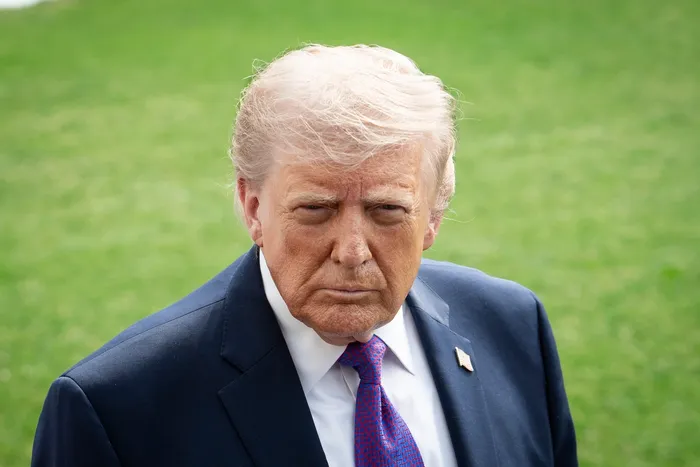
The narrative that this is a "Trump-brokered" or "Trump-inspired" shift simplifies a chaotic reality into a campaign slogan. While the incoming administration’s "maximum pressure" rhetoric creates a specific psychological environment, it doesn't change the geography of the Litani River.
The outgoing and incoming administrations both crave the "win" of a quiet border, but for different reasons. For the Americans, it’s about regional stabilization and pivot-to-Asia dreams. For the locals, it's about survival and sequencing. Israel needs to rotate its battered reservists and address its domestic economic bleed. The northern front has been an expensive, grueling stalemate. Calling for a ceasefire now isn't an admission of peace; it’s a strategic pivot to address other existential threats—specifically the looming shadow of a nuclear-capable Iran.
The Economic Fallacy of the Border Reopening
Business analysts are already speculating on the "recovery" of the Lebanese economy and the "stabilization" of Northern Israel. This is a fundamental misunderstanding of how war-torn economies function.
Investment doesn't flow into a "pause." It flows into "certainty."
There is zero certainty here. Why would a tech firm return to Kiryat Shmona or a developer rebuild in Southern Lebanon when the underlying triggers for escalation remain untouched?
- The Proxy Problem: As long as Tehran views Lebanon as its forward operating base, the border will remain a light switch that can be flipped at any moment.
- The Displacement Reality: Hundreds of thousands of people on both sides are being told it’s safe to return. Many won't. The psychological border has moved miles inland, regardless of where the military border sits.
Imagine a scenario where a multinational corporation decides to invest $500 million in a new regional hub in Beirut based on this ceasefire. Within six months, a single rogue drone or a "miscommunication" at a checkpoint triggers a retaliatory strike. The investment vanishes. The market knows this, even if the journalists don't. The risk premium for this region isn't going down; it's just being repriced for a different kind of volatility.
Why the Buffer Zone is a Fantasy
The talk of a 60-day implementation period and a buffer zone is a classic case of ignoring physics for the sake of optics. You cannot scrub a paramilitary presence from a civilian population that is ideologically and economically entwined with that presence.
The "contrarian" truth is that a buffer zone only works if you occupy it or if the people living there find the alternative—peace—more profitable than resistance. Neither of those conditions is met here. Israel does not want a long-term occupation (the "security zone" of the 1990s was a disaster), and the social fabric of Southern Lebanon is built on the very militia structures this deal claims to remove.
The Iran Variable
You cannot talk about Lebanon without talking about the 800-pound gorilla in the room. This ceasefire is being treated as a bilateral or trilateral agreement. It isn't. It’s a move on a much larger chessboard.
If Iran feels the squeeze of a new American administration’s sanctions, it will use its Lebanese assets to create leverage. A ceasefire in April could easily become a full-scale conflagration by October if the "maximum pressure" campaign hits too hard. The border isn't a sovereign line; it’s a pressure valve for a regional cold war.
The Failure of "People Also Ask" Logic
When people ask, "Is the Israel-Lebanon war over?" the honest answer is a brutal "No."
It has merely entered a new phase of cold hostilities. The premise of the question assumes that wars have a clear start and finish line, like a football match. In this region, war is the baseline, and "peace" is just the period between the previous round and the next.
Unconventional advice for those watching this space: Stop looking at the diplomatic statements. Start looking at the shipping insurance rates and the movement of heavy artillery. If the tanks aren't being loaded onto trailers and sent back to permanent bases in the south of Israel, the "ceasefire" is a PR exercise.
The Cost of the Illusion
The danger of this ceasefire narrative isn't just that it's wrong; it's that it creates a false sense of security that leads to catastrophic miscalculations.
Governments make policy based on these illusions. Families make life-altering decisions to move back into strike zones. Markets misprice assets. I’ve seen this play out in various conflict zones where the "insider" consensus was that "this time it's different." It never is. The structural drivers of the conflict—the lack of a Lebanese state, the regional ambitions of Iran, and the security requirements of Israel—are all still in play.
This agreement is a sedative, not a cure. It’s designed to lower the temperature just enough so that the major players can catch their breath before the next inevitable climb in mercury.
If you want to be the smartest person in the room, stop celebrating the "end" of the war. Start preparing for the way the next one will be fought, because the pause we are seeing today is exactly where the next conflict is currently being designed.
The ceasefire isn't the story. The inevitable violation of it is.
Stop looking for peace in a press release.