In the glittering boardrooms of Singapore or the cramped, vertical forests of Hong Kong, the world has long accepted a certain kind of suffering. We tell ourselves that space is the ultimate luxury in a city-state or a mountain-locked island. We expect the price of a shoebox in the sky to cost a soul. But there is a shift happening in Southeast Asia that defies that logic, a quiet crisis brewing in the archipelago of the Philippines that has quietly overtaken its wealthier neighbors.
If you look at the cold spreadsheets of the latest Urban Land Institute (ULI) Asia Pacific Home Attainability Index, the numbers tell a story of mathematical impossibility. In Manila, the median home price is now roughly 25 times the median annual household income. To put that in perspective, Singapore sits at around 13.7. Hong Kong, often the poster child for housing nightmares, is at 18.8.
The math is broken.
The Invisible Resident
Meet Mateo. He is a hypothetical composite of the millions of young professionals currently fueling the Philippine economy. He works in a high-rise in Makati, the country's financial heartbeat. He wears a crisp barong or a tailored suit. He speaks two languages fluently and manages accounts for a multinational firm. To an outsider, Mateo is the success story of a rising middle class.
But Mateo is 31 and lives in a room no larger than a walk-in closet, shared with two other grown men.
Every morning, he wakes up at 4:30 AM. Not because he is an avid jogger, but because the geography of Manila demands it. To afford a "home" that isn't a bunk bed, he would have to move two provinces away, sacrificing four to six hours of his life every day to the sweltering, gridlocked arteries of the EDSA highway. So, he stays in the city. He pays half his salary for the privilege of a mattress and a shared bathroom.
The ULI report isn't just a collection of bars and graphs; it is the blueprint of Mateo’s life. When a city becomes the least affordable in its region, it isn't just about real estate. It is about the slow erosion of a generation’s ability to dream.
The Myth of the Boom
The Philippines has been hailed as a "tiger economy" for years. Skyscrapers sprout like weeds across the skylines of Bonifacio Global City (BGC) and Ortigas. To a tourist peering out from a luxury hotel window, it looks like progress. But look closer at the lights in those windows. Many of them are dark.
For a long time, the narrative was that the housing crisis was a supply problem. "Build more," the experts said. And build they did. Yet, the vast majority of this new inventory is aimed at a tiny sliver of the population or international investors looking for a place to park their capital. The developers are building for the 1%, while the 99% are fighting over the scraps of a crumbling rental market.
The disparity is staggering. While the median home price in Manila is approximately $400,000 to $500,000 for a modest family unit in a decent area, the average worker is lucky to bring home $6,000 a year.
The gap is not a gap. It is a canyon.
In Singapore, the government stepped in decades ago with the Housing and Development Board (HDB). They turned homeownership into a national identity. Even in Hong Kong, despite the astronomical costs, there is a robust system of public housing that provides a floor—however low—for the working class. In the Philippines, that floor is made of glass, and it is positioned miles above the heads of the people who need it most.
The Social Cost of a Square Meter
We often talk about housing in terms of interest rates and square footage. We rarely talk about what it does to the human spirit to realize that you will never own the ground you walk on.
In the Philippines, the home is the center of the universe. It is the place where extended families congregate, where birthdays are celebrated with karaoke and lechon, and where the elderly are cared for. When you price a generation out of the market, you don't just change their balance sheets. You change the way they live.
Consider the "Bedspace" phenomenon. It is a term unique to the dense urban centers of the Philippines. It refers to renting a single bunk in a room filled with other workers. It is a temporary solution that has become permanent for many. It means you have no privacy. It means your "home" is a locker. It means you delay marriage. You delay children. You delay the very things that make a society stable and forward-looking.
The stakes are invisible until they aren't. They manifest in the "brain drain"—the exodus of the country’s brightest minds who realize that their hard-earned degrees will never buy them a backyard in Manila, so they take their talents to Dubai, London, or Toronto. The least affordable housing market in Asia is effectively an export business for human capital.
Why It’s Harder Than You Think
You might ask why the market doesn't just "correct" itself. If no one can afford the houses, shouldn't the prices drop?
The reality is more complex. Land in Manila is a finite, precious commodity held by a few powerful families and massive conglomerates. These entities have "diamond hands." They can afford to wait. They don't need to lower prices because they aren't selling to Mateo; they are selling to the global market or holding the land as a speculative asset.
There is also the matter of the "Overseas Filipino Worker" (OFW). Every year, billions of dollars are sent back to the Philippines by nurses, engineers, and seafarers. Much of this money is funneled directly into real estate. This creates a strange, artificial floor for prices. A house in a gated community in Cavite is priced not for what a local teacher can afford, but for what a nurse in New Jersey can save.
This creates a tragedy of success. The very money meant to lift families out of poverty is driving the cost of living so high that the family members left behind can no longer afford to live in their own neighborhoods.
The Geography of Inequality
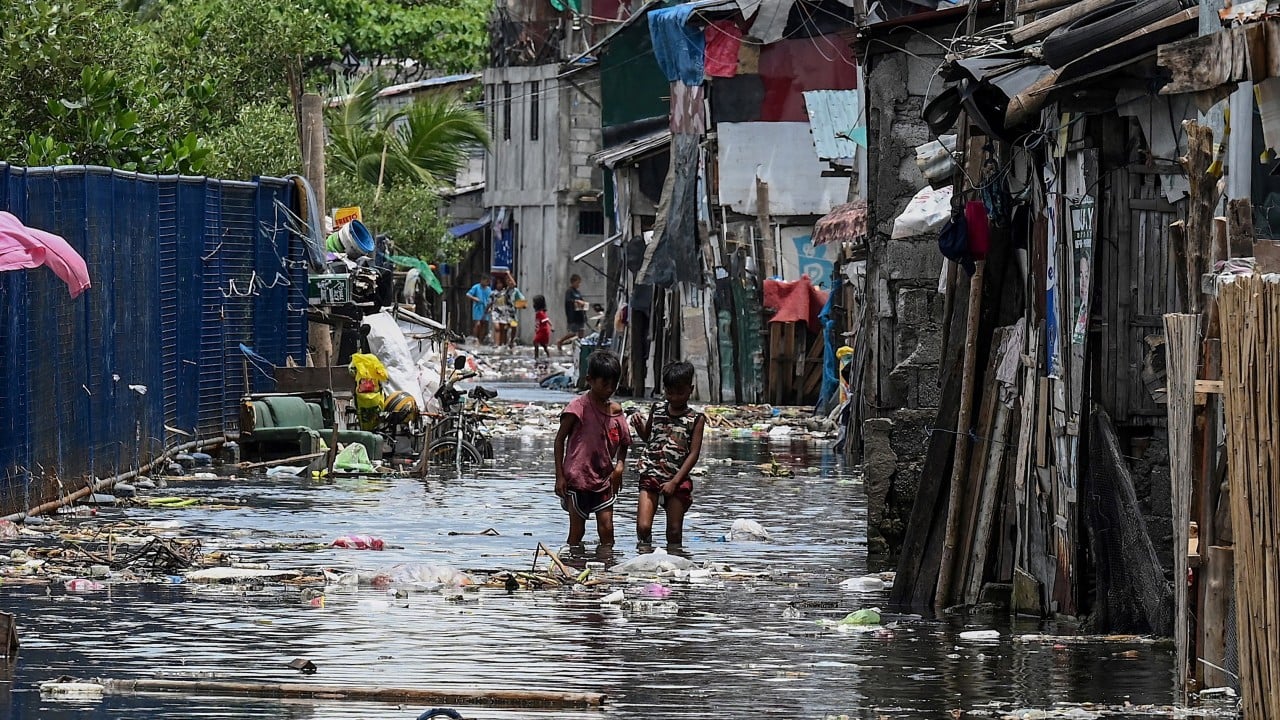
Manila is a city of walls. On one side of a concrete barrier, you have high-end malls with air conditioning so cold you need a sweater. On the other side, you have "informal settlements" where homes are built from scavenged wood and corrugated metal.
The ULI survey highlights that the lack of affordability isn't just about the price of a condo; it’s about the lack of options in between. There is no "middle." You are either in a luxury tower or you are struggling in the shadows.
This absence of a middle ground is what makes the Philippines' situation more dire than Singapore’s. In Singapore, the "middle" is the majority. In Manila, the "middle" is a ghost.
The problem is compounded by a lack of infrastructure. In Tokyo, you can live 50 kilometers away and be in the city center in 30 minutes via a high-speed train. In Manila, 10 kilometers can take two hours. This ties people to the city center like a leash, driving up the demand—and the price—for every square inch of urban soil.
A Different Kind of Debt
When we look at the least affordable cities, we usually see a reflection of wealth. Hong Kong is expensive because it is a global financial hub. Singapore is expensive because it is an oasis of efficiency. Manila is expensive, but the underlying wealth isn't reaching the hands of the people paying the rent.
This is a debt that isn't measured in pesos. It is measured in time.
It is the time a father loses with his children because he has to work two jobs to cover the mortgage. It is the time a nurse spends commuting instead of sleeping. It is the time a young couple spends "waiting for the right moment" to start a life that never quite arrives.
The data from the ULI is a warning light on the dashboard of a speeding car. It tells us that the current trajectory is unsustainable. A city that cannot house its workers is a city that is eating its own future.
The irony is that the Philippines is known for its hospitality. It is a culture built on the idea of "Tuloy po kayo"—a phrase that means "please, come in." It is an invitation to share a home, a meal, a life. But as the towers rise higher and the prices soar further out of reach, that invitation is becoming a whisper.
The ceiling in Manila isn't just a physical structure made of concrete and rebar. For the millions of people trying to find a place to call their own, the ceiling has become the sky—vast, distant, and impossible to touch.
A man stands on a balcony in a high-rise, looking down at the sprawling, flickering lights of the city below. He is one of the lucky ones. He owns this view. But as he looks out at the endless carpet of roofs, he realizes that the most expensive thing in the city isn't the gold or the glass. It’s the simple, quiet peace of knowing you are home. And for most people in the streets below, that peace is the most expensive luxury of all.