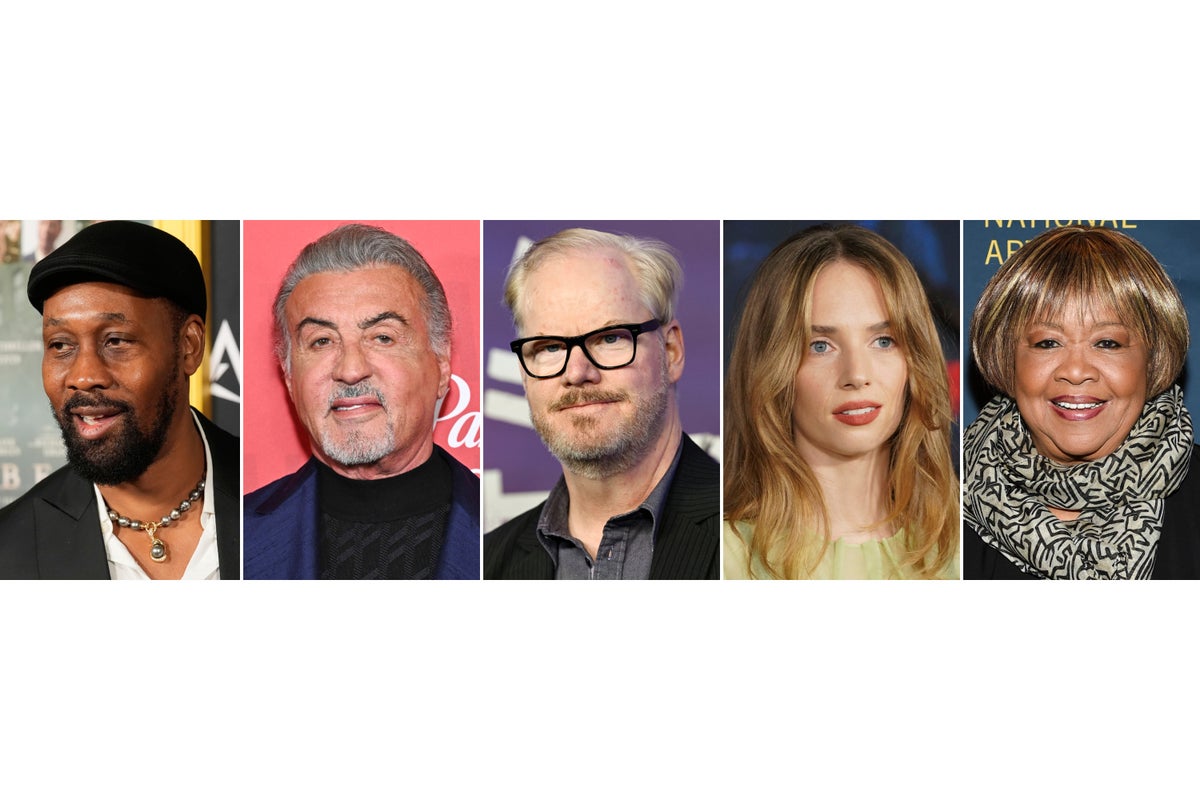
Media outlets love the lazy comfort of the weekly celebrity birthday list. Every summer, right around the first full week of July, editors copy-paste the same predictable roster. They tell you that July 5 through July 11 is a milestone week because Kevin Hart turns a year older, Jim Gaffigan hits another mid-fifties marker, and Mavis Staples adds to her legendary run.
It is chronological filler. It treats fame like an attendance sheet.
The entire premise of celebrating celebrity birthdays as news is a relic of 20th-century PR mechanics. It aggregates unlinked human beings under the arbitrary banner of a calendar square, assuming that because two people share a birth week, they share cultural weight. They do not. Worse, these lists completely flatten the distinction between structural legacy and algorithmic noise.
I have spent fifteen years managing talent strategy and analyzing audience retention metrics in the entertainment space. I can tell you exactly how the sausage gets made: birthday roundups are high-volume, low-effort SEO plays designed to capture passive search traffic while offering zero actual insight into how culture moves.
If we are going to look at the cohort of stars born between July 5 and July 11, let us actually look at what their careers teach us about the brutal reality of modern entertainment. Stop reading the greeting-card summaries. Here is the data-driven dissection of what these careers actually signal.
The Myth of the Relatable Everyman
Look at the comedy heavyweights anchoring this specific week: Kevin Hart (July 6) and Jim Gaffigan (July 7).
The standard media narrative groups them as beloved, accessible stand-ups who built empires on being "the regular guy." Gaffigan talks about Hot Pockets and being a lazy dad; Hart talks about being short and getting into ridiculous domestic arguments. The public laps it up because it feels safe and familiar.
But the industry reality is the exact opposite. These two men represent the absolute centralization of comedic capital. They are not everymen; they are hyper-optimized corporations.
- Kevin Hart did not become the highest-earning comedian of his generation by just telling jokes. He did it through extreme vertical integration. His company, Hartbeat, merges production, distribution, and marketing into a single machine. He bypasses traditional studio gatekeepers because he owns the pipeline.
- Jim Gaffigan operates on a masterclass of distribution diversification. While other comics starved during shifts in the streaming ecosystem, Gaffigan was busy self-releasing specials, migrating across multiple streaming platforms, and quietly securing six Grammy nominations by dominating the high-margin touring market for clean comedy—a demographic that traditional Hollywood consistently underestimates.
The lesson here isn't "happy birthday to a funny guy." The lesson is that in the current entertainment ecosystem, raw talent is a baseline requirement, but equity ownership is the only thing that guarantees survival. If you are tracking a celebrity’s age instead of their licensing revenue, you are tracking the wrong metric.
Cultural Endurance vs. Chart Positions
On July 10, Mavis Staples celebrates another year. The standard birthday blurb will mention her civil rights activism, her time with The Staple Singers, and maybe her recent collaborations with younger indie rock musicians. It treats her like a museum exhibit—a prestigious piece of history to be dusted off once a year.
This is a profound misunderstanding of cultural endurance.
Staples is not important because she is old; she is important because her vocal delivery format defied the inevitable obsolescence that destroys 99% of pop acts. Most modern pop stardom is built on transient production techniques—auto-tune trends, specific synth sounds tied to an era, or viral dance choreography. When the technology changes, the artist evaporates.
Staples relies on raw analog resonance and narrative gravity. She anchors her brand in gospel and soul mechanics that exploit fundamental human psychology. A minor chord progression paired with a gritty, low-frequency vocal delivery triggers an emotional response that bypasses the intellectual critique of the listener.
Compare that to the flash-in-the-pan pop stars born in the same summer window who cannot sell out a theater five years after their first number-one single. Legacy is an engineering problem, not a stroke of luck. It requires building a sonic architecture that cannot be replicated by software or diminished by a graying demographic.
The Failure of the "People Also Ask" Premise
If you look at search engine behavior around celebrity birthdays, the questions people ask are remarkably shallow:
- How much is Kevin Hart worth?
- Is Mavis Staples still touring?
- Who is the most famous person born in July?
These questions assume that fame is static. They treat celebrity like a video game stat sheet where the numbers only go up.
Let us dismantle the premise of the net worth obsession. Publicly available celebrity net worth estimations are almost entirely fictional, calculated by multiplying visible real estate assets and arbitrary box office grosses without accounting for debt leverage, shell company distributions, agent fees (10%), manager cuts (10-15%), legal retainers (5%), and state taxes. A celebrity listed at a $100 million net worth often operates with less liquid capital than a mid-tier regional franchise owner.
The real question audiences should ask is: What is the cost of maintaining the attention required to keep that valuation alive?
Attention is a depreciating asset. To keep a brand relevant in July 2026 requires a constant infusion of capital into digital ad spend, PR crisis mitigation, and content creation. The moment an artist stops spending to maintain their search volume, their market value craters. Celebrities do not age like fine wine; they decay like open milk unless they constantly reinvest their earnings back into the algorithmic meat grinder.
The High Cost of the Counter-Intuitive Approach
There is a downside to analyzing entertainment this coldbloodedly. When you strip away the romanticism of the "birthday celebration," you lose the magic that makes audiences fall in love with these figures in the first place.
If you view Sylvester Stallone (July 6) purely as a brilliant IP negotiator who retained the rights to the Rocky franchise through sheer stubbornness, you miss the emotional resonance of a guy writing a script in a dingy apartment because he believed in a character. If you view court jester icons through the lens of contract optimization, the art can start to feel hollow.
But sentimentality is a luxury for consumers. For anyone trying to navigate, invest in, or understand the media ecosystem, sentimentality is a liability.
The week of July 5-11 tells a story of survival. It features individuals who managed to stay relevant across four distinct decades of technological disruption—moving from vinyl to CDs, from network TV to streaming, from physical box office to digital impressions. They did not achieve this by blowing out candles and wishing on stars. They did it by treating their names as intellectual property and fighting viciously to control it.
Stop consuming lists that treat talent like a calendar flip. The calendar is irrelevant. The ownership structure is everything.