The Great Defense Procurement Shell Game
Lockheed Martin wants you to celebrate a miracle. The defense titan promises a less expensive interceptor for the Patriot air defense system, pitching it as the answer to the skyrocketing price of modern air defense. The media dutifully repeats the press release: lower unit costs will fix the inventory crunch and stretch military budgets against modern threat inventories.
It is a comforting narrative. It is also dead wrong.
Shaving fifteen or twenty percent off a boutique, hit-to-kill missile does not solve the cost-asymmetry crisis facing Western armed forces. It merely hides a broken procurement model behind slightly cleaner accounting. If you use a three-million-dollar interceptor to destroy a twenty-thousand-dollar one-way attack drone, you are not winning an engagement; you are losing an economic war of attrition.
I have watched defense contractors run this exact playbook for decades. When the defense establishment faces existential criticism over unsustainable unit economics, they do not overhaul their architecture. They offer a marginally discounted version of the same legacy hardware, call it an efficiency breakthrough, and keep the production line humming.
Trimming line items on an inherently exquisite platform is rearranging deck chairs on a sinking doctrine.
The Arithmetic of Attrition Always Wins
Let us look at the actual math that defense planners prefer to ignore in public hearings.
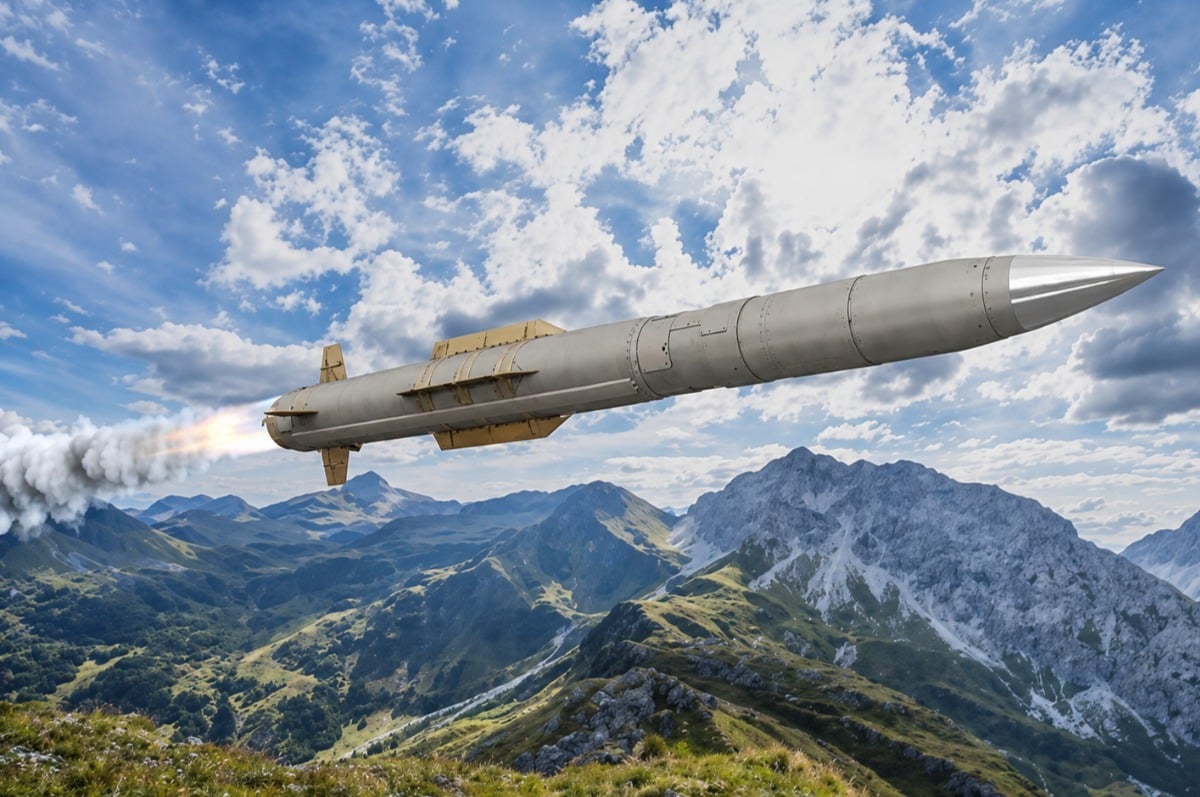
The PAC-3 Missile Segment Enhancement (MSE) sits near the top of ground-based air defense technology. It features a solid rocket motor, active radar seeker, and lethal hit-to-kill agility. It is designed to intercept tactical ballistic missiles, hypersonic threats, and high-end aircraft. It is a masterpiece of engineering.
It also costs anywhere between three million and five million dollars per shot, depending on the contract lot and international customer packaging.
+------------------------------------+-----------------------+
| Threat Class                       | Estimated Unit Cost   |
+------------------------------------+-----------------------+
| Kamikaze Drone (e.g., Shahed-136)  | $20,000 - $50,000     |
| Subsonic Cruise Missile            | $150,000 - $500,000   |
| Tactical Ballistic Missile         | $1,000,000 - $2,000,00|
+------------------------------------+-----------------------+
| Current PAC-3 MSE Interceptor      | $3,500,000 - $5,000,00|
| Proposed "Discounted" Interceptor  | $2,500,000 - $3,000,00|
+------------------------------------+-----------------------+
Now assume Lockheed successfully trims the unit cost of a new variant down to two point five million dollars. What actually changes on the battlefield?
Nothing meaningful.
When an adversary launches a volley of twenty fifty-thousand-dollar drones alongside six cheap cruise missiles, the total attack package costs under two million dollars. Intercepting that swarm with "discounted" Patriot missiles will cost a battery upwards of twenty million dollars in interceptors—assuming a standard two-missiles-per-target doctrine to ensure high probability of kill.
That is an exchange ratio of ten to one in favor of the attacker. You cannot engineer your way out of that balance sheet deficit by trimming ten percent off the missile casing.
The Exquisite System Fallacy
Why can't Lockheed or any other traditional prime contractor simply build a fifty-thousand-dollar Patriot missile?
Because the Patriot architecture was never designed for low-cost mass. It was engineered for high-altitude, high-speed, high-precision threats where failure means a high-value strategic target gets erased.
To achieve hit-to-kill kinetic impact against a maneuvering ballistic missile entering the upper atmosphere, every single component must perform near perfection:
- Ka-band radar seekers capable of tracking high-velocity targets in contested electronic environments.
- Attitude control motors that fire in milliseconds to adjust trajectory in terminal phase.
- High-grade solid propellants built to withstand severe environmental stress and shelf lives spanning decades.
When you attempt to modify an exquisite missile to make it "cheap," you run into hard physical and industrial walls. Strip out the expensive seeker, and your kill probability drops against sophisticated threats. Downgrade the motor, and your kinematic envelope shrinks, rendering the battery useless against high-altitude ballistic threats.
The end result is an awkward hybrid: a missile that remains far too expensive for low-end drone swarms, yet carries compromised capabilities against high-end threats. It satisfies procurement officers looking at powerpoint slides, but fails the fundamental requirements of combat depth.
Follow the Incentive Trail
To understand why the military-industrial complex pushes marginal discounts instead of radical redesigns, follow the money.
Traditional prime contractors operate under business models built around long development cycles, massive capital investments, and guaranteed sustained maintenance. Their margins are tied to contract volume and predictable production lines.
"Disrupting the cost curve requires building expendable hardware at high volume, not refining low-volume boutique hardware."
If a defense prime replaces a five-million-dollar missile program with a fifty-thousand-dollar system built by an agile competitor, their top-line revenue shrinks dramatically. They have zero incentive to self-disrupt.
Instead, they offer the "cheaper variant." It allows military branches to claim they are addressing affordability without disrupting existing supply chains, plant tooling, or subcontractor networks. It is institutional self-preservation disguised as innovation.
What Actual Air Defense Disruption Requires
If a discounted Patriot interceptor is not the solution, what is?
Solving the air defense crisis requires decoupling target engagement from hyper-expensive kinetic rounds. It means building layered architectures where high-end interceptors are reserved exclusively for high-end threats, while low-cost saturation attacks are handled by radically different systems.
1. Directed Energy at Scale
High-energy lasers and high-power microwave systems carry high upfront capital costs, but their cost-per-shot drops to the price of the diesel fuel powering the generator—roughly tens of dollars per engagement. While weather and atmospheric attenuation limit their operational envelope, they remain the ultimate response to mass drone swarms.
2. Gun-Based Kinetic Systems with Programmed Munitions
Modern radar-guided 30mm and 35mm automatic cannon systems firing airburst ammunition offer effective engagement ranges against drones and low-flying cruise missiles at a fraction of the price of any guided missile. Re-investing in modernized mobile anti-aircraft artillery is not backward-thinking; it is economic sanity.
3. High-Volume Attritable Interceptors
Instead of stripping down a three-million-dollar missile, start from scratch. Build small, short-range jet-powered or rocket-assisted interceptors using commercial off-the-shelf components, additive manufacturing, and optical tracking. Accept a ninety percent single-shot kill probability instead of ninety-nine percent in exchange for dropping the price tag to fifty thousand dollars.
4. Magazine Depth Over Flawlessness
Western defense doctrine has long prioritized total target destruction over magazine capacity. But when an adversary can produce five thousand long-range strike drones a year, a battery with sixteen interceptors on the launchers—no matter how accurate—is functionally obsolete within thirty minutes of active engagement.
The Uncomfortable Reality for Planners
The insistence on using modified Patriot interceptors to solve modern air defense points to a deeper refusal to adapt.
The Western defense industrial base is optimized to build small quantities of highly complex, astonishingly expensive weapons platforms. It is radically ill-equipped for attritional warfare against massed, cheap, precision-guided munitions.
Lockheed’s efforts to lower the unit cost of Patriot interceptors are not useless; any cost reduction helps stretch stretched defense budgets. But calling it a solution to modern threat saturation is dangerous wishful thinking.
Until defense leadership stops treating incremental price trims on Cold War platforms as breakthroughs, the economic math of air defense will continue to favor the attacker. You cannot buy your way out of an attrition crisis using boutique hardware. You must change the game entirely—or accept that your air defenses will simply run out of bullets long before the enemy runs out of targets.