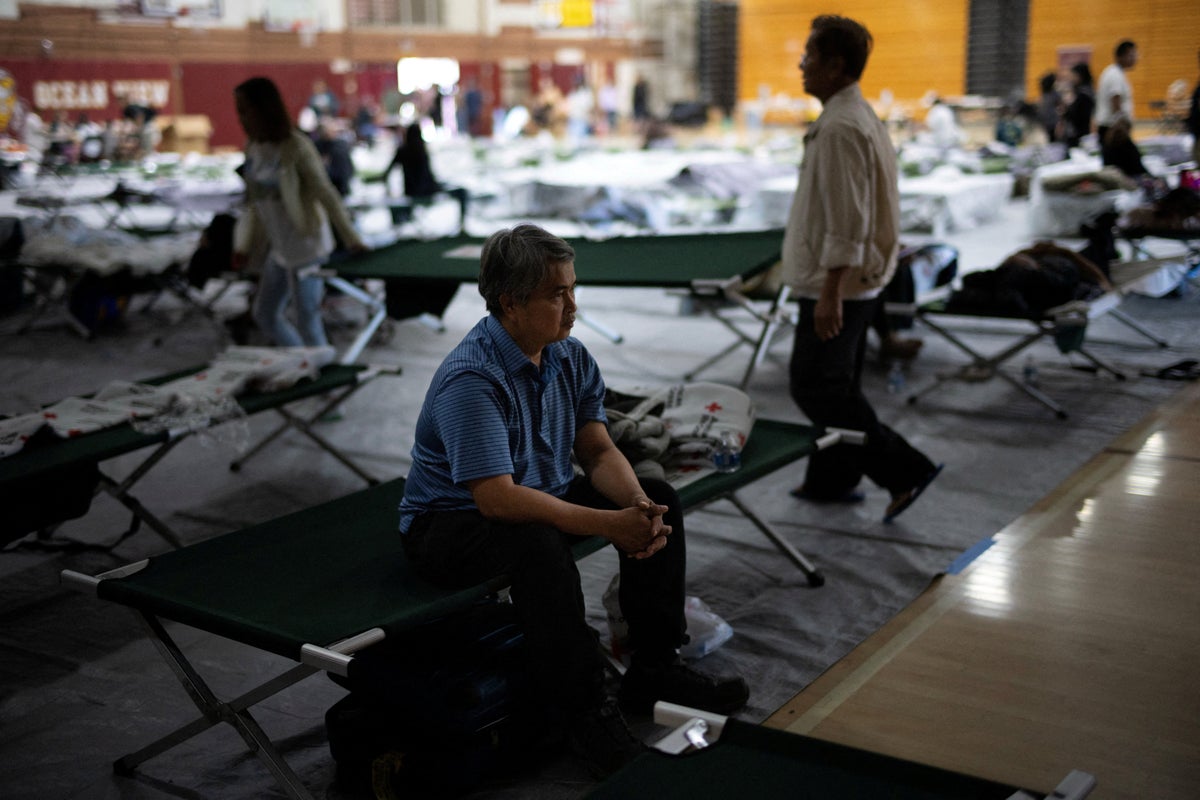
Imagine leaving your house in such a rush that you forget your shoes, wearing nothing but slippers as you hustle your kids into the car. For thousands of Southern California residents, this wasn't a hypothetical drill. It was Memorial Day weekend reality.
A massive industrial crisis unfolded at the GKN Aerospace facility in Garden Grove, forcing an initial evacuation of 50,000 people. While hazardous materials teams recently shrank the danger zone, around 16,000 residents are still barred from returning to their homes. The immediate threat of a catastrophic explosion has been downgraded, but the nightmare isn't over. People are stuck in limbo, sleeping in cars or high school gymnasiums, and wondering how a massive vat of volatile chemicals sat so close to their backyards without their knowledge.
Why thousands of California residents still can't go home
If the explosion risk is mostly gone, why are thousands of people still locked out of their neighborhoods? The answer comes down to chemical instability and a literal mechanical failure.
The crisis centers on a 34,000-gallon industrial storage tank containing roughly 7,000 gallons of methyl methacrylate (MMA). Last Thursday, the tank began to overheat. MMA needs to stay cool to remain stable. Its safe storage temperature is around 50 degrees Fahrenheit. Instead, the tank soared to a blistering 100 degrees because its drainage valves failed and the self-cooling mechanism broke down.
When MMA gets that hot, it triggers an exothermic reaction. It starts generating its own heat, converting liquid to gas, and building intense internal pressure. Think of it like a giant pressure cooker with a jammed valve, sitting next to two other chemical tanks.
Fire crews spent days continuously spraying the tank with water to lower its temperature. Over the weekend, the tank began to bulge outward, prompting fears of a Boiling Liquid Expanding Vapor Explosion (BLEVE). That's a worst-case scenario blast that would have flattened nearby buildings and sent toxic, skin-burning vapors tearing through the local community.
Emergency teams caught a strange break on Sunday night. A hazardous materials team scouted the area and found a physical crack had formed in the tank shell. In a weird twist of physics, this crack didn’t spark a massive leak. Instead, it allowed the trapped gas to vent slowly, relieving the dangerous pressure build-up. By Monday, temperatures dipped down to 93 degrees, and fire chiefs officially took the catastrophic BLEVE threat off the table.
The lingering dangers keeping neighborhoods on lockdown
Even though a massive blast is ruled out, fire officials aren't letting people back into the core danger zone. The remaining evacuation area forms a tight perimeter bounded by Orangewood Avenue, Dale Street, Knott Street, and Garden Grove Boulevard.
Emergency responders face several critical hurdles before lifting the remaining orders:
- The unassessed core: While the exterior tank pressure has dropped, crews haven't been able to fully inspect the core of the chemical mass inside. If the reaction spikes again, the hazard returns.
- Spill and small explosion risks: The tank is structurally compromised. A sudden structural collapse could dump thousands of gallons of toxic liquid into the facility, risking a localized fire or groundwater contamination.
- Atmospheric monitoring: The Environmental Protection Agency (EPA) has monitoring stations set up across the perimeter. So far, air quality tests show toxic levels are within normal limits. However, moving or draining the remaining chemicals could release toxic fumes into the air at any moment.
Because of these micro-risks, incident commanders are only allowing a tiny handful of specialized workers into the hot zone at a time. It's a slow, grueling process. They won't give a concrete timeline for when the final 16,000 people can return.
The human cost of corporate chemical mismanagement
For the displaced families, the official messaging of "progress" doesn't help much when you're running out of money, clean clothes, and vital medications. The economic ripple effects hit hourly workers hard. Parents have had to miss work because local schools closed down, forcing single moms and working families to lose a week of wages while paying out-of-pocket for emergency food and supplies.
Many residents expressed shock that GKN Aerospace stored such massive quantities of volatile toxins so close to residential blocks. Public records show this isn't the company's first issue with environmental safety. In 2021, GKN paid nearly $1 million to settle previous environmental violations. Predictably, at least two class-action lawsuits have already been slapped against the company by angry residents looking for accountability.
GKN Aerospace issued a formal apology, stating they are acutely aware of the disruption and are working around the clock with hazardous materials teams. But apologies don't pay for hotel rooms or replaced wages.
What you need to do next if you are affected
If you live anywhere near the Garden Grove or Stanton area, you need to manage your safety and logistics actively right now. Don't rely on rumor mills or passive social media scrolling.
First, check the official incident maps provided by the Orange County Sheriff's Department or the Orange County Fire Authority. If you're outside the updated perimeter, local health officials have stated it's completely safe to return, and the air quality is clear.
Second, if you're among the 16,000 still evacuated, head to the designated active shelter at Savanna High School for logistics, food, and medical assistance. If you left behind critical prescription medications, do not try to sneak past police barricades to get them. Contact the emergency shelter staff or local public health officials, who have protocols to help evacuees secure emergency refills.
Third, keep every single receipt for food, lodging, fuel, and clothing purchased during this displacement. Since class-action lawsuits are already moving forward and corporate liability is clear, you will need meticulous documentation to claim compensation or reimbursement later. Keep a digital log of any lost wages or forced time off work due to the evacuation orders. Stay put, keep your documents organized, and wait for the official all-clear from incident commanders.