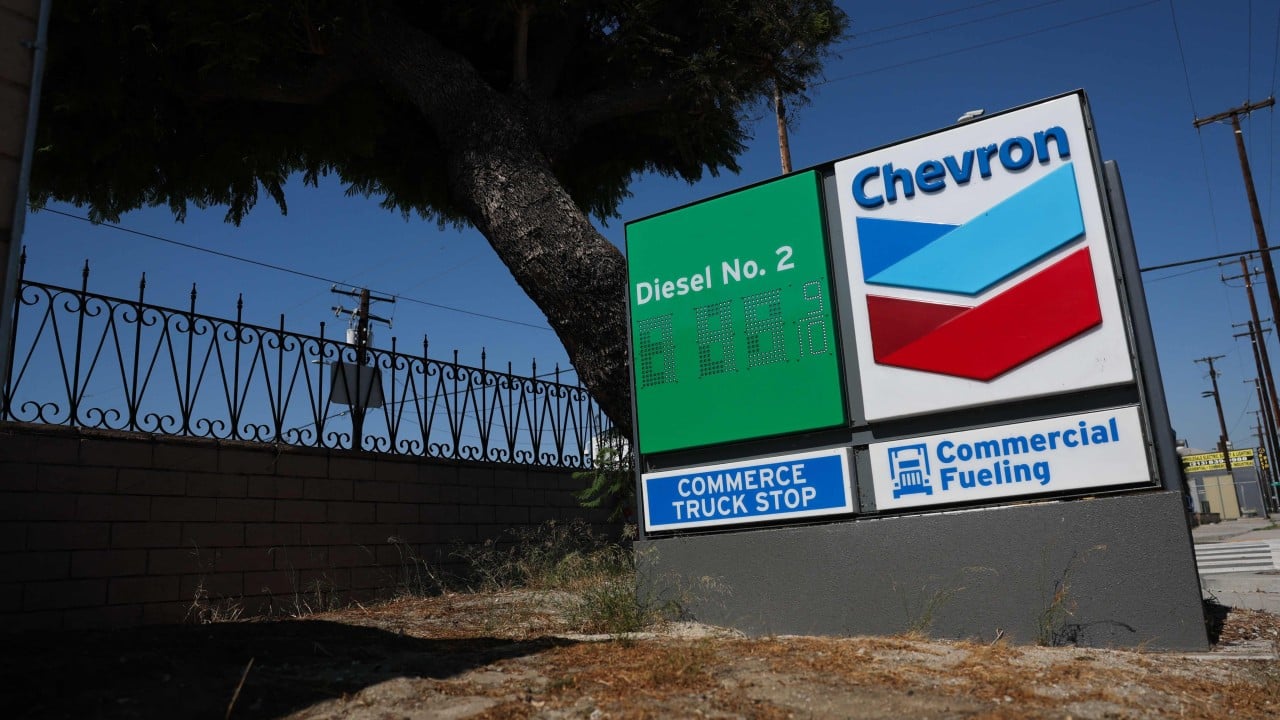
Capital deployment into sovereign-risk jurisdictions requires a strict separation of fiscal incentives from engineering constraints. Chevron Corporation's five-year, seven-billion-dollar commitment to expand extra-heavy oil production in Venezuela's Orinoco Belt presents a textbook case of corporate resource allocation balancing low marginal lifting costs against systemic infrastructure decay. Understanding the viability of this expansion demands analyzing the underlying cost functions, geological realities, and structural bottlenecks that define asset recovery in Petropiar and Petroindependencia.
The Cost Function of Extra-Heavy Crude Extraction
Operating margins in the Orinoco Belt depend on managing the viscosity and density of extra-heavy oil before it can enter standard export streams. Chevron's reported operating cost baseline of under twenty dollars per barrel reflects the natural abundance of the reservoir and low initial well-head extraction expenses. However, this figure represents a partial accounting metric rather than total delivered cost.
Extracting bitumen with API gravities ranging between eight and ten degrees requires intensive downhole diluent blending or specialized upgrading capacity. Because Venezuelan domestic infrastructure lacks sufficient naphtha production to dilute heavy streams independently, operations rely on imported diluents or functional upgrader units. The economic equation is therefore dictated by three distinct variables:
- The marginal cost of raw fluid extraction from expanded blocks like Carabobo 1 and Carabobo-2-South-A.
- The logistics tariff and market availability of imported diluents required to transport the crude via pipeline to coastal terminals.
- The utilization rate and maintenance expenditure of coking and desulfurization upgraders required to convert heavy bitumen into marketable synthetic crude.
When capital expenditures are distributed across a multi-year horizon to double production toward six hundred thousand barrels per day, the capital intensity per flowing barrel dictates project net present value. Greenfield integration in decayed fields demands upfront outlays for well workovers, electrical grid stabilization, and environmental remediation long before incremental barrels reach maritime tankers.
Asset Realities and Infrastructure Bottlenecks
Proving the mathematical feasibility of a production target requires examining the state of the surface and subsurface assets. Venezuela holds the world's largest certified oil reserves, exceeding three hundred billion barrels, but the physical capability to lift and process this volume has been severely degraded by decades of underinvestment, deferred maintenance, and brain drain among technical personnel.
The newly acquired acreage in the Orinoco Belt sits adjacent to existing joint ventures where Chevron holds a forty-nine percent working interest. While expanding footprint via blocks like Ayacucho 8 and Carabobo provides immediate access to massive in-place volumes, reservoir physics impose strict limitations on recovery rates. Extra-heavy oil does not flow naturally under simple pressure depletion; it requires artificial lift methods, steam injection, or progressive cavity pumps.
Power grid stability represents an acute external vulnerability. Heavy oil processing facilities and water-flooding stations require continuous, high-capacity electricity. Local power infrastructure near the Orinoco belt suffers from chronic load shedding and generation deficits, forcing operators to install dedicated, gas-fired captive power plants to maintain continuous production cycles. Without reliable power, wellbores experience cooling and sludging, leading to catastrophic formation damage and expensive workover interventions.
Fiscal Terms and Sovereign Risk Mechanics
Corporate strategy in high-risk jurisdictions relies on contractual insulation against arbitrary regulatory shifts. The updated agreements negotiated for Chevron's joint ventures provide enhanced commercial, legal, and fiscal terms designed to guarantee operational control and cash-flow repatriation.
The structural mechanics of these joint ventures rely on ring-fenced cash management models. Rather than routing revenues through opaque state channels, structured arrangements secure debt service and capital cost recovery directly from export proceeds before profit-splitting calculations occur. This framework protects the initial capital outlays from immediate sovereign expropriation risk, though political transitions continue to pose long-term tail risks to asset ownership.
Operating as the sole major United States energy producer with a legacy footprint in the country grants Chevron unique first-mover advantages, but it also concentrates geopolitical exposure. The alignment between corporate capital allocation and broader Washington trade frameworks ensures political backing for asset security, yet it exposes the balance sheet to regulatory reversals should bilateral diplomatic stances shift over successive political cycles.
Strategic Capital Deployment
Evaluating the multi-billion-dollar commitment requires viewing the project through the lens of portfolio optimization rather than short-term cash generation. Depleting mature assets in lower-risk basins forces major operators to seek large-scale resource additions capable of moving the needle on multi-decade production profiles.
Deploy capital into brownfield expansions where subsurface data is already well-defined, minimizing exploration risk while accepting brownfield rehabilitation challenges.
Tie capital milestone disbursements directly to physical infrastructure restoration, ensuring that diluent supply lines and upgrader availability keep pace with wellhead drilling activity.
Maintain stringent cash management controls to protect corporate liquidity against sudden changes in international Brent pricing benchmarks and local tax adjustments.

