Most people assume anti-corruption campaigns only target greedy bureaucrats stuffing cash into briefcases. That's only half the story in Beijing right now.
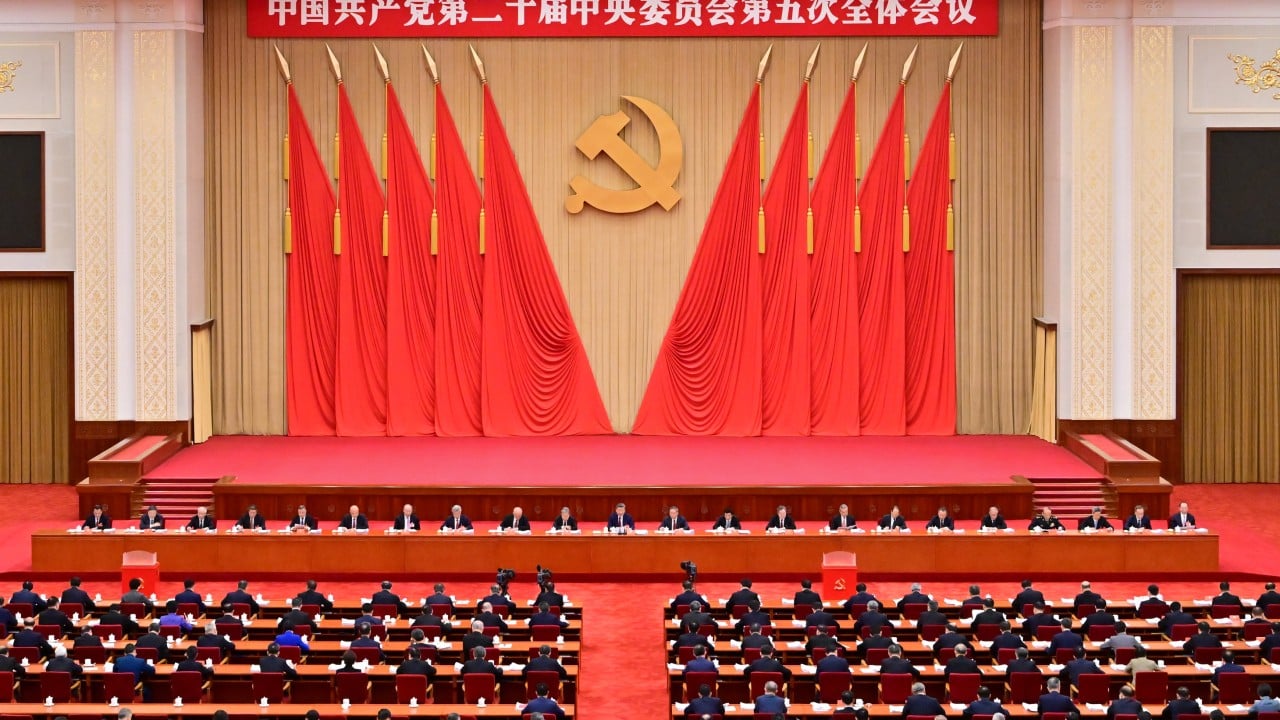
During recent Communist Party plenum meetings and Central Commission for Discipline Inspection (CCDI) sessions, China's leadership turned its crosshairs on a surprisingly quiet target. They call them "haoren" (好人)—literally "good people" or "nice guys." In the halls of Chinese bureaucracy, being a "nice guy" isn't a compliment anymore. It's a liability.
If you've watched Chinese politics closely over the past decade, you know Xi Jinping's anti-graft drive has evolved. Early on, it was about "tigers and flies"—taking down high-ranking ministers and local extortionists. Today, the party is obsessed with political paralysis. Officials have become so terrified of making a mistake or offending a colleague that they simply stop doing anything controversial.
They smile. They nod. They avoid conflict at all costs. And according to Beijing, that passive attitude is rotting the system from the inside out.
What Beijing Means by the Nice Guy Problem
In Chinese political jargon, the term "haoren zhuyi" (好人主义)—often translated as "good-guy-ism" or unprincipled peacemaking—describes officials who prioritize personal harmony over party discipline.
Think about how a typical government office operates anywhere in the world, then dial the political stakes up to eleven. When an official spots a colleague cutting corners, padding a budget, or ignoring a directive from Beijing, they face a choice. They can blow the whistle and make an enemy for life, or they can look the other way and keep the peace.
For years, keeping the peace was the safest survival strategy. You don't report your boss. You don't criticize your peers during self-criticism sessions. You hand out vague, flattering feedback and hope nobody scrutinizes your own department too closely.
Party disciplinary watchdogs have had enough of it. State media outlets like People's Daily and the CCDI's official publications have repeatedly warned that these passive "nice guys" are actually enablers of corruption. By refusing to confront wrongdoing, they create a protective bubble around corrupt networks.
Honestly, it makes total sense from a management perspective. If you're running a massive, top-down hierarchy with over 99 million party members, silence is your worst enemy.
How Passive Bureaucrats Stall Policy Execution
It isn't just about hiding bribes. Beijing's frustration with "nice guys" ties directly into China's sluggish economic recovery and local government debt crises.
When the central government rolls out major economic stimulus or industrial policy, it relies on provincial and municipal cadres to execute those orders on the ground. Instead, Beijing keeps running into a wall of "tangping" (lying flat) inside government offices.
Officials terrified of anti-corruption investigators have adopted a simple rule of thumb. Do less, make fewer mistakes.
Here is how that plays out in real life across local Chinese administrations:
- Endless committee meetings. Instead of taking responsibility for approving a commercial project, officials pass the file around a dozen departments so no single person holds the blame if it fails.
- Performative compliance. Local bureaus draft elaborate PowerPoint presentations and hold high-profile study sessions praising central directives while changing virtually nothing on the ground.
- Soft-pedaling accountability. During internal party evaluations, managers refuse to hand out failing grades to underperforming subordinates because they don't want to spark resentment or retaliation.
You can't stimulate an economy or fix a real estate slump when your mid-level managers are hiding under their desks. Xi Jinping has repeatedly demanded cadres show "dandang" (担当)—a willingness to shoulder heavy responsibilities and take bold action. You can't have dandang when everyone is trying to be the most likeable person in the room.
The Origins of the Campaign Against Unprincipled Harmony
This crackdown didn't pop up out of nowhere. Mao Zedong famously attacked liberalism inside the party back in 1937, criticizing members who let things slide for the sake of peace and friendship.
Xi Jinping has revived that exact ideological playbook. Since the 18th Party Congress in 2012, the CCDI has systematically dismantled the informal "buddy networks" that used to dominate provincial politics. Under previous administrations, local officials often operated like regional bosses, trading favors and protecting each other from Beijing's oversight.
By the time the Third Plenum of the 20th Central Committee convened in 2024—and continuing through subsequent plenum sessions and CCDI plenums—the anti-corruption apparatus had shifted from reactive punishment to behavioral engineering.
The CCDI's work reports now explicitly lump "good-guy-ism" alongside formalism and bureaucratism as major political deviations. Disciplinary inspectors aren't just auditing bank accounts anymore. They're reviewing meeting minutes to see if local leaders actually challenged each other, or if they just sat around trading polite compliments.
Why This Creates an Impossible Trap for Chinese Officials
If you put yourself in the shoes of a mid-level Chinese official right now, you'll realize they're caught in a brutal double bind.
On one hand, the CCDI tells you to be bold, take initiative, and aggressively report your colleagues' faults. On the other hand, if you make a bold economic decision that loses money—or if your aggressive whistleblowing steps on the toes of someone with powerful backing—your career is finished.
This is the fundamental contradiction inside China's governance model. You cannot easily demand entrepreneurial risk-taking while maintaining an atmosphere of relentless political surveillance.
Western analysts who study Chinese elite politics—including researchers at institutions like the Center for Strategic and International Studies (CSIS) and the Mercator Institute for China Studies (MERICS)—have pointed out this exact friction for years. When political loyalty and ideological conformity become the primary metrics for promotion, rational bureaucrats become deeply risk-averse. They stop innovating. They wait for explicit written instructions from above before moving a muscle.
So Beijing tries to fix the paralysis by punishing the passivity. They launch a campaign against "nice guys," forcing officials to criticize one another and prove their fighting spirit.
What happens next? Officials perform aggression instead of performing harmony. They write sharper self-criticism essays. They file minor disciplinary complaints against low-level staff to hit their quotas. Yet the underlying fear of making a real-world policy mistake remains completely intact.
What the Crackdown Signals for China's Political Direction
Watch how Beijing frames these internal party campaigns, because they tell you everything about where the leadership feels vulnerable.
When the Communist Party spends plenum time lecturing cadres about being too polite to each other, it's an admission that internal oversight mechanisms are breaking down. Top-down inspection teams from Beijing can't be in every county office at once. The system depends on peer-to-peer policing—officials keeping each other honest out of ideological commitment or mutual fear.
When cadres band together in silent solidarity to avoid rocking the boat, Beijing loses visibility into what's actually happening at the grassroots level. Local debt numbers get massaged. Environmental violations get ignored. Unsafe factory conditions get swept under the rug until an industrial accident hits the news.
Cracking down on "nice guys" is Beijing's attempt to break that local solidarity. By making passivity itself a punishable offense, the CCDI is telling every party member that neutrality is no longer an option. You are either actively enforcing party discipline, or you are complicit in undermining it.
How to Read Future Signals from Beijing
If you're tracking Chinese politics, corporate risk, or regional policy, don't just look at the headline arrests of billionaire executives or cabinet ministers. Pay attention to the shifting language coming out of CCDI communiqués and provincial plenum readouts.
Look closely at three specific indicators over the coming months:
- Changes to performance evaluations. Watch for local governments introducing "fault-tolerance mechanisms" (容错机制) alongside anti-passivity rules. Beijing knows it has to promise officials they won't be jailed for honest business mistakes if it wants them to stop acting like passive bystanders.
- Turnover in provincial economic bureaus. When central inspectors target "good-guy-ism," the first casualties are usually municipal department heads in finance, housing, and state-owned asset supervision who have stalled on debt restructuring.
- Increased disciplinary warnings without criminal charges. Under the CCDI's "four forms" of disciplinary supervision, minor infractions—like failing to criticize a colleague—usually result in "red-faced, sweaty" warnings (红红脸、出出汗) rather than prison time. A spike in these lower-tier administrative reprimands proves the campaign is actively reshaping daily office culture.
Understanding this shift changes how you interpret Chinese policy announcements. When Beijing says it wants cleaner governance, it isn't just hunting for hidden cash anymore—it's trying to force a terrified bureaucracy back into motion.