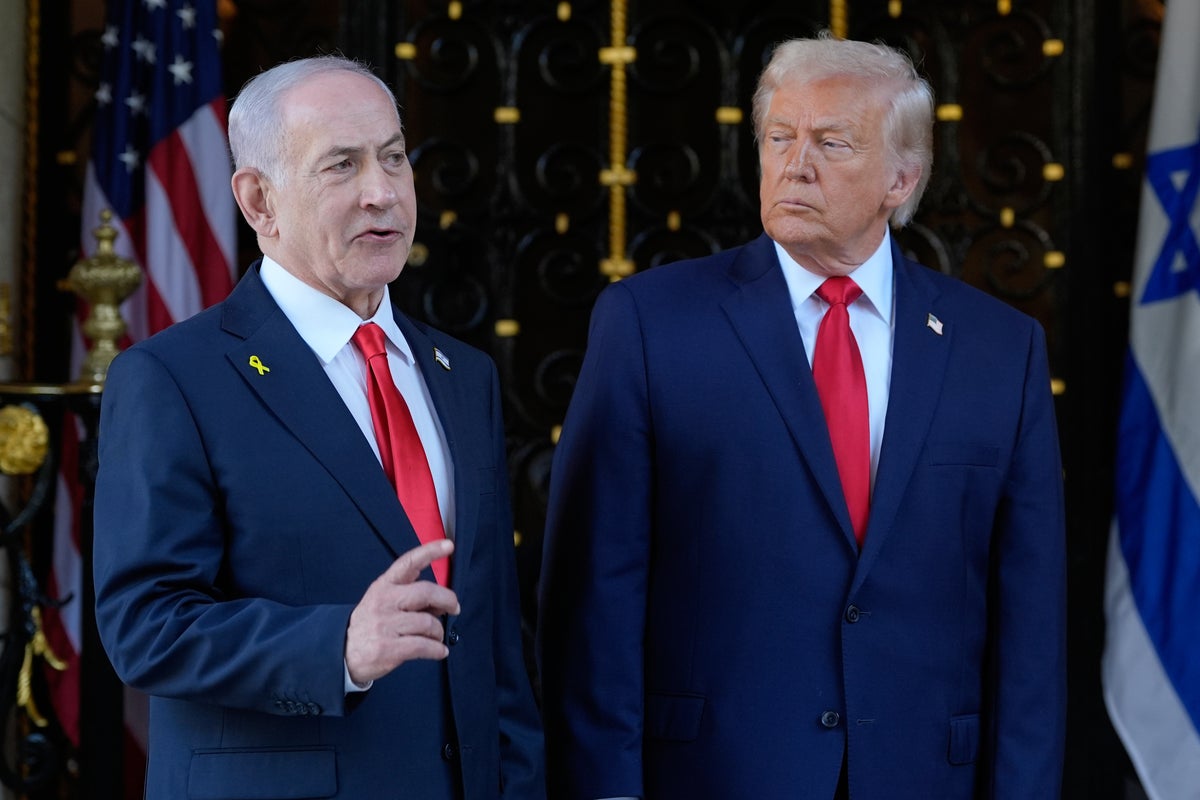
Every six months, Washington runs the exact same play. A senior intelligence official leaks to a compliant reporter that the Central Intelligence Agency no longer trusts its Israeli counterpart, Mossad. The narrative writes itself. The spooks are fighting. The special relationship is fraying. Donald Trump is about to blow up his alliance with Benjamin Netanyahu because the briefers cannot agree on a threat assessment.
It is a neat story. It is also entirely divorced from how modern intelligence operations actually function. Building on this theme, you can find more in: The Map That Bleeds.
I spent years watching national security analysts chase ghosts in windowless rooms, and I can tell you right now that the lazy consensus about intelligence friction between Washington and Jerusalem misses the entire point. The media wants you to believe this is a soap opera of broken trust and personal betrayal. The reality is far more clinical, transactional, and insulated from political mood swings than any headline suggests.
Stop treating state intelligence agencies like romantic partners who need to share feelings. They are rival corporate conglomerates trading proprietary data. Observers at Reuters have also weighed in on this trend.
The Myth of the Monolithic Intelligence Community
The foundational error in every mainstream analysis of US-Israel intelligence relations is the bizarre assumption that intelligence agencies operate with one unified brain. When the press reports that "the CIA believes" or "Mossad claims," they are speaking in cartoon terms.
Intelligence is a fragmented marketplace of competing biases, internal turf wars, and selective stovepipes. The CIA is not a monolithic oracle of objective truth. It is a massive bureaucracy driven by internal promotion incentives, regional analysis silos, and political risk mitigation. Mossad is an entirely different beast, structurally optimized for aggressive human intelligence and immediate national survival rather than academic policy forecasting.
When an analyst in Langley disagrees with an assessment coming out of Tel Aviv, it is rarely about personal deception or malicious fabrication. It is about epistemology.
- The CIA builds analytic models based on long-term regional stability, bureaucratic consensus, and strategic risk management.
- Mossad operates on tactical immediacy, asymmetrical survival imperatives, and hard operational access.
To frame these natural analytical discrepancies as a crisis of trust is fundamentally unserious. Friction is not a bug in the intelligence-sharing architecture. Friction is the architecture. If two intelligence services agreed on everything in the Middle East, one of them would be completely asleep at the wheel.
The Trump and Netanyahu Variable
Then we add the political overlay. The standard mainstream script suggests that Donald Trump’s mercurial leadership style combined with Benjamin Netanyahu’s political survival instincts creates an unstable compound that will shatter traditional intelligence pipelines.
This argument misunderstands both men.
Trump does not care about institutional etiquette, and Netanyahu treats international diplomacy as an extension of domestic bare-knuckle politics. But beneath the public posturing, the operational ties between the American and Israeli security apparatuses are welded together by code, infrastructure, and shared threats that outlast administrations.
Imagine a scenario where the White House completely cuts off high-level diplomatic pleasantries with the Prime Minister's office. Does Mossad stop handing over hard-target signals intelligence on mutual adversaries? Does the Pentagon stop coordinating missile defense telemetry with the Israel Defense Forces? Absolutely not.
The plumbing of the security state operates independently of who is sitting in the Oval Office or the Knesset. Bureaucrats survive presidents. Prime ministers come and go. The hard-drive exchanges continue.
Why Intelligence Skepticism is Routine
Let us address the core premise of the panic: that the CIA has somehow lost faith in Israeli intelligence assessments.
Good. They should be skeptical. In fact, they are skeptical of everyone, all the time.
If you are running an intelligence agency and you accept an allied service's brief at face value without running your own independent verification, you should be fired immediately. Intelligence services lie to each other by omission, by exaggeration, and by protecting their own sources. Every major intelligence partnership in history—from the Five Eyes down to bilateral counterterrorism cells—is built on a foundation of mutual paranoia.
When the US intelligence apparatus pushes back against an Israeli assessment, it is doing its job. When Israel conceals an operation from Washington to avoid bureaucratic leaks or policy interference, it is doing its job.
The media frames these normal operational frictions as existential diplomatic fractures because drama sells subscriptions. A headline reading "Two Intelligence Agencies Do Standard Due Diligence and Disagree on a Tactical Projection" does not drive web traffic.
The Real Danger: Political Interference in Raw Data
The true threat to the US-Israel intelligence relationship has never been tactical disagreement between analysts. The danger arises when politicians on either side try to launder political narratives through intelligence products.
Over the past decade, we have watched politicians weaponize intelligence assessments to score domestic points or box rivals into policy corners. When intelligence is treated as a PR weapon, the analytical machinery breaks down.
When analysts feel pressured to cook the books to support a president's peace initiative or a prime minister's military escalation, the data degrades. That is where the real friction lives. Not in whether Mossad miscounted a militia's rocket cache, but in whether Washington's political leadership will allow the analysts to look at the data without wearing ideological blinders.
The Transactional Reality of the Alliance
We need to dispense with the sentimental language of the "special relationship" when discussing intelligence. Sentimentality belongs in history books; survival belongs on the secure server.
The United States and Israel share intelligence because the cost of non-cooperation is catastrophic for both sides. Israel provides unmatched human intelligence depth and operational agility in a region where Western agencies often struggle to plant deep roots. The United States provides satellite constellations, massive signal interception capabilities, diplomatic cover, and industrial-scale defense manufacturing.
This is not about whether Trump likes Netanyahu or whether a mid-level CIA desk officer trusts a Mossad handler. It is a cold, hard, mathematical equation of mutual necessity.
Every time a pundit tells you that a leak about intelligence friction signals the end of an era, look at the underlying mechanics. The data pipelines are encrypted, the joint targeting cells are operational, and the threat environment remains as hostile as ever.
The spooks are going to keep arguing. The politicians are going to keep posturing. And the alliance is going to keep running because the alternative is unacceptable to both capitals.
Stop looking for romance where you should be looking at a balance sheet.