The Northeast agricultural sector is currently experiencing a structural breakdown in predictable yield cycles due to high-amplitude thermal oscillations. This phenomenon, colloquially termed "whiplash weather," is more accurately defined as a decoupling of photoperiod cues from thermal accumulation. When unseasonable warmth triggers premature deacclimation in perennial crops like apples, peaches, and blueberries, the subsequent return to mean seasonal temperatures—or "false springs"—shatters the biological resilience of the plant. The economic fallout is not merely a loss of seasonal inventory; it is a systemic degradation of capital assets in the form of damaged orchard stock and permanent loss of multi-year fruiting wood.
The Biophysics of Thermal Shock
Agricultural stability in the Northeast relies on a specific sequence of physiological states: endodormancy, ecodormancy, and bud break. The primary risk factor currently facing farmers is the compression of the ecodormancy phase.
The False Spring Mechanism
Plants require a specific "chilling requirement" (measured in Chill Units) to break endodormancy. Once met, they enter ecodormancy, where they remain dormant only because environmental conditions are unfavorable. A period of abnormal warmth—often driven by a fluctuating jet stream—rapidly accumulates Growing Degree Days (GDDs).
When a plant reaches the "green tip" or "pink bud" stage prematurely, its cold hardiness—the ability of tissues to survive sub-freezing temperatures—drops from -20°C to near 0°C in a matter of days. A subsequent frost event does not just kill the blossom; it causes intracellular ice formation that can rupture vascular tissues. This creates a physiological bottleneck where the plant may survive but lacks the hydraulic capacity to support fruit development during the summer heat.
The Economic Cost Function of Perennial Vulnerability
Annual row crops (corn, soy) offer a degree of flexibility; planting dates can be shifted. Perennial fruit and flower operations do not have this luxury. Their cost structure is heavily weighted toward fixed assets and long-term biological cycles.
Capital Depreciation via Tissue Damage
A total crop loss in a single year is a liquidity crisis. However, the "whiplash" effect often causes cumulative damage that functions as accelerated capital depreciation. If a late April freeze kills the primary buds, the plant may push secondary or tertiary buds. These buds are genetically programmed for lower yields and inferior fruit quality. The farmer incurs 100% of the labor and input costs (pruning, spraying, fertilization) for a harvest that may only return 30% of market value.
Market Volatility and Supply Chain Displacement
The Northeast region serves as a critical local supply node for high-value organic and specialty produce. When local yields fail, procurement shifts to West Coast or international suppliers. This displacement has a "stickiness" factor. Retailers who establish new supply contracts during a Northeast shortage do not always return to local sourcing once the local season recovers. This results in a permanent loss of market share for regional growers.
Mitigation Infrastructure and the Limits of Intervention
Current mitigation strategies are reactive and require significant capital expenditure, creating a divide between industrial-scale operations and small-to-medium-sized farms.
Thermal Management Systems
- Wind Machines: These towers pull warmer air from the inversion layer (usually 10-15 meters up) down to the orchard floor. They are effective for radiation frosts but useless during advective freezes where the entire air mass is sub-freezing.
- Overhead Irrigation: By continuously coating buds in water, the latent heat of fusion released as the water freezes keeps the plant tissue at exactly 0°C. The risk here is mechanical failure; if the ice load becomes too heavy or the water flow stops, the plant tissue will drop to the ambient air temperature and die instantly.
- Cryoprotectants: Chemical sprays designed to lower the freezing point of plant cells are increasingly used, though their efficacy varies wildly based on application timing and the specific rate of temperature drop.
The Insurance Paradox
Federal crop insurance programs are often calibrated for catastrophic total loss rather than the "death by a thousand cuts" caused by successive weather oscillations. Many policies do not adequately cover the loss of "future value" or the long-term decline in tree health. This leaves a massive gap in the risk management framework of the modern farm.
Structural Shifts in Varietal Selection
The survival of Northeast viticulture and pomology depends on a pivot from traditional market favorites to "climate-resilient" genotypes. This is not a simple swap.
Phenological Delay as a Defense
Breeders are now prioritizing "late-breaking" varieties. By selecting for plants that require a higher accumulation of Chill Units or GDDs before breaking dormancy, growers can theoretically bypass the window of highest frost risk. The trade-off is often a shorter growing season, which may not allow enough time for the fruit to develop optimal sugar content (Brix) or flavor profiles.
Rootstock Adaptation
The interaction between the scion (the fruit-producing part) and the rootstock is the new frontier of agricultural strategy. Rootstocks that can modulate the water uptake of the scion during warm spells can effectively "dampen" the plant's response to false springs, keeping it in a state of ecodormancy longer.
Strategic Logic for Regional Agricultural Persistence
The Northeast agricultural sector is moving into a period of forced consolidation. To maintain viability, the operational model must shift from yield maximization to risk-adjusted stability.
- Micro-Climate Analysis and Topographical Hedging: Future orchard expansion must be dictated by hyper-local sensor data rather than historical regional trends. Planting on north-facing slopes or at higher elevations can delay bud break by several critical days, providing a natural buffer against early heat waves.
- Diversification of Thermal Profiles: Growers must diversify their portfolios not just by crop type, but by thermal response. Mixing early-season varieties with late-season varieties within the same farm footprint ensures that a single frost event cannot wipe out the entire year's revenue.
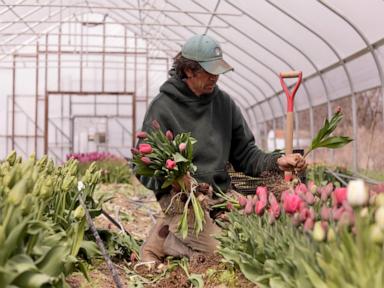
- Investment in Modular Protective Environments: High tunnels and retractable roof greenhouses represent the move toward "de-risked" agriculture. While the initial investment is high, the ability to physically isolate the crop from the atmosphere during a 48-hour freeze event is the only way to guarantee 100% yield security.
The current trajectory of the Northeast climate suggests that the "outlier" years of the past decade are the new baseline. Agricultural enterprises that fail to transition from a "good weather" mindset to a "volatility-first" operational structure will face terminal insolvency as their biological assets continue to degrade under the stress of atmospheric instability. The most successful operators will be those who view weather not as a variable to be predicted, but as a system of constraints to be engineered around.