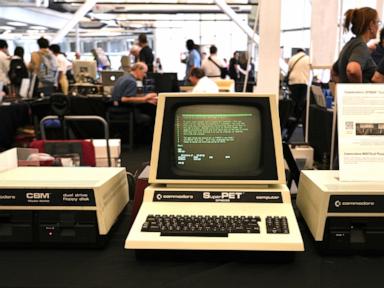
The screen does not just turn on. It wakes up.
First comes a low, rhythmic hum, the sound of a mechanical cooling fan spinning to life against decades of gathered dust. Then, a soft amber light bleeds through a heavy plastic bezel. Phosphor dots ignite one by one, painting a wavering green phosphor cursor in the center of a glass vacuum tube. It smells faintly of ozone, old circuit boards, and warm plastic—the unmistakable scent of 1982.
Right now, an invisible wall of code surrounds us. Software decides what we read, what we buy, how we travel, and who we love. Algorithms synthesize art in milliseconds and predict our thoughts before we finish typing them. Everything is weightless. Everything is stored in a server farm ten states away, cooling in vast, sterile hangars that no human ever visits. Nothing belongs to anyone anymore. You rent your music, your movies, your workspace, and your memories.
That is precisely why basement doors across the world are starting to creak open.
Meet Arthur. This is a hypothetical scenario, but it mirrors hundreds of real collectors waking up to a silent garage workshop on a rainy Tuesday morning. Arthur is forty-two years old. He spends his days writing code for a cloud-based enterprise platform, wrestling with asynchronous API calls and floating-point errors that exist only as text on a sleek, ultra-thin monitor. By five o'clock, his eyes burn. His hands ache from typing on a keyboard with zero travel distance, a slick piece of aluminum that feels like tapping on a glass table.
So, Arthur goes downstairs.
He sits at a scarred wooden workbench illuminated by a single brass desk lamp. Before him sits an IBM Personal Computer 5150, heavy enough to throw out a chiropractor's back, housing a roaring forty-megabyte hard drive that sounds like a tiny washing machine when it seeks a file.
Arthur reaches out and flips a physical toggle switch on the side of the chassis. A heavy, satisfying clack echoes through the room. There is no instant-on state here. There is no telemetry tracking his keystrokes, no operating system update demanding a reboot, no subscription fee expiring next month. There is only an 8088 processor running at 4.77 megahertz, completely and utterly dedicated to whatever Arthur tells it to do. And nothing else.
We are watching a quiet cultural pendulum swing. As artificial intelligence tightens its grip on every waking hour, the thrill of collecting vintage computers is experiencing a massive, unexpected surge. It is not driven by nostalgia alone. It is driven by survival.
The Weight of History
To understand why people are paying thousands of dollars for beige plastic boxes that possess a fraction of the computing power found in a modern hotel room keycard, we have to look at what we lost along the way.
Consider what happens next when you throw away a modern smartphone. Within five years, the battery swells, the security patches stop arriving, and the manufacturer remotely deprecates the software support. It transforms into a brick. You cannot fix it. You cannot open it without a heat gun and a suction cup. The motherboard is smothered in resin, designed to be disposable.
Now look at a Commodore 64 or an Apple IIe.
These machines were built by engineers who expected the user to open the hood. They came with thick spiral-bound ring binders containing the entire source code of their operating systems. The schematics were printed right there in the back of the manual. If a capacitor blew, you desoldered it with a twenty-dollar iron and soldered a new one in its place.
I remember the first time I held a motherboard from a 1977 KIM-1 single-board computer. Running my finger over the hand-soldered traces felt less like examining electronic waste and more like reading a map carved by a cartographer who cared about every single hill and valley. Every component was visible to the naked eye. You could trace a signal path with a finger, following electricity as it danced through logic gates made of silicon and copper.
Today, that direct connection has been severed. We live inside black boxes. The average software engineer today is separated from the physical hardware by ten layers of abstraction, virtual machines, hypervisors, and cloud orchestration layers. We are abstract thinkers floating in an ether of our own creation.
Vintage computing brings us back to the dirt.
The Economics of Obsolescence
The market reflects this deep-seated craving for tangibility. Prices for clean, working units of iconic retro computers have climbed steadily over the last decade. A pristine Apple Macintosh 128K, complete with its original "Fat Mac" signature bag and mouse, routinely commands prices that rival modern high-end gaming laptops. Rare prototypes, like the early iterations of the Osborne 1 or the IMSAI 8080, trade hands among dedicated enthusiasts in private auctions and specialized forums like VCFED.
Yet, this is not a speculative gold rush driven by Wall Street day traders looking to flip quick assets. You do not see venture capitalists pouring millions into Commodore 64 index funds.
The people buying these machines are restorers, historians, and exhausted digital workers. They are hunting down elusive floppy disk drives on eBay, restoring rotting foam insulation inside terminal keyboards, and bathing yellowed ABS plastic in baths of hydrogen peroxide and UV light—a process known as RetroBrite.
It is labor-intensive, frustrating, and expensive. It requires patience that our current culture actively trains us to abandon.
When an algorithm can write an essay in two seconds or generate a photorealistic image of a cat in a spacesuit with a single prompt, the human brain begins to atrophy its muscle for struggle. We forget the profound dopamine hit of wrestling with a problem for six hours and finally solving it.
When an Apple II user spends three days debugging a rogue assembly language routine just to make a single pixel bounce across a monochrome monitor, they earn that victory. That pixel belongs to them. The triumph is real, earned through sweat and hexadecimal calculations.
The Human Circuit
At a vintage computer festival in a convention center in New Jersey, the air smells of soldering flux, stale coffee, and old cardboard.
There are no crypto bros here. There are no venture capitalists pitching disruptive paradigms. Instead, you see a grandfather showing his teenage granddaughter how to load a game from a standard compact cassette tape into an Atari 800.
Watch her face. She is accustomed to capacitive touchscreens that respond instantly to the gentlest brush of a finger. She watches skeptically as her grandfather presses Play on the tape deck. For thirty seconds, nothing happens except for a harsh, electronic screeching sound—a chaotic audio data stream translating ones and zeroes into magnetic pulses.
Then, color graphics materialize on the CRT monitor. A blocky spaceship appears.
Her eyes widen. She leans in close, listening to the whir of the cassette motor. "Wait," she says, pointing at the tape player. "It actually reads the music to make the game work?"
"Not music," her grandfather smiles, his hands shaking slightly with age. "Data you can hear. You can hear the code going in."
That is the magic. We have sanitized our technology to the point of clinical boredom. Everything is sleek, flat, silent, and invisible. By hiding the mechanics of computing behind minimalist glass panels, we have stripped away the wonder.
When you collect vintage computers, you are not hoarding junk. You are preserving the archaeological layers of the modern mind. Every soldered joint tells the story of an engineer working late into the night in a garage in Silicon Valley or Cambridge, trying to figure out how to squeeze a universe of potential into four kilobytes of RAM.
The Last Switch
Back in his basement workshop, Arthur finishes soldering a replacement capacitor onto the motherboard of a 1984 Kaypro II portable computer.
The machine weighs twenty-six pounds. It looks like a gray metal suitcase with a handle. It has a tiny nine-inch green phosphor screen built right into the front door.
He plugs it into the wall. He takes a deep breath, reaches out his thumb, and flicks the heavy power toggle.
The internal fan whirs to life, coughing out a tiny puff of dust that catches the light of his desk lamp. The screen flickers, contracts into a bright horizontal line, and then expands outward into a crisp, glowing green prompt.
Arthur types a simple command. The machine responds instantly. No corporate telemetry. No cloud synchronization. No invisible hand updating software in the dead of night.
Just a man, a machine, and a quiet room, standing firm against the tide of a weightless world.


