The air at twelve thousand feet tastes of nothing. It is thin, sharp, and cold enough to make the inside of your nose freeze with every inhalation. Up here, where the peaks of the Himalayas look like jagged teeth biting into a pale blue sky, sound does not carry the way it does in the valleys. It dies against the gray slate and the ancient ice.
Yet, for the men standing watch along the Line of Control, a new sound has begun to echo across the ridges.
It is not the deep, concussive roar of heavy artillery that shakes the stone foundations of the bunkers. It is something faster, lighter, and far more mobile. It is the rhythmic, mechanical heartbeat of the SH-15.
Let us be honest about what hardware means to a soldier. To a strategist sitting in a temperature-controlled room hundreds of miles away, a weapon system is a row of figures on a spreadsheet. It is caliber, range, barrel life, and logistical footprint. To the soldier whose boots are stiff with frozen mud, a weapon system is an extension of survival. It is the line drawn in the dirt between breathing and becoming a casualty of geography.
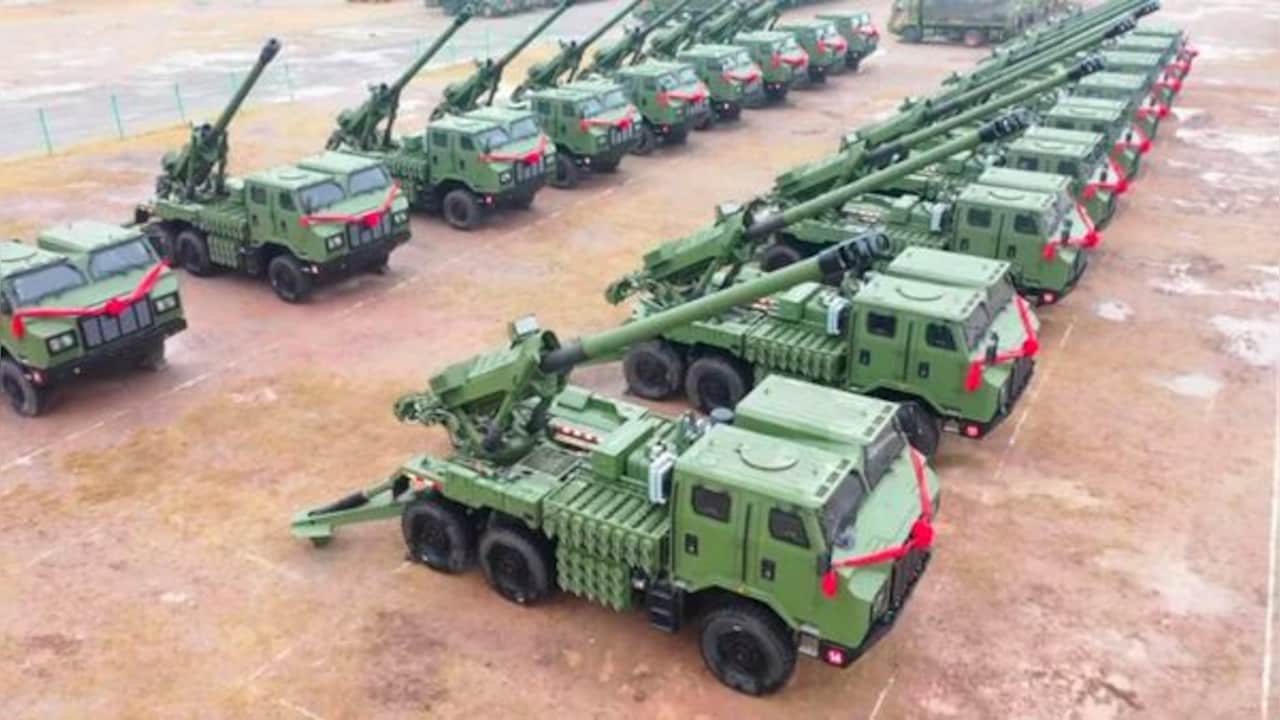
For months, whispers have moved through military intelligence channels regarding Pakistan’s acquisition and deployment of the Chinese-built SH-15 155mm wheeled howitzer. Dry reports state the specifications: a truck-mounted artillery system, highly mobile, designed for rapid deployment and quick displacement before counter-battery radar can lock onto its coordinates. Statistics. Numbers on a page.
But numbers do not capture the weight of what is shifting in the valleys below.
Consider what happens next when mobility replaces static strength. Traditionally, high-altitude warfare was a game of concrete and anchors. Heavy towed artillery pieces required teams of tractors or specialized trucks to drag them laboriously up treacherous mountain switchbacks. Once emplaced, they stayed there, locked into concrete pits, vulnerable to precise counter-fire. They were monuments to stationary power.
The SH-15 changes the grammar of that conflict.
Imagine a hypothetical battery commander stationed near the high-altitude passes. Let us call him Tariq. For twenty years, Tariq has watched the choreography of border defense change by inches. He knows the weight of old steel. He knows the agonizing hours it takes to reposition a standard towed gun when the enemy zeros in on your position.
Now, picture Tariq standing beside a six-wheeled, armored chassis. The SH-15 is deceptively modern. It looks less like a relic of old wars and more like an industrial machine built for a brutal, high-tech age. With its automated ammunition loading system and computer-assisted fire control, it does not rely solely on the raw muscle of exhausted men working in oxygen-starved air.
When the order comes down, Tariq does not wait for a tractor. The truck engine roars. The stabilization spades lift from the frozen earth. Within minutes, the gun has fired its payload and is already rolling away, disappearing into the folds of the jagged terrain before the first return shell can scream out of the sky.
That is not just an upgrade in hardware. That is a transformation of psychology.
When your adversary gains the ability to strike and vanish with impunity, the nature of watchfulness shifts. The men on the opposing side of the ridge—soldiers who have manned Indian positions through bitter winters and sudden skirmishes—feel that shift in their bones. They know the math of modern artillery. A gun that can shoot and scoot is a ghost that haunts the perimeter.
Why does this matter now? Because the geopolitical chessboard along the India-Pakistan border is perpetually pressurized, and every new piece introduced alters the delicate equilibrium of deterrence.
For years, Pakistan sought to modernize its artillery arm to counter regional imbalances. The reliance on older towed systems left critical gaps in responsiveness, particularly in rough terrain where reaction time dictates survival. The integration of the SH-15—procured from China, a nation deeply invested in the strategic architecture of South Asia—represents a concerted effort to close that gap. It brings a 155mm/52-caliber punch capable of reaching targets upwards of twenty to forty kilometers away, depending on the ammunition used, all mounted on a platform that can traverse regional highways and rugged tracks with surprising ease.
We must confront the uncomfortable truth of what this means for regional stability.
Every time a modern weapon system is wheeled into a contested zone, the margin for human error shrinks. When reaction times drop from hours to minutes, the space for diplomatic cooling off vanishes right along with them. A miscalculation by a junior commander, a border flare-up driven by fog or tension, can suddenly escalate with terrifying velocity because the tools of destruction are simply faster than they used to be.
Yet, technology does not operate in a vacuum. It is shadowed by logistics, and logistics at high altitudes is a relentless taskmaster.
Ask any quartermaster what keeps them awake at night, and they will not talk about muzzle velocity or digital fire control. They will talk about spare parts. They will talk about hydraulic fluid freezing at negative twenty degrees. They will talk about the nightmare of keeping complex, computer-reliant machinery functioning when dust, ice, and thin air conspire to break every mechanical seal in sight.
The SH-15 is formidable, but it is not magic. Its chassis relies on rubber tires that can be shredded by shale and shrapnel. Its electronics require maintenance that demands specialized training, spare components, and stable supply chains running through some of the most unforgiving geography on Earth. If a single electronic control unit fails during a critical engagement, a multi-million-dollar truck becomes an expensive, immovable roadblock.
This is where the grand designs of defense ministers meet the stubborn reality of the ground.
When we look at the deployment of these Chinese-built guns along the borders, we are witnessing a symptom of a larger, quieter arms race. It is a race driven by the desire for tactical dominance in spaces where traditional rules no longer apply. Drones buzz overhead, cyber surveillance maps every movement, and mobile artillery dances along the cliffs.
The human element remains, stubbornly and tragically, the same.
Down in the barracks, letters are still written home on crumpled paper. Tea is still poured from dented thermoses to fight off the chill of dawn. Young men who have never met each other, separated only by a line drawn on an old map by men who died decades ago, stare through binoculars at the same jagged horizons.
They do not care about the geopolitical theories connecting Beijing, Islamabad, and New Delhi. They care about the whistle of incoming fire. They care about whether the roof of their bunker is thick enough to hold.
The arrival of the SH-15 along the ridges is a reminder that the world is speeding up, even in the slowest, highest places on earth. It is a testament to the relentless march of military engineering, striving always to make violence more efficient, more mobile, and more anonymous.
The wind continues to howl across the mountain passes, indifferent to the iron machinery resting below its peaks. The silence returns as quickly as it was broken, heavy with the weight of what might come next, lingering in the thin air like smoke that refuses to clear.