The boarding pass is a small piece of thermal paper, yet it holds the weight of an exit visa from anxiety. You hand it to the gate agent. You hear the cheerful beep. You walk down the jet bridge, that narrow steel accordion stretching over the tarmac, and for a fleeting moment, the earth drops away. You are in transit. You belong to the sky.
Until you reach the other side.
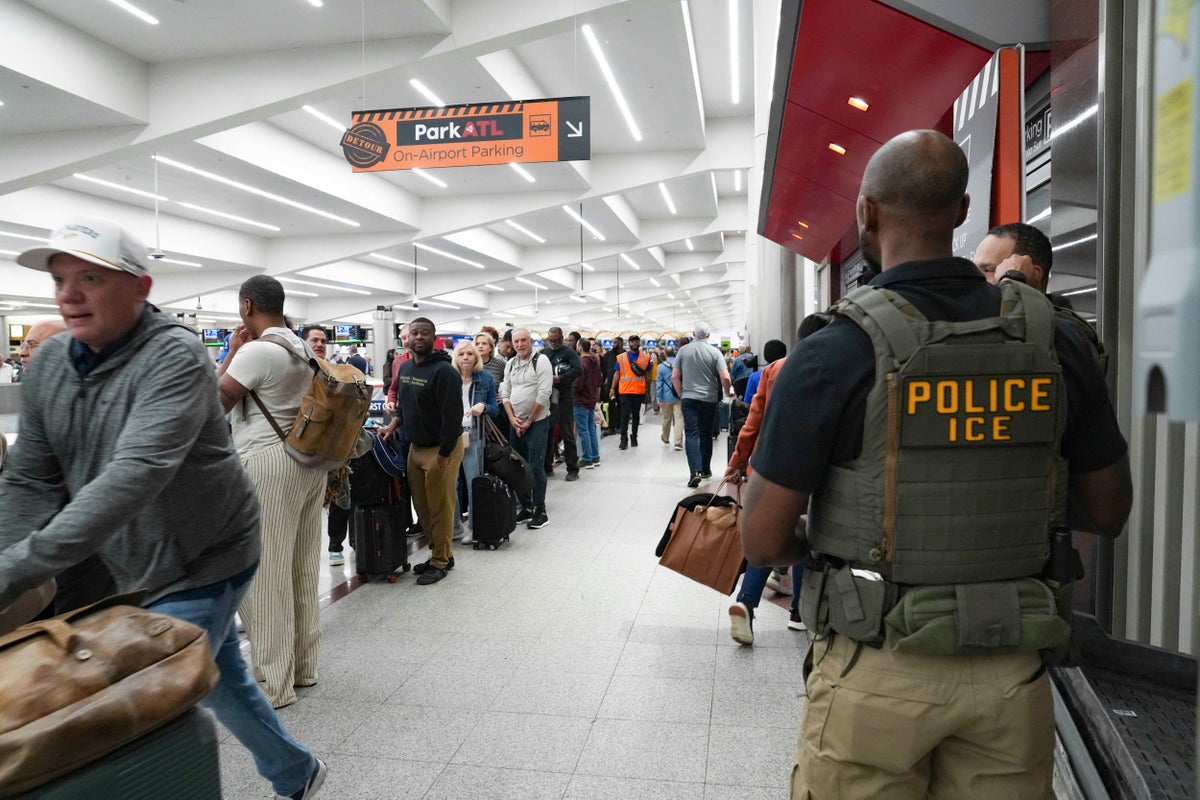
Imagine walking off a flight after a fourteen-hour haul, smelling of recycled air and stale coffee, only to find the corridor choked not by fellow passengers, but by badges, tactical vests, and the quiet, heavy machinery of enforcement. This is not a dystopian fiction. This is the modern airport terminal, where the boundary between a commercial travel hub and a federal staging ground has dissolved entirely.
And now, the airlines are pushing back.
For years, the expansion of Immigration and Customs Enforcement operations inside civilian airports happened in the shadows of operational convenience. Gate areas borrowed for secondary inspections. Luggage carousels utilized as makeshift holding pens. Passenger boarding bridges blocked while federal agents executed administrative warrants on jetways. Travelers hurried past, heads down, clutching roller bags, desperate not to make eye contact with authority. We normalized the theater of surveillance because we were tired, because we just wanted our luggage, because the airport is a place designed to make humans compliant through exhaustion.
Consider what happens when commercial infrastructure collides directly with civil immigration enforcement.
Airports are private-public hybrids. They are leased municipal asphalt managed by corporate boards, operating under strict Federal Aviation Administration rules designed for one specific purpose: moving human beings safely from point A to point B. When federal agencies treat those corridors as open territory for uncoordinated sweeps, they disrupt the delicate, highly choreographed physics of aviation.
Airlines noticed. First in whispers among regional station managers, then in urgent conference calls between legal counsels and operations directors.
The friction is fundamentally logistical, but it carries profound humanitarian gravity. When an aircraft lands, the clock starts ticking. Turnaround times are measured in minutes. Gate availability is a zero-sum game. If federal operations stall a deplaning process, the downstream delays ripple across continents. But the operational headache masks a deeper ethical fracture. Major commercial carriers transport everyone. Business executives, returning college students, visiting grandparents, asylum seekers with court dates, refugees clutching torn manila folders.
When the jet bridge becomes a checkpoint, the airline's brand promise—safe carriage for all ticket-holders—collides with a government mandate that views certain passengers as immediate targets.
To understand why this opposition matters, look at how enforcement used to work. It happened behind closed doors, in sterile federal buildings downtown, far from the public gaze. Moving those operations into the bright, fluorescent glare of civilian terminals brought enforcement into the daily lives of everyday citizens. It turned a routine vacation return into a terrifying spectacle for children staring through terminal windows.
The airlines, long accused of corporate indifference, found themselves backed into a corner by their own passengers.
A frequent flyer from Atlanta, who spoke on condition of anonymity due to ongoing corporate contracts, described watching agents intercept a family right as they stepped off an international arrival.
"The children were crying," they said. "Not just because of what was happening to their parents, but because everyone in the terminal stopped. Hundreds of people just standing there, staring at luggage carts, paralyzed. It wasn't just an arrest. It was an interruption of the social contract. You buy a ticket. You fly. You land. You go home. When that chain breaks at the gate, nobody feels safe traveling anymore."
That is the invisible stake. Trust.
Aviation relies entirely on a fragile architecture of shared confidence. Passengers must trust that the pilot is trained, the plane is bolted together properly, and the terminal is a neutral zone where they will not be ambushed. When enforcement agencies use commercial gates as ambush points, that trust evaporates.
Carriers began issuing quiet directives. Gate areas are for passengers. Operational spaces leased to airlines cannot be commandeered without explicit, warrant-backed coordination. Station managers started asking federal agents to step back, to move secondary checks to non-public areas, to stop turning the final stretch of a journey into a gauntlet.
It is an unlikely alliance. Corporate boardrooms aligning, however cautiously, with civil rights advocates who have spent years documenting the escalation of interior immigration enforcement.
The federal response has been predictably rigid. Security is paramount, agencies argue. Airports are ports of entry, meaning federal jurisdiction is absolute. They point to statutes written decades before low-cost carriers and mega-terminals existed, laws drafted when air travel was an elite luxury rather than public transit.
Yet the landscape of travel has fundamentally shifted. Airports are our modern town squares. They are where small-town America meets the globe. When federal agents operate uninhibited in those spaces, they are not securing a border; they are projecting power into the heart of civilian life.
The airlines are waking up to the reality that their business model depends on freedom of movement. If travelers begin to fear landing, they will stop flying. If international students and business travelers worry that a layover in Chicago or Houston might end in a surprise detention at the gate, they will book their tickets through London or Frankfurt instead.
Money talks. Ethics listen when the bottom line requires it.
Step back and look at the terminal floor. Notice the brass strips dividing the carpet from the tile. Notice the yellow lines painted on the tarmac. Every inch of an airport is governed by rules, by boundaries negotiated over generations to balance efficiency with safety.
When those boundaries blur, everyone loses their footing.
The quiet resistance unfolding behind the scenes at major hubs is not just about corporate turf wars or flight delays. It is a desperate, necessary defense of the threshold. It is an insistence that a civilian airport must remain a place of arrivals, not a station for separation.
The jet bridge stretches out toward the cabin door. The latch clicks open. What waits on the other side of that threshold is no longer just a welcoming committee of family and friends, but a battleground for the soul of transit itself.