Saltwater tastes like iron and memory. I remember the exact burn of it in the back of my throat the first time I sank beneath the surface off the coast of Florida, watching the gray blur of a depleted sea floor stretch out like an abandoned parking lot. There was nothing down there. Just sand, ghosts, and the quiet ache of a marine desert.
For decades, we treated the ocean as an infinite sponge, soaking up our waste while we scraped its floors clean. We watched coral reefs turn into bleached skeletons across the tropics, framing the decline as a distant tragedy. We thought the damage was permanent. We were wrong.
Consider what happens when human artistry meets biological desperation.
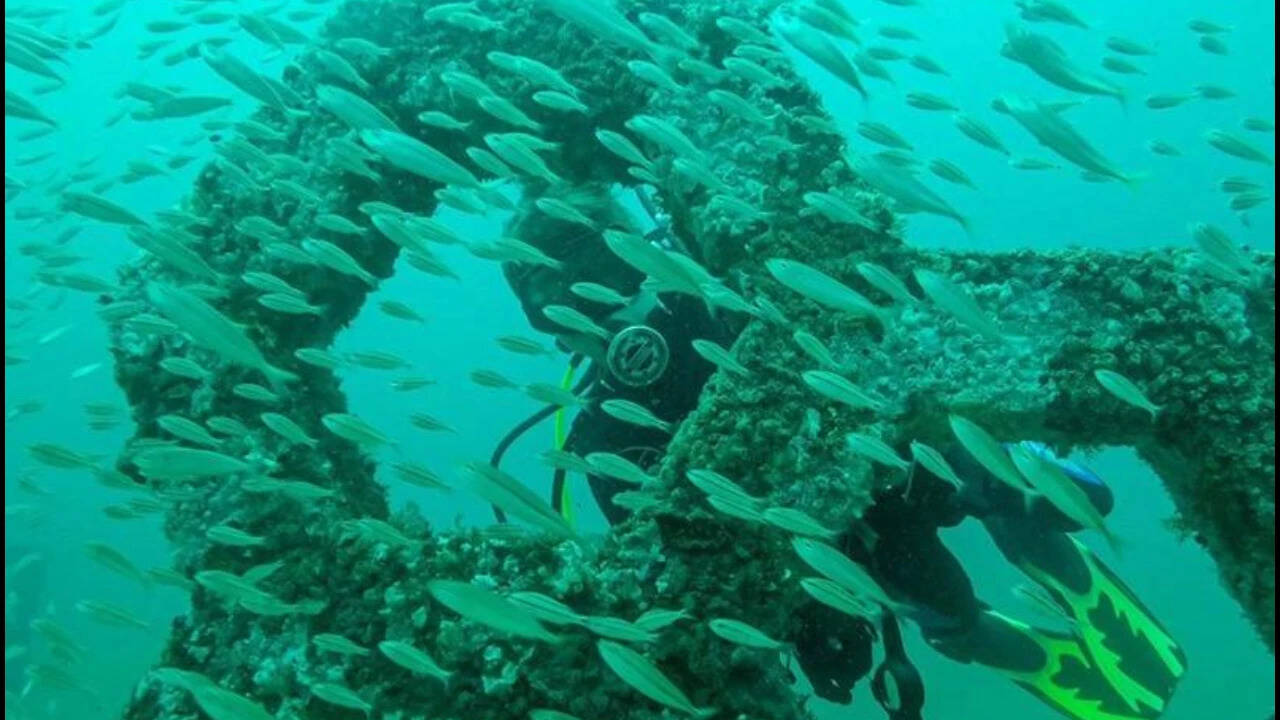
Deep beneath the turquoise swells near Miami, a strange city has risen from the silt. It is an art gallery where the paintings breathe and the sculptures grow. Known as the Reef Line, this monumental underwater exhibition features massive concrete installations designed by artists and marine architects alike. They rest on the sand not as monuments to human ego, but as scaffolding for life.
When marine biologist Dr. Elena Vance first lowered herself down to inspect the early concrete modules, she did not expect miracles. She expected slime. She expected silence. Instead, she found an architectural awakening.
"Concrete is usually where life goes to die in urban planning," Elena told me, wiping salt spray from her mask on the deck of a rolling research skiff. "We pour it over green spaces on land. But underwater? Calcium carbonate-infused concrete is an invitation. It is a dinner bell for coral larvae drifting on the current."
Let us be honest. Conservation is usually boring. It is a parade of dry statistics, bureaucratic hand-wringing, and depressing reports about greenhouse gas parts-per-million. People tune out. You cannot save a dying ocean with a spreadsheet. You save it by giving people something to fall in love with.
That is why art works where textbooks fail.
Imagine swimming through a submerged labyrinth of geometric arches and surrealist human forms, only to realize that the shoulders of a concrete figure are no longer gray. They are neon orange. They are electric blue. They are dripping with staghorn coral.
Today, this submerged garden hosts over one hundred distinct species. Grouper dart through hollow ribcages. Parrotfish graze on algae that cling to abstract masterpieces. Sponges filter the water, turning murky green into crystalline blue.
This is not a traditional artificial reef made from scuttled subway cars or rusted cargo ships. Those are convenient graveyards. This is deliberate, site-specific habitat restoration disguised as a public park. Each sculpture is engineered with specific porosities, pH balances, and structural angles to mimic the complex micro-topography of a natural barrier reef.
Why does this matter? Because Florida's natural coral reefs are under siege from rising ocean temperatures, pollution, and disease. They are the shock absorbers of the coastline, protecting beaches from storm surges during ferocious hurricane seasons. Without reefs, coastal communities stand defenseless against rising tides.
When you build a living sculpture garden, you are not just making a cool attraction for scuba divers with waterproof GoPros. You are constructing a literal breakwater that absorbs wave energy while simultaneously breeding the very organisms that rebuild the ecosystem.
It is easy to feel paralyzed by environmental news. Every time I open my phone, another ecosystem is collapsing. The scale of the crisis feels biblical. That is why standing on the deck above Florida's underwater garden feels so subversive. It is an act of active defiance.
We made this mess. But we also made this reef.
Down below, the polyps are hard at work. They do not care about political debates or carbon credits. They are too busy secreting calcium carbonate, fusing themselves to the concrete ribs of an artist's vision, turning an abstract human concept into a biological reality.
The water is clear today. If you look closely enough through the shimmering distortion of the surface, you can see the faint, ghostly outline of art becoming nature. The sculptures are disappearing, swallowed whole by the very life they were built to invite.
And that is the point. The greatest art is the kind that eventually erases itself, leaving behind a living, breathing world that no longer needs us to survive.