Ink on paper used to feel heavy. Now, words hang in the digital ether, weightless yet sharp enough to draw blood. A microphone clicks on in a studio somewhere across the globe. A familiar voice begins to speak, smoothing over restrictions with practiced cadence, defending the indefensible, and offering justification for closed school gates.
Across continents, children watch the news flicker on screens. In dusty courtyards and quiet rooms, the question lingers: Why does anyone argue for our absence?
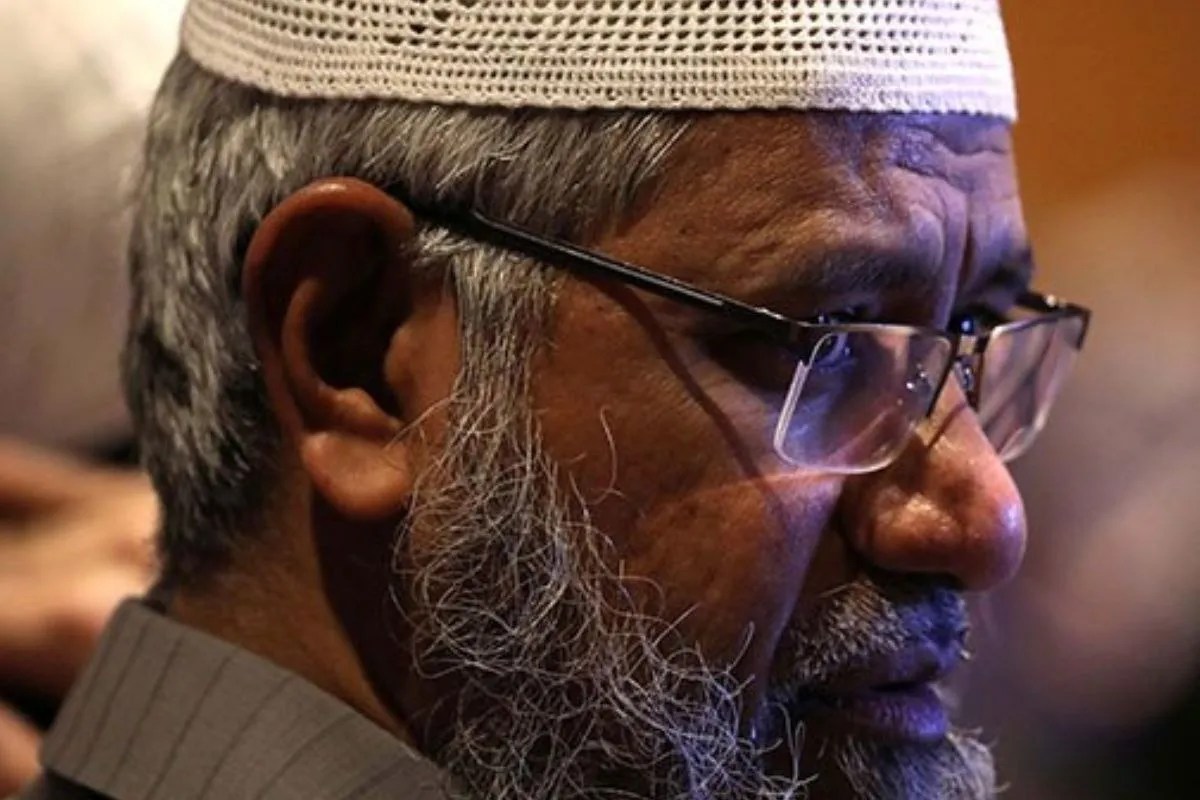
Zakir Naik, a polarizing preacher whose broadcasts reach millions, recently found himself at the center of intense controversy after defending the Taliban's sweeping bans on female education. The reaction was swift and fierce. From Ziauddin Yousafzai—an educator whose own daughter, Malala, stared down a bullet for the right to hold a book—to prominent scholars across India, voices rose in condemnation. How could anyone rationalize locking half a population out of the light of learning?
The debate is not merely political. It is visceral. It touches the nerve of what it means to grow up with a voice, or to have that voice systematically silenced before it can even form.
The Weight of a Closed Door
Consider what happens inside a classroom when the door shuts for the last time. The chalk dust settles on empty wooden desks. The laughter of girls solving equations fades into an eerie quiet. Outside, time moves forward, but inside these restricted zones, the clock spins backward.
Education is never just about memorizing dates or balancing chemical equations. It is the armor through which a young mind learns to question the world. When that armor is stripped away, the consequences ripple outward through generations.
History has shown this pattern before. Whenever a society decides that certain minds are too dangerous to cultivate, it does not protect itself; it stagnates. The defense of such policies relies on twisting tradition into a weapon. It dresses up exclusion as protection, claiming that keeping girls away from books is a form of cultural preservation.
Yet, those who have lived through the reality of these restrictions know the truth. It is not protection. It is erasure.
Voices from the Front Lines of Learning
When Ziauddin Yousafzai responded to the controversy, his words carried the weight of a father who nearly lost his child simply because she wanted to go to school. He spoke not just as an individual, but as a symbol of resistance against the normalization of ignorance. Indian scholars joined the chorus, pointing out the dangerous precedent set when influential figures use religious or cultural arguments to justify human rights abuses.
Words matter. When a public figure with a massive global platform condones systemic educational deprivation, it gives oxygen to oppression. It tells young girls that their aspirations are inconvenient, secondary, or worse, forbidden.
This is where the human element shatters the cold calculus of political rhetoric. Behind every statistic of banned students is a specific face. A girl who loves mathematics. A teenager who writes poetry in the margins of her notebooks. A future doctor, engineer, or artist whose potential is being deliberately suffocated.
Confronting the Rhetoric
Listen closely to the arguments used to defend these restrictions. They often sound reasonable to the uninitiated—wrapped in cultural relativism or appeals to tradition. But peel back the polished veneer, and you find a profound fear of autonomy. An educated woman is harder to control. She asks difficult questions. She demands accountability.
That is the hidden core of the entire controversy. The restrictions are not about modesty or tradition. They are about power.
When commentators attempt to soften the blow or reframe oppression as an internal affair, they ignore the universal bond of human dignity. Knowledge does not belong to one gender, one culture, or one regime. It belongs to anyone brave enough to seek it.
The Unwritten Future
The debate will fade from the headlines eventually. New controversies will take its place, scrolling past our eyes on glowing screens. But the classrooms in restricted regions remain dark.
Yet, human curiosity is remarkably stubborn. It survives in whispered lessons passed between friends. It hides in dog-eared books read by the light of a single candle. It persists in the quiet determination of those who refuse to let their minds go dark, no matter how many decrees are issued from behind microphones and studio walls.
The true test of our time is not how we handle the opinions of those who defend exclusion. It is how fiercely we protect the right of every child to look up, read the words on the page, and realize they have a place in the story of the world.