The press badge is supposed to mean something. Across conflict zones from the streets of Beirut to the rubble of Gaza, that rectangle of laminated paper or arm patch bearing the word "PRESS" functions as an international covenant. It is a shared understanding among combatants that those recording history are not actors within it. They are observers. They are witnesses. When that covenant fractures, the consequences extend far beyond the immediate tragedy, striking at the very foundation of how the world understands war.
Families of fallen journalists do not ask for geopolitical maneuvering or diplomatic statements. They demand accountability. When a reporter is killed while clearly marked, the questions that follow expose a grim reality about modern conflict reporting. Who fired the fatal round? What rules of engagement allowed an operator to pull the trigger on a non-combatant holding a camera instead of a rifle? And crucially, why do investigations into these deaths so often dissolve into bureaucratic obscurity? Learn more on a related issue: this related article.
The mechanics of reporting from active combat zones have undergone a profound transformation over the last two decades. The days of embedded journalism within structured military units have given way to local fixers, freelance producers, and independent reporters who live where the bombs fall. They do not get extracted by armored convoys when the shelling intensifies. They are already there. This independence makes them indispensable to the global news ecosystem. It also makes them entirely vulnerable.
When a journalist dies under disputed circumstances, the initial response from military authorities follows a predictable script. Expressions of regret are issued, followed by promises of a thorough internal review. Weeks turn into months. The initial outrage in newsrooms gives way to the next breaking crisis, and the investigation quietly stalls. This pattern is not an accident. It is a structural failure of accountability that protects institutional interests at the expense of truth. More analysis by TIME explores comparable perspectives on this issue.
Consider the evidentiary trail left behind in these incidents. Modern warfare is recorded from multiple angles. Drone feeds, helmet cameras, intercepted communications, and ballistic forensics exist in abundance. Yet, when a member of the press is killed by state forces, access to this raw data is tightly controlled by the very entity under suspicion. Independent watchdogs and international press freedom organizations are left piecing together timelines from shaky smartphone footage and eyewitness testimony, fighting an uphill battle against closed military justice systems.
The psychological toll on remaining reporters in the field is rarely discussed in official briefings. Working under the constant realization that a press vest may act as a target rather than a shield changes the calculus of presence. Self-censorship creeps in. Corners are cut not out of laziness, but out of sheer survival instinct. When reporters are forced to weigh the value of a story against the probability of targeted fire, the public loses its window into the conflict.
History shows that impunity breeds repetition. If the killing of a journalist yields no political cost, no criminal prosecution, and no policy shift, the deterrent
Targeting the Truth When Journalists Become the Frontline
news
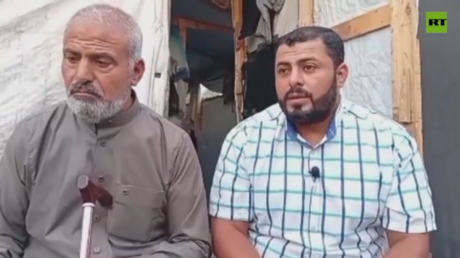
The cost of reporting from active conflict zones has long been measured in hazard pay, frayed nerves, and the occasional shrapnel wound. Today, that ledger reads differently. When families of slain reporters stand before microphones demanding international accountability, they are not merely mourning an individual loss. They are exposing a systemic failure in how the global community protects, or rather fails to protect, the chroniclers of history. The death of a Palestinian reporter sparks immediate outrage, quick social media cycles, and predictable diplomatic statements of concern, yet the structural impunity that allows these deaths to occur remains untouched.
To understand why journalists find themselves in the crosshairs with alarming frequency, one must look past the immediate battlefield chaos and examine the mechanics of modern warfare reporting. In contemporary conflicts, information is infrastructure. Controlling the narrative is as vital as holding territory. Consequently, press credentials, once serving as a recognized shield under international humanitarian law, increasingly function as a target marker. When independent observation becomes an impediment to a military objective, the messenger transforms into a tactical obstacle.
International humanitarian law is explicit. Reporters are civilians, and targeting them constitutes a war crime. Yet, the gap between codified protection and operational reality grows wider by the day. Investigative bodies note a troubling pattern where investigations into journalist fatalities stall indefinitely, buried under bureaucratic inertia and competing geopolitical narratives. Families are left to wage lonely campaigns for justice, facing institutional walls designed to absorb outrage rather than assign culpability.
The investigative record reveals a chilling calculation. When an embedded reporter is killed, the diplomatic fallout is manageable. When an independent local reporter working without the corporate backing of a major Western network is killed, the response is often deafening silence. Local journalists bear the heaviest burden of modern conflict reporting. They provide the raw, unfiltered footage that shakes global consciousness, yet they possess the least protection when the cameras are smashed and the transmitters go dark.
Accountability cannot be outsourced to internal military inquiries that routinely clear themselves of wrongdoing. True accountability requires independent forensic investigations, international legal pressure, and a willingness to impose real consequences for violations of press safety. Until the cost of killing a reporter outweighs the tactical utility of silencing them, the cycle will continue. Families demanding justice are not asking for charity; they are demanding the enforcement of a rule of law that applies equally to those who hold the pen and those who hold the weapon.
The silence that follows the initial wave of headlines is where the true injustice takes root. As the news cycle lurches toward the next crisis, the bereaved families are left alone with their grief and a justice system designed to protect institutions over individuals. History will record who was in the field to document the suffering. It will also record who chose to look away when the price for that documentation was paid in blood.