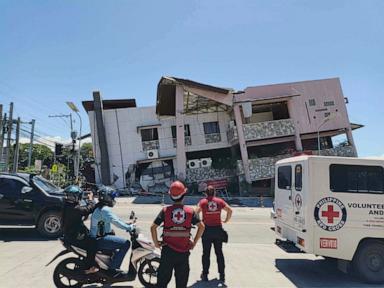
The media has a template for natural disasters. When a massive 7.8 magnitude earthquake strikes the Philippines, the standard operating procedure is immediate, superficial arithmetic. Headlines flash a body count. Eleven dead. Twelve dead. Images of twisted rebar and pancaked concrete fill the feed. Sirens wail, politicians issue somber press releases, and the collective commentary fixates entirely on the immediate body count.
This framing is broken. It is a lazy consensus that fundamentally misunderstands how modern disasters work.
Focusing on the immediate loss of life following a massive seismic event is looking at the wrong ledger. In the aftermath of a major earthquake, the real catastrophe is not the initial shockwave. It is the systemic, creeping paralysis of critical infrastructure that follows over the next ninety days. We are measuring disaster severity by the wrong metric, and that failure of perspective is exactly why communities remain vulnerable.
The Magnitude Myth
Let us dismantle the first misconception: that a high magnitude automatically equals an unprecedented catastrophe.
Earthquake magnitude measures energy release at the source, not human impact. A 7.8 magnitude event is undeniably powerful. But the obsession with the Richter scale or Moment Magnitude scale obscures a far more critical variable: structural resilience and engineering standards.
When a major quake hits a region with modern building codes, the structures are designed to flex, absorb, and deform without collapsing entirely. If a massive quake hits and the immediate death toll remains in the single or double digits, that is not a tragedy of epic proportions. It is a triumph of structural engineering. It means the building codes worked. The walls cracked, the foundations shifted, but the roofs stayed up long enough for people to walk out alive.
The real story isn't that twelve people died. The real story is that millions lived because of passive defense systems built into the concrete. Yet, the narrative remains fixed on total devastation.
The Hidden Ninety Day Fuse
The true toll of a disaster begins when the news cameras pack up and leave. When a 7.8 magnitude quake disrupts an island nation like the Philippines, the immediate casualties represent only the tip of the iceberg. The real threat is the silent shutdown of the invisible networks holding society together.
- Logistical Asphyxiation: A cracked runway or a collapsed bridge does not just slow down aid. It halts the supply chain for essential medications, clean water, and food. The diabetic who cannot access insulin three weeks after the event does not show up in the initial earthquake statistics, but they are just as much a casualty of the event.
- The Tsunami Phantom: The panic over tsunamis often results in chaotic, unmanaged mass evacuations that cause more accidents, injuries, and structural gridlock than the wave itself. When a warning goes out, the resulting societal friction can be more hazardous than the localized water displacement.
- Economic Sepsis: Small and medium enterprises in the affected zone rarely survive a three-week power outage. When local businesses fold en masse, the tax base evaporates. Schools stay closed. Healthcare funding dries up. The community enters a downward spiral that lasts for a decade.
I have spent years analyzing recovery data across multiple disaster zones. The pattern is always the same. Millions of dollars pour into immediate search and rescue within the first forty-eight hours. Then, the attention span evaporates. The long-term recovery funding is a fraction of what is required to rebuild the economic engine. We spend lavishly on the drama of rescue and pennies on the reality of resilience.
Redefining the Disaster Premise
People often ask: How do we prevent these casualties?
The premise of the question is flawed. You do not prevent casualties during a tectonic shift; you minimize systemic vulnerability decades before the fault line slips. The focus must shift from reactive crisis management to proactive structural redundancy.
If you want to evaluate the severity of a natural disaster, stop looking at the initial death toll. Look at the time it takes for the local power grid to achieve 90% restoration. Look at the percentage of hospitals that remained operational through the shaking. Look at the speed of the supply chain recovery.
The Cost of the Counter-Intuitive Approach
Shifting to this mindset requires a cold, analytical perspective that many find uncomfortable. It means prioritizing funding for underground utility lines and seismic retrofitting over flashy emergency response vehicles. It means acknowledging that a building that deforms and becomes unusable but remains standing has done its job perfectly.
The downside to this approach is that it lacks emotional resonance. It is easy to raise money for a crisis; it is incredibly difficult to raise money for maintenance and code enforcement.
We must stop treating natural disasters as unpredictable, localized tragedies that demand nothing more than thoughts, prayers, and temporary aid. A massive earthquake is a known variable. The geography of the Philippines is a known variable. The real disaster is our ongoing refusal to look past the immediate headlines and fix the broken systems that break long after the ground stops shaking.