The air inside a local council office doesn't smell like grand strategy or the sweeping currents of history. It smells of damp coats, industrial carpet cleaner, and the faint, metallic tang of a cooling radiator. This is where politics happens when the cameras are turned off. This is where a council leader sits, staring at a spreadsheet that refuses to balance, listening to the muffled sound of a protest outside the window.
When a local Labour group leader stands up and demands that Keir Starmer resign, they aren't usually thinking about the fine art of parliamentary procedure or the seating arrangements in the House of Lords. They are thinking about the person sitting across from them at a plastic table in a community center—someone who can’t pay their rent and wants to know why the "party of the people" feels so far away.
The friction between the top of the pyramid and the base has reached a sudden, violent heat. It isn't just a disagreement over a policy or a missed talking point. It is a fundamental crisis of identity.
The Weight of the Badge
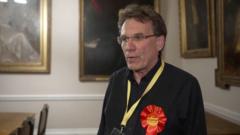
Imagine a councillor named David. He has held his seat for fifteen years. He knows which street lamps are broken and which families are one missed paycheck away from the food bank. For David, the Labour rose on his lapel is a promise. It’s a contract. When he knocks on a door in a rain-slicked terrace, he is the face of the movement.
Lately, that door is staying shut. Or worse, it’s being opened by someone who looks at him with a mix of betrayal and exhaustion.
The calls for Starmer’s resignation from figures within the party’s local ranks—most notably exemplified by the leadership in places like Burnley—stem from a feeling that the national leadership has severed its nerve endings. If the brain in Westminster can’t feel the pain in the feet, the whole body starts to stumble. The specific catalyst often cited is the leadership's stance on international crises, specifically the conflict in Gaza. But the root goes deeper. It’s about the permission to speak. It’s about the feeling that the party has become a top-down corporate structure rather than a bottom-up movement.
When a group leader walks away, they aren't just quitting a job. They are tearing up a map they’ve used their entire lives.
The Architecture of Silence
Discipline is the currency of Keir Starmer’s leadership. He came into the role like a structural engineer entering a condemned building. He saw the cracks left by the previous era, the shaky foundations of the 2019 election defeat, and he decided that the only way to save the house was to brace it with steel.
That steel is the "iron discipline" of the front bench. No stray comments. No unauthorized protests. A singular, focused message aimed squarely at the swing voters in the suburbs who decide elections.
But steel doesn't breathe.
To the local leader in a northern town, that discipline feels like a gag. They see their constituents grieving, angry, or desperate, and they find themselves unable to echo that emotion because the "line to take" hasn't been cleared by a twenty-something staffer in London. The frustration boils over. It’s not just about what Starmer says; it’s about what he prevents others from saying.
This is the paradox of modern electability. To win the country, Starmer believes he must project an image of absolute control. Yet, that very control alienates the people who do the hard, unglamorous work of winning towns vote by vote. They feel like they are being asked to be mannequins rather than representatives.
The Ghost of 1997
Every conversation about the future of the Labour party is haunted by the ghost of Tony Blair. The memory of that landslide victory is both a North Star and a warning. Starmer is clearly following the map of the mid-nineties: move to the center, reassure the markets, court the press, and keep the left wing of the party at arm's length.
It worked then. The world, however, has changed.
In 1997, the internet was a novelty and the geopolitical landscape was—briefly—stable. Today, a council leader can see a video of a bombed hospital in real-time on their phone, and ten minutes later, they receive an email from a constituent demanding to know why their MP abstained on a ceasefire vote. The lag time between global events and local accountability has vanished.
When a leader like Afrasiab Anwar in Burnley or others across the country call for a change at the top, they are signaling that the "1997 playbook" is missing a chapter on the modern soul. They see a vacuum where there should be a moral clarion call. They fear that in the rush to be "government-ready," the party has become "conviction-empty."
The Invisible Stakes
What happens if these cracks continue to spread?
The danger isn't necessarily a formal coup. The math in Westminster remains firmly in Starmer's favor. The real danger is a quiet, devastating withdrawal.
Politics runs on volunteer energy. It runs on the people who stuff envelopes at 9:00 PM on a Tuesday, the people who drive elderly voters to the polls, and the people who keep the local branches alive. If those people lose heart, the machine seizes up. You can have the best polling data in the world, but if your ground game is paralyzed by a sense of moral injury, the data won't save you.
Consider the ripple effect. A resignation in a town like Burnley isn't just one headline. It’s a signal to minority communities, to young voters, and to the traditional working class that their concerns are secondary to the strategic triangulation of the "center ground." It creates a space where apathy grows. And in the current political climate, apathy is a predator.
The View from the Bridge
Starmer sits at the helm of a ship that is currently leading in every poll. From his perspective, the noise from the engine room—the complaints from local leaders—is a distraction from the primary goal: reaching the shore of 10 Downing Street. He likely views these calls for resignation as the inevitable growing pains of a party transforming itself from a protest movement into a government.
He is betting everything on the idea that on election day, the British public won't care about internal party squabbles or foreign policy stances that didn't align with local councilors. He believes they will vote on the economy, the NHS, and the simple desire for a change after years of Conservative rule.
But there is a risk in being too right.
If you win the election but lose the trust of your own foundation, you inherit a house you can't live in. The authority of a Prime Minister comes from the parliament, but the power of a Labour Prime Minister has always come from the union of the intellectual and the laborer, the city and the town, the radical and the pragmatic.
The man in the council office is still staring at that spreadsheet. He hears the protesters, he looks at the letter of resignation on his desk, and he wonders if the person leading the party even knows his name.
Rain begins to streak the window, blurring the lights of the town outside. It is a quiet, lonely moment. The kind of moment that determines the fate of empires, not because of a grand speech, but because of a single, tired hand reaching for a pen to sign away a lifetime of loyalty. The blueprint for victory is held tightly in London, but the ground it’s supposed to be built on is shifting, inch by agonizing inch.