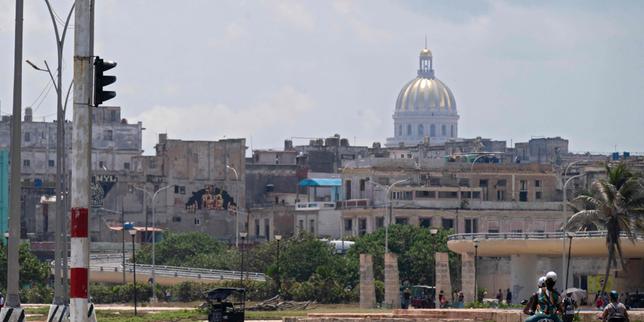
You wake up, the fan stops spinning, and the humid, heavy air of Havana immediately begins to press down on you. For over nine million people in Cuba, this isn't a rare annoyance. It's a daily reality. On July 14, 2026, the country's national electricity grid collapsed entirely, plunging the island into its third massive blackout in less than ten days.
The state-run utility company, Union Electrica (UNE), reported that the total system failure occurred at 11:05 am. By now, these events are so frequent that people have stopped expecting the lights to stay on. If you look past the official government press releases blaming foreign blockades, you'll find a highly complex mix of decaying, Soviet-era infrastructure, failing diplomatic alliances, and an economy running on fumes.
The Anatomy of a Chronic Collapse
This latest shutdown isn't an isolated incident. It marks the fifth full-scale power grid collapse Cuba has endured since the start of 2026. To understand why the grid keeps dying, you have to look at how Cuba generates electricity.
The backbone of the island's energy production relies on eight aging thermoelectric plants. Most of these facilities are well past their intended 30-year lifespans. They are corroded, poorly maintained, and constantly run at subpar capacities. When one major plant experiences a technical glitch, the sudden drop in generation triggers a domino effect across the entire national transmission network. To protect itself from physical destruction, the system automatically shuts down.
But the physical plants are only half the problem. They need fuel to run, and Cuba simply doesn't have enough of it.
A Drying Pipeline of Foreign Oil
Cuba imports the vast majority of its crude oil. For decades, the island survived on highly subsidized shipments from Venezuela. In exchange, Cuba sent doctors, teachers, and security advisors to Caracas.
That arrangement is falling apart. Venezuela’s own economic and production woes have forced the country to slash its exports to Havana. To make matters worse, other regional suppliers like Mexico have halted or heavily reduced their shipments under intense diplomatic and economic pressure from the United States.
The Cuban government points squarely at the long-standing US trade embargo as the root cause of the crisis. They argue that sanctions prevent them from acquiring necessary spare parts for their thermal plants and block them from international financing to buy crude on the open market. While the embargo certainly chokes the economy, critics argue that systemic domestic mismanagement and a stubborn refusal to reform the state-controlled economic model play an equally destructive role.
Life in the Dark
When the power grid fails, daily life grinds to a halt. Public transportation stops. Hospitals are forced to postpone thousands of non-urgent surgeries. Without electricity, water pumps fail, leaving entire high-rise neighborhoods without running water.
The heat is suffocating, and food preservation is nearly impossible. In a country already dealing with severe food shortages, losing a freezer full of meat or milk because of a multi-day blackout is a financial disaster for a family.
People are getting desperate, and they're starting to show it. In Havana, sporadic, spontaneous protests have broken out. In several neighborhoods, residents have blocked streets by setting fire to trash piles or banging empty pots and pans (cacerolazos) from their balconies to voice their frustration.
Adapting via Solar and Electric Bikes
Faced with a government that can’t keep the lights on, Cubans are doing what they have always done: improvising.
Those who can afford it have turned to small-scale renewable energy. Look up at the balconies in Havana and you'll see a growing number of small solar panels. Portable solar-charged batteries have become the most sought-after items on the black market, often sent by relatives living in Miami.
On the streets, electric motorcycles and tricycles, frequently modified with custom solar roofs, have become the primary mode of moving people and goods. It’s a fascinating, bottom-up transition to green energy, born not out of environmental consciousness, but out of absolute survival.
The Cuban government has promised a gradual, structured restoration of power. But until they address the structural decay of their plants and find a reliable source of fuel, these temporary fixes are just band-aids on a terminal system. Expect the lights to go out again soon.