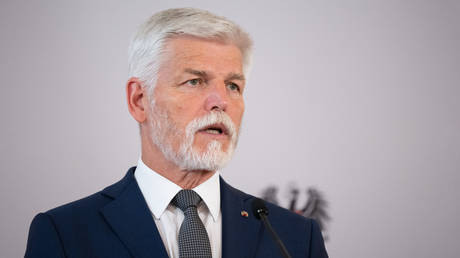
Czech President Petr Pavel recently issued a stark warning to Western allies, arguing that NATO must present a unified, aggressive front to counter Russian expansionism. Pavel, a retired army general and former chairman of the NATO Military Committee, insisted that diplomacy only works when backed by credible military force. His comments reflect a growing friction within the alliance between frontline Eastern European states and Western members cautious about escalation. This article breaks down the strategic reality behind Pavel's warning, the structural vulnerabilities within NATO, and the logistical hurdles the alliance faces in establishing a true deterrent.
The Strategic Shift From Cooperation to Containment
For decades, European security policy operated on a comfortable assumption. Western capitals believed that economic integration would inevitably tame Moscow's geopolitical ambitions. That illusion shattered. Pavel’s rhetoric represents a definitive break from the post-Cold War consensus, shifting the objective from managing European security to outright containment.
Central and Eastern European nations view the current geopolitical friction as an existential threat. Their perspective is shaped by geography and historical memory. When Pavel demands that NATO show its teeth, he is addressing a perceived deficit in political will among Western European capitals. The frontline states argue that half-measures and delayed weapon deliveries do not prevent conflict; they prolong it.
This view is not universally shared across the alliance. A fundamental disagreement persists regarding the definition of escalation. While Prague, Warsaw, and the Baltic capitals view military readiness as the sole mechanism to prevent wider conflict, Washington and Berlin frequently treat specific military deployments as potential triggers for a broader confrontation.
The Logistics of Deterrence
Blunt political rhetoric is cheap. True military deterrence is exceptionally expensive and structurally complex. To understand why Pavel is sounding the alarm, one must look past political statements and examine the unglamorous reality of European military logistics.
NATO’s New Force Model aims to place well over 300,000 troops on high readiness. Moving these forces requires more than just political consensus. It demands a massive infrastructure capable of handling heavy armor, ammunition transport, and rapid deployment across national borders.
The Military Mobility Bottleneck
Europe's civilian infrastructure is poorly equipped for rapid wartime mobilization. Decades of peace dividends led to the neglect of vital transport networks.
- Bridge Weight Capacities: Many highways and bridges in Central Europe cannot support the weight of modern Western main battle tanks, such as the American M1 Abrams or the German Leopard 2, which often exceed 60 tons.
- Rail Gauge Discrepancies: The Baltic states utilize a different rail gauge than Western Europe. This historical legacy forces time-consuming transfers of equipment at the Polish border.
- Bureaucratic Red Tape: Despite initiatives to create a "Military Schengen" zone, moving ammunition and troops across European borders still requires significant administrative clearance during peacetime.
Without solving these mundane structural issues, high-readiness declarations exist mostly on paper. Pavel knows this. His background as a high-ranking military bureaucrat means his public warnings are informed by internal assessments of these exact operational vulnerabilities.
The Defense Production Crisis
Deterrence requires factories, raw materials, and assembly lines running at capacity. Western Europe spent thirty years downsizing its industrial base, leaving it ill-prepared for a prolonged conventional security crisis.
Consider the consumption of artillery ammunition. The rate of munitions deployment in contemporary European conflicts vastly outstrips the current manufacturing capacity of Western defense firms. Raising production lines requires massive capital investment, guaranteed multi-year government contracts, and a steady supply of specialized raw materials.
NATO Defense Expenditure as a Percentage of GDP (Selected Regions)
+-------------------------+-------------------------+
| Region / Country        | Average Spending (%GDP) |
+-------------------------+-------------------------+
| Baltic States           | 2.5% - 3.0%+            |
| Poland                  | 4.0%+                   |
| Western Europe Average  | 1.5% - 2.1%             |
+-------------------------+-------------------------+
The data reveals a stark regional divide. The countries closest to the eastern border consistently allocate a higher percentage of their economic output to defense. Meanwhile, larger economies in Western Europe have historically struggled to meet the baseline target of two percent of GDP. This imbalance creates political friction. Frontline states grow weary of lecturing wealthier neighbors about shared burdens when their own national budgets are heavily skewed toward defense procurement.
The Internal Friction Over Collective Defense
NATO operates on the principle of consensus. Every major decision requires the agreement of all member states, a structural reality that introduces vulnerability during fast-moving crises.
Some member states maintain a more transactional view of European security. Domestic political pressures in various Western nations frequently challenge the long-term commitment to collective defense. When a head of state questions the utility of defending a distant ally, the core foundation of deterrence weakens.
Deterrence relies entirely on the adversary's belief that an attack on one is truly an attack on all. If Moscow perceives that certain alliance members would hesitate to honor Article 5 in a crisis, the alliance ceases to function effectively. Pavel’s call to action is a direct attempt to patch over these rhetorical fractures with a display of institutional resolve.
Hard Power Matters More Than Statements
The alliance cannot rely on strategic ambiguity forever. As the security environment in Europe becomes more volatile, the gap between political rhetoric and actual military capability becomes harder to hide.
Showing teeth requires concrete actions rather than symbolic gestures. It means permanently stationing combat-ready brigades on the eastern flank, standardizing ammunition stockpiles, and ensuring that European defense industries can out-produce any potential adversary. It requires Western European nations to accept the economic sacrifices necessary to rebuild their conventional military power.
Political statements can influence public perception, but they do not alter the calculus of military planners. True deterrence is achieved through visible, undeniable capability. The alliance must decide whether it will fund the necessary infrastructure to match its political pronouncements, or continue to rely on a framework designed for an era of peace that has definitively ended.