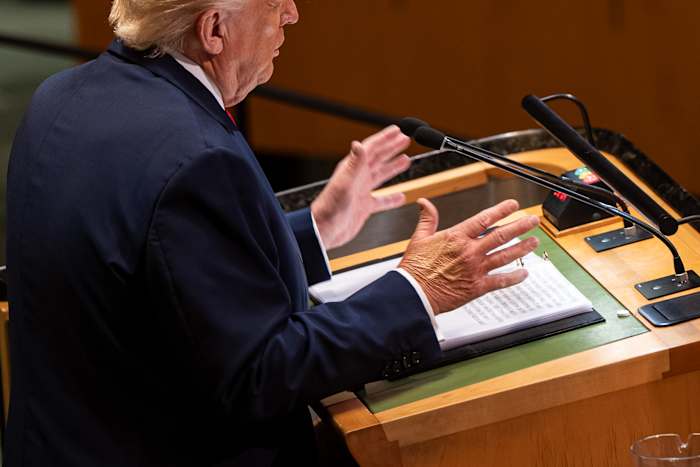
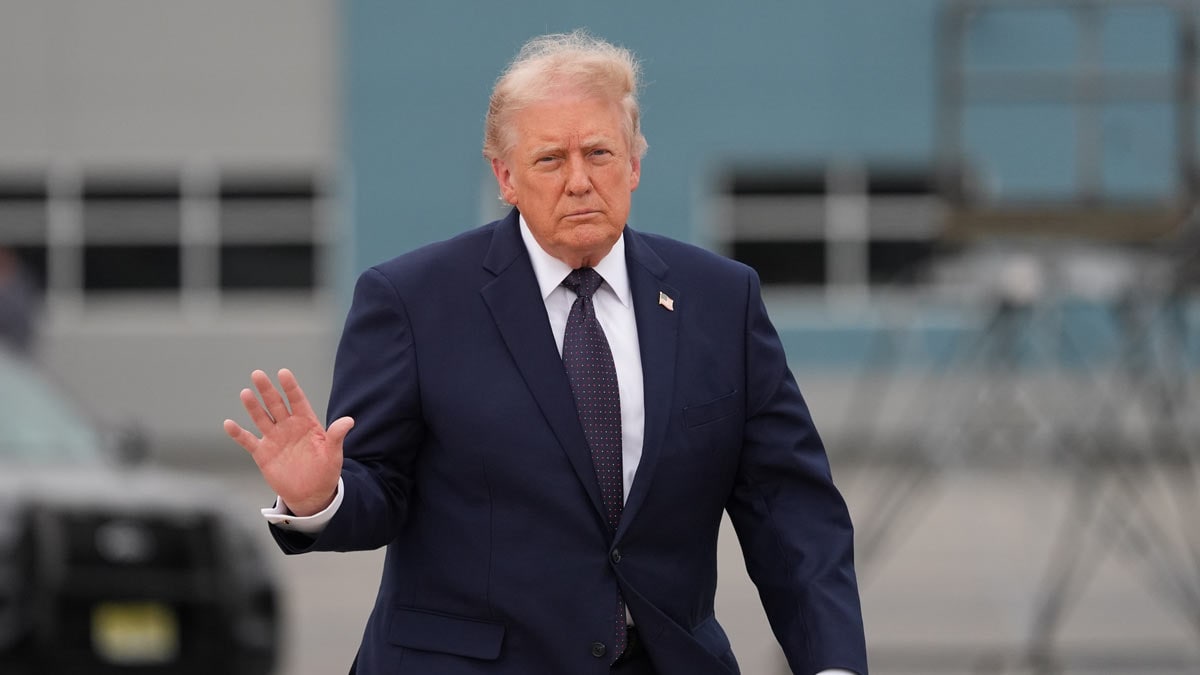
Mainstream commentary frames the current friction between Washington and Beijing as a delicate balancing act. According to the standard narrative—reflected in conventional reporting on Donald Trump and Xi Jinping navigating flare-ups over artificial intelligence, trade, and Iran—both leaders are fundamentally seeking stability despite sharp disagreements.
That framing misses the structural reality of the relationship.
When two superpowers simultaneously restrict access to advanced semiconductors, erect sweeping tariff walls, and back opposing geopolitical coalitions in the Middle East, "stability" is not a shared goal. It is a temporary tactical pause used by both sides to buy time for decoupling. Treating diplomatic pleasantries or interim trade truces as evidence of a stabilizing equilibrium leads businesses, investors, and policymakers into a costly trap.
The Myth of Managed Competition
For years, financial analysts and foreign policy pundits have relied on the concept of "managed competition." The theory suggests that Washington and Beijing can compartmentalize their rivalry—fighting over high-end microchips and regional security while keeping broader trade flows intact.
In practice, compartmentalization has collapsed. Economic policy and national security are now identical.
Consider how the two governments approach artificial intelligence. The United States views compute capacity—specifically advanced graphics processing units and semiconductor manufacturing equipment—as the decisive military and economic asset of the twenty-first century. Export controls are designed not merely to slow Chinese commercial tech firms, but to prevent the People's Liberation Army from achieving parity in autonomous systems, cyber capabilities, and intelligence processing.
Beijing views these restrictions as an existential containment strategy. Rather than accepting a subordinate tier in the global technology stack, the Chinese state has mobilized massive industrial subsidies to build a parallel, self-sufficient semiconductor supply chain.
When the core technology driving future economic growth is treated as a zero-sum weapons system, stability is impossible. Any quiet period in bilateral talks is simply the calm while both sides re-architect their supply chains to reduce mutual vulnerability.
Trade Tariffs Are Not Negotiating Chips
A pervasive misconception in Western business circles is that tariffs are purely transactional—an opening bid designed to extract concessions on agricultural purchases, intellectual property enforcement, or currency valuation.
This view misunderstands both the political economy of the Trump administration and the structural shifts inside China.
- Revenue and Reshoring: In Washington, tariffs are increasingly viewed as a permanent structural tool to reshore manufacturing capacity, reduce reliance on adversarial supply chains, and generate federal revenue. Even when targeted exemptions are granted, the baseline direction is toward higher barriers, not a return to pre-2018 free trade norms.
- China's Overcapacity Engine: Facing a prolonged domestic real estate downturn and sluggish household consumption, Beijing has doubled down on manufacturing and exports—particularly in electric vehicles, batteries, solar panels, and legacy semiconductors—to sustain GDP growth.
Because China's domestic economy cannot absorb its own industrial output, Chinese firms must export aggressively to survive. Meanwhile, the United States and its allies are unwilling to absorb a second wave of manufacturing displacement. Neither leader has the domestic political room to back down on trade without undermining their own economic model.
The Iran Variable Exposes the Limits of Bilateralism
The idea that Washington and Beijing can easily compartmentalize geopolitical flashpoints breaks down completely when examining Iran.
To understand the friction over Tehran, look at the competing incentives:
- Beijing's Energy Calculus: China remains the primary buyer of sanctioned Iranian crude oil, often purchasing it at steep discounts through independent refiners and settling transactions outside the U.S. dollar system. For Beijing, cheap energy lowers domestic industrial input costs while weakening the global reach of American financial sanctions.
- Washington's Maximum Pressure: For the Trump administration, cutting off Iran's oil revenue is central to containing Tehran's regional influence and nuclear ambitions. Enforcing those sanctions inevitably requires targeting the Chinese financial institutions, port operators, and shipping networks that facilitate the trade.
Washington cannot enforce maximum pressure on Iran without colliding directly with Chinese economic interests. Beijing cannot abandon Tehran without forfeiting discounted energy and signaling acquiescence to American extraterritorial sanctions. The Middle East is not a side issue; it is an active theater where U.S.-China friction plays out in real time.
Why Businesses Keep Misreading the Signals
I have watched multinational corporations spend tens of millions of dollars lobbying for tariff exclusions and building contingency plans based on the assumption that a "grand bargain" between Washington and Beijing is just around the corner. Every time a high-level summit is announced or a working group is formed, corporate boards pause their supply chain diversification, hoping the storm will pass.
That hesitation is a strategic error.
Diplomats use the language of stability because overt hostility spooks bond markets and disrupts immediate logistics. Neither Trump nor Xi wants an accidental military clash in the South China Sea or an overnight freeze in consumer goods that triggers an immediate inflationary shock. Avoiding acute crisis, however, is entirely different from building long-term stability.
The Real Meaning of Diplomatic Truces
When Washington and Beijing agree to extend a tariff pause, resume military-to-military hotlines, or hold leader-level summits, markets often rally on the headline. Look closer at what actually changes:
- Export control lists continue to expand, closing loopholes on AI accelerators and chipmaking tools.
- Investment screening mechanisms—both outbound from the U.S. and inbound from China—grow stricter every quarter.
- Supply chains continue migrating toward third-party hubs like Vietnam, India, and Mexico, even when Chinese components remain embedded upstream.
The headline suggests stabilization; the underlying policy trajectory remains strict separation.
How to Operate in a Fractured System
Stop waiting for a diplomatic reset that neither superpower can afford to deliver. Whether you are managing capital, running a supply chain, or analyzing geopolitical risk, operating on the assumption of U.S.-China stability leaves you exposed to sudden regulatory shocks.
1. Treat Compliance as a Core Operational Cost
Export controls, sanctions enforcement, and customs scrutiny are no longer edge-case legal issues. If your product relies on dual-use technology, rare earth processing, or cross-border data flows, assume that any gray area will eventually be closed by regulators in either Washington or Beijing. Build visibility down to your third- and fourth-tier suppliers now, before an enforcement action freezes your inventory.
2. Separate "China-for-China" from Global Operations
The era of a single, integrated global supply chain is over. Multinational firms that succeed in this environment are ring-fencing their operations: localizing research, data storage, and manufacturing inside China exclusively to serve the Chinese domestic market, while building completely independent supply chains outside China to serve North America and Europe. It is expensive, duplicative, and inefficient—and it is the only structure resilient enough to survive simultaneous sanctions regimes.
3. Discount Summit Rhetoric
Judge bilateral relations by statutory actions, treasury sanctions, and commerce department entity lists—not by readouts from diplomatic meetings. Leaders routinely project calm to manage domestic expectations and market volatility while signing executive orders that harden the divide the very next week.
Acknowledge the Trade-Offs
Pursuing total supply chain redundancy carries real costs. Duplicating manufacturing footprints destroys economies of scale, compresses operating margins, and slows down product iteration. Companies that move too aggressively out of China risk losing access to the world's deepest manufacturing ecosystem and an enormous consumer market. Yet the alternative—betting a company's survival on the hope that Washington and Beijing will suddenly prioritize harmony over strategic dominance—is far riskier.
Stability between the United States and China is not a destination these two governments are working toward. It is simply the brief breath they take between rounds.