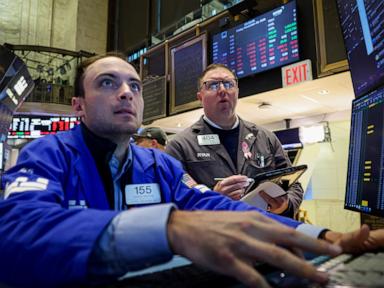
Friday night smelled like cold takeout and stale coffee in a quiet townhouse outside Columbus. On a kitchen island, a laptop glowed with red numbers that refused to stop bleeding.
Down.
Down again.
By the closing bell on November 20, 2026, Nvidia had slid to $125.53, capping seven straight weeks of losses and sitting nearly 48 percent below its October record high near $239. For seven weeks, a single chipmaker had carried the weight of a trillion-dollar hope and a trillion-dollar anxiety, and when its footing slipped, the tremors rattled semiconductor indexes, pulled the Nasdaq into a punishing slide, and turned routine retirement statements into unwelcome reading.
Then came Monday morning, November 23. Within hours, the board unanimously reinstated Jensen Huang as chief executive, and the market snapped upward with a force that stunned traders from London to Tokyo—Nvidia rocketing more than 31 percent in a single session, the Nasdaq jumping roughly 6.5 percent, and the S&P 500 climbing nearly 5 percent.
Yet a rebound on a screen rarely feels like peace in your chest. When a market drops hard and bounces violently, the numbers tell you what happened in aggregate, while the quiet rooms of real lives hold the actual cost.
When One Ticker Becomes a Weather System
To understand why a single stock can move an entire index by nearly five percent in a day, picture a suspension bridge built with one oversized cable carrying half the load. That is a metaphor for market concentration—not a literal engineering flaw in the exchanges, just a plain way to see how weight distributes when sentiment shifts.
Over the past few years, artificial intelligence stopped being a niche research lab story and became the primary engine behind data-center spending, cloud capacity, and semiconductor orders. Because Nvidia sat at the center of that buildout, investors treated its share price like a barometer for the entire technology cycle. When fears mounted in early November over stricter AI rules, slower data-center permitting, and a board investigation followed by Huang's abrupt November 12 departure amid governance controversies, worry did not stay neatly contained inside one company. It spilled across chipmakers and growth stocks because so many portfolios held the same bet under different labels.
Consider a hypothetical character to make that chain reaction concrete. Call her Maya, a physical therapist in her late thirties who opened her first brokerage account two years ago after watching coworkers talk about index funds and AI chips. Maya is not a day trader. She checks her phone between appointments, hoping her savings will grow faster than inflation so she can help pay for her younger brother's trade school tuition without draining her emergency cash.
During the seven-week slide into November 20, Maya felt a familiar knot every evening. She knew intellectually that markets fluctuate. Emotionally, watching months of gains evaporate while headlines warned of governance drama and chip sell-offs made every notification feel like bad news. When Monday's rebound hit and Nvidia surged past $165 before later settling back near $150 later in the week, Maya did not feel triumphant. She felt dizzy, wondering whether Monday's surge was a genuine turning point or just another sharp gust of wind in a stormy season.
Plenty of seasoned investors shared that whiplash. Even as indexes rebounded after Huang's return, market commentators pointed out how steep the round-trip swings had been, with cumulative ups and downs measuring roughly a quarter of the index's movement across a turbulent stretch. A green day feels wonderful until you realize how much red it took just to get back to bruised.
The Quiet Tug-of-War Inside Everyday Portfolios
Standard market summaries love neat slogans: buyers stepped in, dip-hunters returned, confidence bounced back. Real investor behavior in November 2026 was messier and far more revealing.
Data tracking retail flows showed that outside of a narrow spotlight on names like Nvidia and newly listed Anthropic, individual investors actually net-sold hundreds of millions of dollars on the very day the Nasdaq jumped nearly seven percent, continuing a broader pattern of trimming exposure across many single stocks rather than blindly chasing every bounce. Think about what that means. People were not uniformly throwing caution to the wind. Many were using a sharp rally to lighten up on positions that had kept them awake, while concentrating whatever conviction they still had in a tiny handful of recognizable giants.
That split reveals something essential about human psychology under stress.
Fear.
Fear narrows our field of vision until only the brightest or loudest lights remain visible, pulling money toward familiar household names even when the broader road feels bumpy.
Let's introduce another hypothetical character—purely illustrative, not based on any real person—to trace the other side of that coin. Call him David, a retired machinist living on a fixed pension plus a modest nest egg. David lived through 2008 and 2020, and those memories sit in his bones like old winter injuries. When Nvidia plunged 14 percent on Friday, November 20, David did not panic-sell everything at the bottom, yet he felt a quiet anger at himself for letting a volatile corner of the market loom so large in his mental map. When Monday's massive rebound arrived, his instinct was not to celebrate a paper gain; his instinct was to ask how much risk he was actually willing to carry at sixty-eight.
His reaction captures a truth that dry recaps often miss: a rebound restores prices faster than it restores calm.
Why Rebounds After Sell-Offs Trick Our Timing
Anyone who has watched markets long enough knows the oldest trap in finance: confusing a sharp bounce with a straight line back to calm.
When a stock drops nearly half from its peak over seven weeks and then jumps more than thirty percent in a single session on leadership news, two competing stories collide at once. One story focuses on valuation and business demand—pointing out that after a steep haircut, forward multiples looked far cheaper than their multi-year averages even while debate continued over export rules, governance, and AI spending durability. The other story focuses on friction and uncertainty—noting that reinstating a founder-CEO amid controversy does not magically erase regulatory questions, data-center bottlenecks, or the possibility of more sharp swings ahead.
Both stories can be true at the exact same moment. That is what makes market turning points so exhausting for ordinary people. You do not get a clean signal with a flashing green light that says safe now. You get noise, headlines, rapid reversals, and a nagging question about whether acting today helps you or hurts you.
Consider what happens next when a reader tries to make a calm decision after a week like that:
- A sudden single-day spike can tempt you to buy out of fear of missing out, right before the stock chops sideways or pulls back as traders digest fresh news.
- A multi-week slide can tempt you to sell out of exhaustion, locking in losses just before sentiment flips on a single announcement.
- Treating a single high-beta stock as a stand-in for your entire financial future turns every boardroom headline and analyst revision into an emotional roller coaster.
Notice how neither extreme serves a real human life well. You do not need to become a cynical spectator who mocks every rally, nor do you need to hang your peace of mind on every tick of a semiconductor chart.
Grounding Yourself When the Tape Runs Hot
So how do you stand steady when Wall Street goes from dread to euphoria in forty-eight hours?
Start with position sizing—how much of your actual net worth, near-term cash needs, and sleep quality sits inside any single stock or theme. A 30 percent swing on a position that equals 2 percent of your savings is a story. A 30 percent swing on a position that equals 40 percent of your savings is a crisis. Most emotional mistakes happen not because someone picked the wrong company, but because the bet was sized for calm weather and hit a squall.
Second, separate price from purpose. Why did you buy in the first place? Was it a multi-year view on computing demand, or was it because everyone around you was talking about easy gains? When you write down your reason before a sell-off starts, a sudden drop or a sudden surge has far less power to hijack your judgment.
Third, give yourself permission not to have an instant opinion on every dramatic market day. The closing bell rings at four in the afternoon; your life does not run on a four-o'clock clock. Stepping away for a walk, eating dinner without refreshing a brokerage app, and letting the initial noise settle are not signs of indifference. They are habits of self-respect.
Markets will keep doing what markets have always done: overreacting to fear, overreacting to relief, swinging hard around inflection points, and forcing human beings to confront what they really value when certainty goes missing. A single day's rebound can erase a week's worth of red ink on a chart, yet the real test happens later, in the quiet hours when the screen goes dark and you ask yourself whether your money is serving your life—or running it.
The numbers will keep flashing in green and red, long after the headlines fade, while out on quiet streets people close their laptops, turn off the kitchen lights, and decide what kind of tomorrow they are actually building.