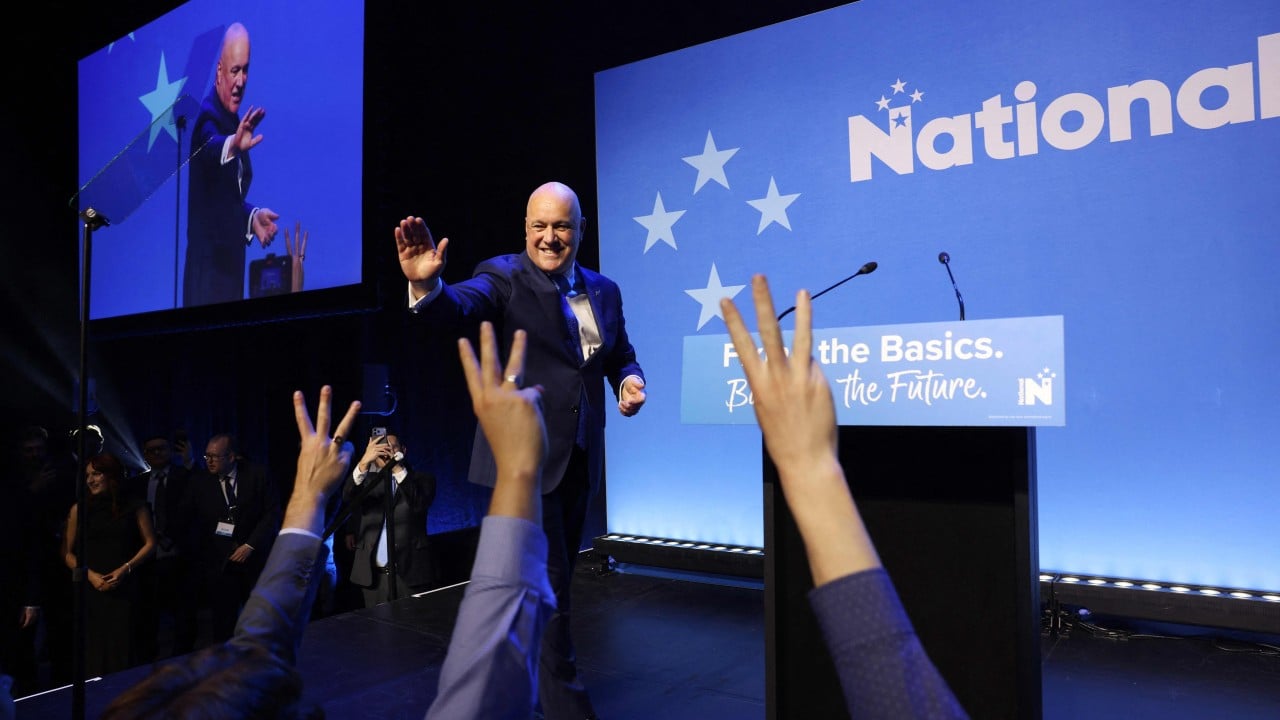
New Zealand’s 2026 general election has produced a statistical stalemate that leaves the country’s political establishment paralyzed. When the Electoral Commission closed the books on the preliminary count following the November 7 vote, the opposition Labour Party held 29.36 percent of the party vote (710,330 ballots) against the ruling National Party’s 29.21 percent (706,680 ballots)—a gap of just 3,650 votes nationwide. Yet under New Zealand’s Mixed-Member Proportional (MMP) system, raw popular vote totals are an illusion. National holds 42 seats to Labour’s 36, the incumbent right-leaning coalition sits on a razor-thin 67-seat majority in an expanded 131-seat Parliament, and roughly 399,365 uncounted special votes will decide who governs when official results drop on November 27.
Wire services and surface-level dispatches have framed this outcome as a simple horse race between two exhausted major parties. That reading misses the structural earthquake happening beneath Wellington’s floorboards. For the first time since MMP was introduced in 1996, both major parties have simultaneously collapsed below the 30 percent threshold on election night. Voters did not merely hesitate between Christopher Luxon and Chris Hipkins. They actively rejected the two-party duopoly, fracturing the electorate into seven parliamentary factions, inflating the House of Representatives with 11 overhang seats, and handing the balance of power to a centrist newcomer that National spent months swearing it would never touch.
The Illusion of the Popular Vote Deadlock
To understand why a 3,650-vote lead for Labour translates into a six-seat deficit against National, you have to look past the headline percentages and examine the mechanics of electorate geography.
Under MMP, a party’s total share of Parliament is determined primarily by its nationwide party vote—provided it clears the 5 percent threshold or wins at least one local electorate seat. In a standard 120-seat legislature, 29.2 percent of the vote entitles a party to roughly 35 seats. On election night, however, National’s candidates swept 42 single-member electorate races, largely across rural heartlands and provincial cities, while Labour captured just 21.
Because National won seven more local electorates than its nationwide party vote entitled it to, the electoral system triggered an overhang. National keeps all 42 of those seats, and the total size of Parliament expands to accommodate them. Te Pāti Māori triggered an additional four-seat overhang by winning five of the seven Māori electorates despite polling just 0.57 percent of the nationwide party vote.
The result is a bloated, 131-seat chamber where the threshold for a governing majority jumps from the usual 61 seats to 66.
| Party | Preliminary Party Vote | Vote Share | Electorate Seats | List Seats | Total Seats |
|---|---|---|---|---|---|
| Labour Party | 710,330 | 29.36% | 21 | 15 | 36 |
| National Party | 706,680 | 29.21% | 42 | 0 | 42 |
| Green Party | 321,902 | 13.30% | 2 | 14 | 16 |
| ACT New Zealand | 264,121 | 10.92% | 1 | 12 | 13 |
| New Zealand First | 236,630 | 9.78% | 0 | 12 | 12 |
| Opportunity Party | 144,298 | 5.96% | 0 | 7 | 7 |
| Te Pāti Māori | 13,845 | 0.57% | 5 | 0 | 5 |
Look closely at National’s column. Zero list seats. Every single National MP entering Parliament on the preliminary count won a geographic constituency, wiping out the party’s ranked list candidates—including senior policy figures and urban specialists—in one stroke. Meanwhile, the incumbent coalition of National (42), ACT (13), and New Zealand First (12) sits on 67 seats. That is a single-seat buffer above the 66-seat majority line. One bad afternoon in the special vote tally erases their governing mandate entirely.
Why Special Votes Always Break Left
In New Zealand politics, election night is never the final word. It is an opening bid. Roughly 14 percent of all ballots cast in 2026—an estimated 399,365 votes—were special votes. These include ballots cast by New Zealanders living overseas (nearly 97,000 of the total), citizens voting outside their home electorates, hospital patients, and anyone who enrolled or updated their address on election day itself.
Processing them takes nearly three weeks. Electoral officials must physically transport declarations back to home districts, verify identities against a master roll to prevent double voting, and recount every ordinary ballot alongside them.
Historically, special votes lean younger, more urban, and decidedly further to the political left than election-day ballots. In 2023, special votes constituted 20.9 percent of the total turnout and stripped two seats away from National, transferring them to the Green Party and Te Pāti Māori. In 2017, they boosted Labour and the Greens by enough votes to reshape coalition leverage.
If the 2026 special votes follow even a fraction of that historical trajectory, two distinct mechanisms will punish the incumbent right-wing bloc:
- List Seat Reallocation: As overseas and late-enrolled ballots push up the nationwide vote totals for Labour and the Greens, the Sainte-Laguë mathematical formula used to allocate proportional seats will strip list seats from ACT or New Zealand First and hand them to the left. Because National holds zero list seats, it cannot lose list MPs directly—unless its party vote rises enough to absorb its own overhang, which changes nothing in its raw seat count.
- Knife-Edge Electorate Flips: Eight local electorates currently sit within margins narrow enough to flip once special votes are tallied. In seats like Wairarapa, where National’s Mike Butterick holds a slender lead against thousands of incoming special ballots, a single electorate loss drops National’s overhang count and directly reduces the right bloc’s seat total. Conversely, Labour is defending razor-thin leads in Wellington Bays and Mt Roskill. Even if Labour holds its urban seats while National drops a single rural-provincial marginal, the right coalition falls from 67 seats to 66—or 65, below the threshold required to govern alone.
The Collapse of the Two-Party Duopoly
Step back from the daily ballot count and look at the three-decade arc of New Zealand democracy. When voters abandoned the First-Past-the-Post system in the 1990s, political scientists predicted a gradual fragmentation toward European-style multi-party coalitions. For nearly 30 years, that prediction largely stalled. National and Labour continued to hoover up 70 to 80 percent of the combined vote, treating smaller parties as irritants or junior appendages.
Not anymore. Combined, Labour and National captured just 58.57 percent of the preliminary party vote in 2026.
That number represents a historic loss of faith in establishment governance. Voters watched Jacinda Ardern and Chris Hipkins burn through a historic 2020 outright majority amid inflation, bureaucratic overreach, and post-pandemic fatigue. They then watched Christopher Luxon’s three-headed coalition—National, David Seymour’s libertarian ACT, and Winston Peters’ populist New Zealand First—spend three years wrestling over public-sector cuts, Treaty of Waitangi co-governance, and sluggish economic recovery.
Faced with a choice between two familiar brands that had both disappointed them within a single decade, more than four in ten New Zealanders walked away from both. Voter turnout dipped to an estimated 74.6 percent, down from 78.2 percent in 2023 and 82.2 percent in 2020. Those who did show up flocked to the flanks—pushing the Greens to 13.30 percent, ACT to 10.92 percent, and New Zealand First to 9.78 percent—or gambled on a ten-year-old minor party that had never previously won a single seat in Parliament.
Enter Qiulae Wong and the Opportunity Party
Every stalled election produces a kingmaker. Usually in New Zealand, that role belongs to Winston Peters, the octogenarian populist who has held the balance of power in 1996, 2017, and 2023. This time, Peters is trapped inside an incumbent bloc that may not have enough seats to survive, and the true wild card is a 38-year-old former sustainability consultant named Qiulae Wong.
Founded in 2016 by economist Gareth Morgan as The Opportunities Party (TOP), the movement spent three consecutive election cycles trapped in the wilderness below the 5 percent threshold—winning 2.4 percent in 2017, 1.5 percent in 2020, and 2.22 percent in 2023. After taking over in November 2025, Wong rebranded the party simply as Opportunity, shed its academic aloofness, and capitalized on middle-class frustration with housing taxes and stagnant wages. On November 7, Opportunity cleared the 5 percent hurdle with 5.96 percent of the vote, securing seven list MPs.
Those seven seats turn New Zealand’s coalition math into a Rubik's Cube with missing stickers:
- The Incumbent Hold: If special votes leave National, ACT, and NZ First with at least 66 seats, Luxon can govern without Wong. Even then, a one-seat majority in a 131-seat chamber is a nightmare for party whips. One sick MP, one rogue backbencher, or one by-election loss paralyzes the legislative agenda.
- The Right-Plus-Centre Marriage: If special votes shave one or two seats off the right bloc, Luxon will need Opportunity’s seven votes to survive a confidence-and-supply motion. There is just one problem. During the campaign, Luxon explicitly ruled out working with Opportunity, dismissing their flagship policies—including a $19,400 universal citizen income funded by a land value tax—as economic fantasy. Within hours of the preliminary count, Luxon abruptly reversed course, telling reporters he wanted to "build a relationship" with Wong. Even if Luxon swallows his pride, forcing Qiulae Wong—who openly accused Winston Peters of "racist" and "dangerous rhetoric" on immigration during a televised leaders' debate—into the same governing arrangement as NZ First and ACT is a recipe for permanent cabinet warfare.
- The Left-Bloc Pivot: On paper, Labour (36), the Greens (16), and Te Pāti Māori (5) hold 57 seats. Adding Opportunity’s seven brings them to 64—two seats short of a majority. Only a massive, historically unprecedented surge in special votes for the left could push that four-party grouping to the 66-seat finish line. Polling conducted after election day shows roughly two-thirds of Opportunity voters prefer a left-leaning coalition, yet Wong has stated she will speak with National first as the largest party and has laid down five non-negotiable policy bottom lines.
The Caretaker Trap and the Cost of Delay
While electoral officials spend twenty days verifying envelopes and recounting ballot boxes, New Zealand is operating under caretaker conventions. Under constitutional practice, Luxon remains prime minister, but his cabinet is barred from making major policy shifts, signing significant international commitments, or appointing senior officials without consulting opposition parties.
In normal years, a three-week caretaker window is a minor administrative pause. In late 2026, it lands directly on top of urgent fiscal deadlines, global trade uncertainty, and a domestic economy desperate for policy clarity. Worse, November 27 may not even mark the finish line.
In 2023, razor-thin margins in Tāmaki Makaurau (decided by four votes), Mt Albert (20 votes), and Nelson (29 votes) triggered formal District Court judicial recounts that dragged the official return of the writ out for nearly two more weeks. With eight electorates sitting on a knife-edge in 2026, losing candidates have three working days after November 27 to demand judicial recounts. A single four-vote swing in a contested electorate can alter overhang calculations, shift the majority threshold, and blow up weeks of backroom coalition talks.
Coalition negotiations in Wellington are already notoriously opaque. In 2023, it took Luxon, Seymour, and Peters six weeks after election day to hammer out a governing accord. Adding a fourth party with diametrically opposed views on taxation, climate policy, and immigration threatens to stretch government formation past Christmas—leaving New Zealand drifting without an empowered executive while four incompatible leaders haggle over ministerial portfolios behind closed doors.
What the Headlines Missed
Foreign coverage has treated New Zealand’s election night stalemate as a quirky antipodean tie. Look past the superficial symmetry of 29.36 percent versus 29.21 percent, and the real story is far starker.
New Zealand’s electoral system was designed to prevent the tyranny of a narrow plurality by forcing consensus among diverse parliamentary voices. Instead, decades of voter disillusionment have weaponized MMP’s quirks—turning electorate overhangs into seat distortions and handing disproportionate leverage to minor parties whose platforms were rejected by more than 90 percent of the electorate. Whether Christopher Luxon cobbles together a fragile four-party Frankenstein coalition or Chris Hipkins pulls off a miraculous special-vote heist, the next government will enter the Beehive weaker, more divided, and less legitimate than any administration in modern New Zealand history.
When the Electoral Commission releases the official tally at 2:00 p.m. on November 27, watch neither National nor Labour—watch the 66-seat threshold, and the seven rookie MPs sitting squarely in the middle of the room.


