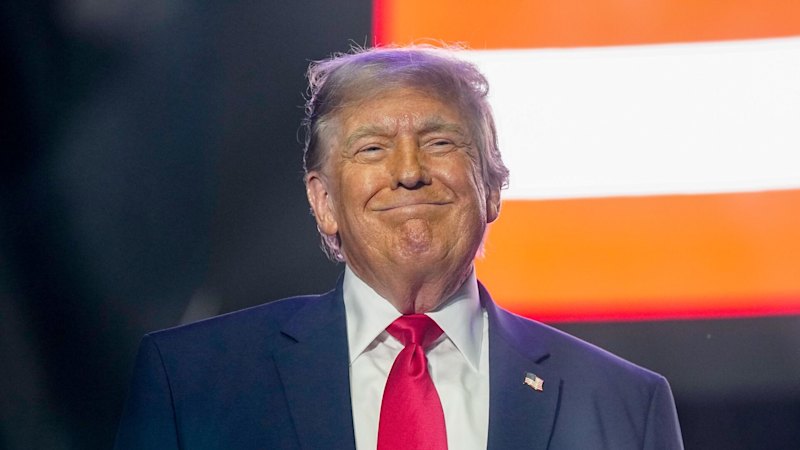
The traditional security architecture of the Indo-Pacific relies on a fundamental assumption: that the structural utility of a superpower alliance remains independent of the transactional volatility of its temporary leadership. Data from the 2026 Lowy Institute Poll demonstrates that this assumption has reached its breaking point. The historic convergence of record-low public confidence in Donald Trump (21%) with an unprecedented drop in the perceived value of the ANZUS alliance (falling seven points to 73%) signals a systemic shift. Australians are no longer merely compartmentalizing their distaste for an individual leader; they are repricing the strategic utility of the United States itself.
To evaluate this transition, the relationship must be analyzed through a dual-variable framework: institutional trust versus executive alignment. When the variance between these two vectors becomes too wide for too long, public support for the broader structural alignment collapses.
The Bilateral Value Function and the Decoupling Mechanism
Historically, middle powers like Australia calculate the return on investment (ROI) of a superpower alliance using a predictable value function based on three core variables: deterrence capability, institutional predictability, and shared normative commitments.
When an administration explicitly rejects institutional predictability in favor of transactional unilateralism—exemplified by aggressive tariff architectures and the abandonment of multilateral frameworks—the value function degrades. The executive variable begins to cannibalize the institutional variable.
[Superpower Value Function]
     │
     ├─► Deterrence Capability (High weight, military hardware)
     │
     ├─► Institutional Predictability (Undermined by unilateral tariffs)
     │
     └─► Shared Normative Commitments (Eroded by transactional diplomacy)
The 2026 data shows that only 31% of Australians trust the United States to act responsibly in the world, marking the lowest level recorded in two decades of longitudinal tracking. This is not a sudden anomaly; it is the culmination of a decade-long trajectory. In 2011, before the current era of populist nationalism, trust in Washington sat significantly higher. The subsequent erosion reflects a structural realization among middle-power populations that American foreign policy is undergoing a permanent domestic realignment toward insularity, rather than a temporary detour.
This structural trust deficit introduces a friction coefficient into bilateral defense operations. While elites within the defense and intelligence bureaucracies continue to execute initiatives like AUKUS, the democratic capital required to sustain these long-term capital allocations is thinning. When a population loses faith in the primary actor, the long-term viability of the alliance infrastructure faces structural risk.
The China Realignment and Rational Hedging
Middle powers respond to superpower unreliability by executing strategic hedging strategies. For the first time in the history of Australian strategic polling, a statistical majority—51% of respondents—now state that Australia's relationship with China is more important than its ties to the United States. This represents an eight-point shift within a 12-month period, occurring simultaneously with Trump's return to executive power.
This realignment is driven by a stark divergence in economic and security imperatives:
- The Economic Gravity Vector: China remains the indispensable destination for Australian resources, an immutable reality that ideological alignment with Washington cannot substitute.
- The Security Reliability Deficit: The perceived probability of American intervention during a regional crisis has degraded. If the primary security guarantor operates on a transactional doctrine, the security guarantee behaves like a financial option that may not be exercised when out of the money.
The shift toward prioritizing Beijing does not indicate a sudden warmth toward authoritarian governance. Trust in Xi Jinping remains low at 20%. Instead, the data reflects a cold, rational optimization of national interest. Australian public sentiment is moving toward a position of strategic non-alignment, treating both superpowers as external risks to be managed rather than choosing one as an absolute protector.
Executive Liability and the Succession Risk
A common analytical error among defensive strategists is the belief that the current trust deficit is bound strictly to the personality of Donald Trump, and that a return to political normalcy will restore historical baseline trust. The metrics disprove this hypothesis. Vice President JD Vance commands a confidence rating of just 20% among the Australian public, tracking one point below the president himself.
This uniformity in distrust proves that the Australian electorate views the current direction of American governance as a structural feature, not an executive bug. The emergence of a populist, protectionist political class in Washington changes the risk profile for allies. A state cannot easily anchor its multi-decade defense procurement strategies to a partner whose foreign policy parameters swing wildly every four to eight years based on thin margins in domestic swing states.
The erosion of the alliance metric from 80% down to 73% within a single year is the direct mathematical consequence of this perceived permanent instability. The public has begun to price in the long-term cost of alignment, including the risk of being dragged into peripheral conflicts or suffering collateral economic damage from unilateral trade wars.
Operational Imperatives for Middle Powers
The contraction of public support for the superpower alliance necessitates an immediate restructuring of middle-power foreign policy. Relying on historical sentiment or shared mid-century wartime legacies is insufficient to maintain public consensus.
The primary strategy must focus on sovereign capability acceleration. Australia must reduce its dependence on the strategic umbrella of the United States by developing organic deterrence capabilities. This requires shifting capital allocations from long-tail, dependent acquisition programs toward immediate, asymmetric denial technologies.
The secondary path requires regional minilateral diversification. To offset the instability of the Washington axis without capitulating to Beijing's regional ambitions, middle powers must build deeper security and economic networks with highly trusted regional peers. The 2026 data indicates a clear public preference for alternative partners: Canadian Prime Minister Mark Carney commands a 66% confidence rating, while New Zealand's Christopher Luxon sits at 65%. Japan's leadership similarly enjoys strong domestic approval within Australia.
Building interlocking security architectures with these medium-sized, high-trust democracies provides a stability buffer. It dilutes the systemic risk of superpower dependency while maintaining a defensive network capable of resisting coercion from regional autocracies. The survival of middle-power sovereignty in an era of unguided superpower competition depends entirely on executing this diversification before the remaining institutional capital of the historical alliance erodes completely.