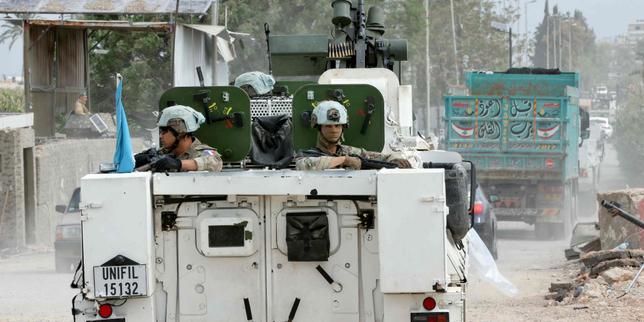
The UN’s Empty Gavel
The United Nations Security Council is back at it, wringing its hands over the rising body count of blue helmets. The consensus coming out of New York is as predictable as it is tired: member states must do more to investigate, prosecute, and punish those who launch deadly attacks against peacekeepers. It sounds noble. It sounds responsible.
It is a complete fantasy.
For decades, the international community has treated the legal prosecution of rebel groups, militias, and warlords as a viable deterrent. I have spent years tracking conflict zones and watching well-meaning diplomats drop millions of dollars into dysfunctional local judiciaries, expecting a war-torn region to suddenly act like a Swiss courtroom. It does not work.
Demanding that host nations—many of which can barely control their own capitals—track down and try heavily armed insurgents who kill peacekeepers is not just naive. It actually worsens the very conflicts the UN is trying to stabilize.
The Myth of the Host-Nation Savior
The core flaw in the Security Council’s logic lies in a fundamental misunderstanding of state capacity in active war zones.
When an armed group ambushes a UN convoy in Mali, the Central African Republic, or the Democratic Republic of Congo, the standard diplomatic response is to issue a sternly worded resolution calling on the host government to bring the perpetrators to justice. This premise is completely broken.
- Institutional Collapse: If the host government had the investigative clout, forensic capability, and judicial reach to arrest and prosecute battle-hardened rebels, it would not need thousands of foreign troops deployed on its soil in the first place.
- The Sovereignty Trap: UN missions operate under Status of Forces Agreements (SOFAs) that technically leave criminal jurisdiction to the host state. But when the state is a fiction outside the capital city, demanding judicial accountability is like asking a drowning man to act as a lifeguard.
- Political Complicity: In many theaters, the line between the official military (FARDC in the DRC, for instance) and local armed factions is incredibly blurry. Rebels who attack peacekeepers on Monday are frequently integrated into state-backed militias on Wednesday. Expecting a government to prosecute its covert allies is a structural absurdity.
Imagine a scenario where a local prosecutor in a volatile province tries to issue an arrest warrant for a warlord who controls the local gold mines and commands five thousand infantrymen. That prosecutor does not achieve justice; they achieve a death sentence. By forcing a legalistic framework onto an anarchic landscape, the UN puts local officials in an impossible position while giving the international community a convenient excuse to do nothing substantial.
Legalism as a Shield for Cowardice
Let’s be brutally honest about why the Security Council loves the "better prosecution" narrative. It shifts the blame.
When a peacekeeper dies, it represents a failure of command, a failure of equipment, or a failure of the mandate itself. But if the UN can pivot the conversation toward the lack of local judicial follow-through, the blame shifts from the council chambers in New York to a dilapidated ministry of justice in Africa or the Middle East.
The Real Reason Peacekeepers Die
Peacekeepers do not die because rebel leaders are afraid of judges and suddenly realized there aren't any around. They die because they are soft targets sent into impossible situations with restrictive Rules of Engagement (ROE).
| Factor | The UN Narrative | The Reality on the Ground |
|---|---|---|
| Deterrence | Criminal prosecution will deter future ambushes. | Only superior fire power and decisive military action deter asymmetric actors. |
| Mandate | Peacekeepers are neutral arbiters protecting civilians. | Asymmetric armed groups view UN infrastructure as a high-value strategic target. |
| Accountability | Local courts must hold individuals responsible. | Local courts are easily intimidated, bought off, or physically destroyed by warlords. |
When the UN Multidimensional Integrated Stabilization Mission in Mali (MINUSMA) became the deadliest deployment in UN history, it wasn't because Malian courts lacked funding. It was because the peacekeepers were driving unarmored vehicles through areas infested with improvised explosive devices (IEDs) while operating under a mandate that restricted them from taking proactive military action against known terrorist cells.
The Dangerous Side Effects of Demanding Justice
Pursuing criminal justice in the middle of an active insurgency actively undermines peace processes. This is a bitter pill for human rights purists to swallow, but the data is clear.
Peacekeeping, by its very nature, requires negotiation with bad actors. To broker a ceasefire, get aid through a blockade, or establish a demilitarized zone, UN commanders must sit across the table from murderers, thieves, and individuals who have ordered attacks on blue helmets.
If the UN insists that these specific individuals must be hunted down and locked up, it destroys any chance of diplomatic leverage. Warlords will not negotiate a peace deal if the prerequisite for talking is walking into a pair of handcuffs. By prioritizing the courtroom over the negotiating table, the UN locks conflicts into endless cycles of violence.
The International Criminal Court (ICC) learned this lesson the hard way in northern Uganda with the Lord's Resistance Army (LRA). The moment ICC warrants were issued for Joseph Kony and his top commanders, any chance of a negotiated surrender evaporated. They had nothing left to lose, so they kept fighting. The exact same dynamic applies to rebel factions targeting peacekeepers today.
Stop Prosecuting. Start Responding.
If the goal is truly to protect the men and women wearing the blue helmet, the Security Council needs to drop the legalistic theater and fix the systemic military deficiencies that make peacekeepers targets in the first place.
1. Scrap Chapter VI Mentality in Chapter VII Realities
The UN routinely deploys troops under Chapter VII mandates (authorization to use force), yet trains and equips them with a Chapter VI (peace observation) mindset. If a mission is deployed where there is no peace to keep, the troops must be reclassified as combatants with the operational freedom to eliminate threats before they strike.
2. End the Two-Tier Troop System
Wealthy Western nations fund missions but refuse to send their own troops to high-risk areas, leaving the actual fighting to under-equipped contingents from developing nations. A Bangladeshi or Fijian infantry unit should not be left holding a perimeter with defective communications gear and substandard armor while Western generals offer "capacity-building workshops" on judicial reform from an air-conditioned office in Geneva.
3. Shift the Financial Burden to the Spoilers
Instead of funding local courts that will never see the inside of a rebel leader, use that capital to fund aggressive, intelligence-driven operations. Track the financial assets of the political elites who fund these rebel groups from afar. Freeze their bank accounts, seize their properties in Europe, and choke their supply lines. Warlords do not care about a local arrest warrant, but they care deeply when their ammunition suppliers stop getting paid.
The Brutal Truth
The insistence on "better prosecution" is an admission of operational bankruptcy. It is an attempt to solve a kinetic, bloody military problem with bureaucratic red tape and judicial paperwork.
We must stop treating the legal systems of collapsed states as if they are merely suffering from a temporary backlog of cases. They are broken because the state itself is broken. Until the UN stops hiding behind the illusion of host-nation accountability and starts authorizing its forces to decisively neutralize threats, the bodies of peacekeepers will continue to return home in flag-draped coffins. No amount of legal posturing in New York will change that.


