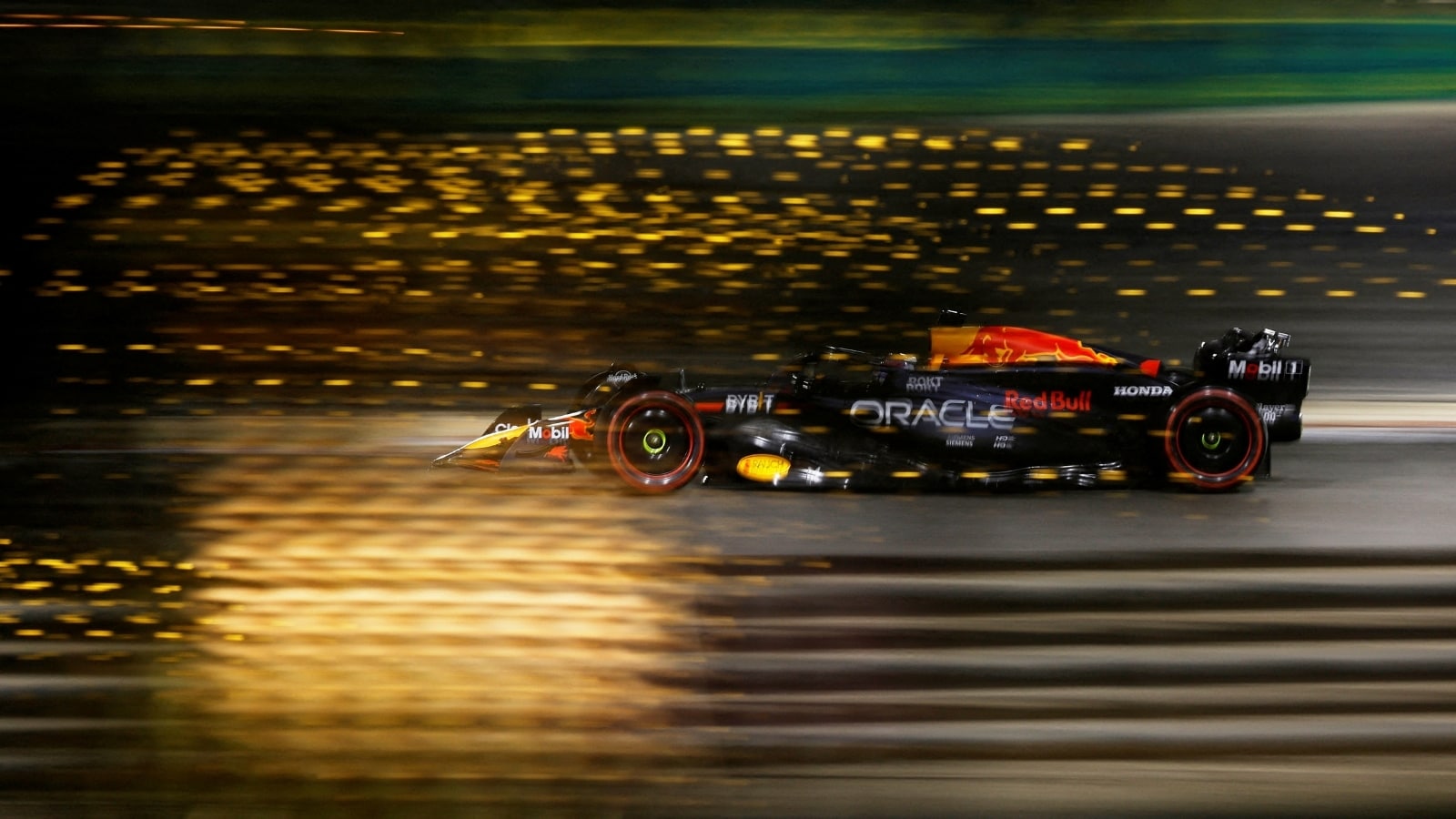
The asphalt of the Bahrain International Circuit cools slowly under a vast, indifferent desert sky. For most of the year, Sakhir is a quiet expanse of sand and silence, disturbed only by the howling wind sweeping across the Persian Gulf. But soon, the quiet shatters. The 2027 Formula 1 season opener is locked in. The engines will roar. The floodlights will cut through the night like a blade.
And the world outside the paddock will watch, chewing its collective fingernail.
To understand why this race matters beyond the lap times, you have to stand in the pit lane at midnight. The air smells of burning rubber, high-octane fuel, and intense, unfiltered ambition. Mechanics in flame-retardant suits move with the terrifying precision of surgeons. They do not talk about geopolitics. They talk about tenths of a second, tire degradation, and downforce coefficients.
Yet, outside those gates, the horizon is heavy. West Asia sits at a permanent, trembling crossroads. Headlines scream of uncertainty, regional friction, and fragile truces that could snap before dawn. Families in Manama, Doha, and Dubai wake up every morning checking the news with a knot in their stomachs.
Formula 1 looks at this volatile map, nods, and signs the contract anyway.
Why? Because the show must go on. It is the oldest, most ruthless mantra in professional sports.
Imagineing the mindset of F1 CEO Stefano Domenicali and the FIA leadership requires looking past the glossy PR statements. They are playing a high-stakes chess match where every square is worth millions of dollars. The 2027 calendar is not just a list of races; it is a global economic ecosystem. Bahrain was the pioneer of the Middle Eastern swing, stepping up in 2004 when traditional European circuits feared they were losing their monopoly on motorsport's soul. Over two decades, Sakhir has poured hundreds of millions into transforming itself into a reliable, hyper-modern fortress for the sport.
When uncertainty plagues the region, canceling an event sends a signal. It signals fear. It signals retreat.
Formula 1 refuses to show fear. Or, more accurately, it refuses to let fear interfere with the cash flow and global expansion strategy.
Critics call it tone-deaf. They argue that racing in a region shadowed by geopolitical tension normalizes instability, turning human suffering into a backdrop for champagne showers on the podium. They ask how a sport can champion diversity, human rights, and global unity while flying into a theater of potential conflict. It is a valid question. It is an uncomfortable question.
Step closer to the fence, though, and the narrative complicates.
Talk to a local marshal in Sakhir, someone who has spent fifteen years volunteering at the circuit. For them, race week is not a political abstraction. It is dignity. It is community. It is a moment when their home becomes the undisputed center of the global universe. They take immense pride in the flawless execution of the grand prix. Their kids wear team caps and dream of engineering degrees. To them, pulling the plug on the race because of distant or localized political tremors feels like a punishment visited upon people who only want to share their passion for speed.
This is the eternal tension of modern sports. We expect athletes and promoters to be geopolitical moral compasses while simultaneously demanding they entertain us at all costs. We want our heroes to speak truth to power, but we also want the lights to turn green on time, sharp at eight o'clock on a Sunday evening.
The 2027 opener in Bahrain will be a masterclass in compartmentalization.
Inside the paddock, reality shrinks to a 5.412-kilometer loop of tarmac. Drivers will strap themselves into carbon-fiber survival cells, trusting their lives to machines that cost more than small towns. They will stare into data screens. They will battle for traction through Turn 10. Max Verstappen, or perhaps a new challenger we haven't yet heard of, will lock his brakes, sending up a ghostly plume of white smoke.
Outside, the geopolitical weather will continue to churn.
History suggests that sports events in flashpoint regions carry a bizarre dual nature. They can act as flashpoints themselves, or they can serve as fragile, defiant islands of normalcy. When the cars hit the track in Sakhir, they will carry the weight of an anxious world on their rear wings.
The engines do not care about diplomacy. They only care about combustion.
And as the checkered flag falls under the artificial suns of Bahrain in 2027, the roar of the V6 hybrids will echo across a silent desert, drowning out the doubts for just a couple of hours, leaving everyone to wonder what happens when the noise finally stops.