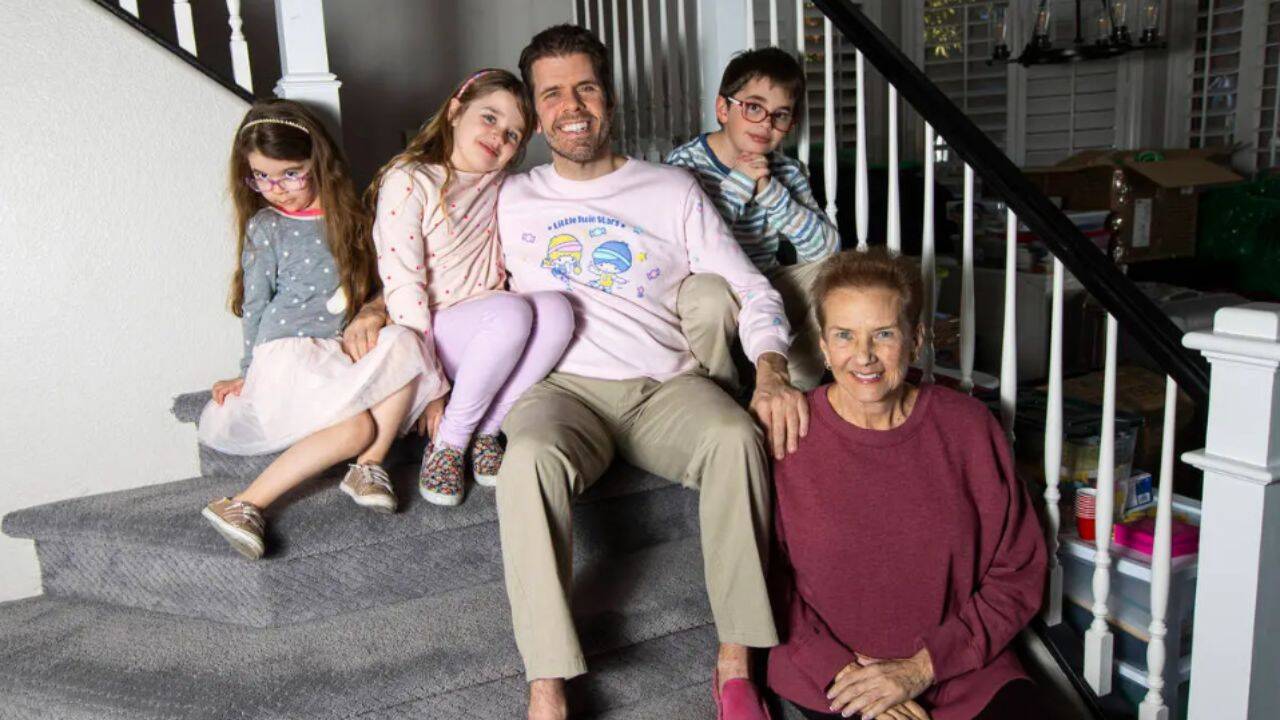
Dust settles differently in the Nevada desert. It does not cling with the damp, smoggy desperation of Los Angeles asphalt. Instead, it drifts in silence, a fine, golden powder that coats everything it touches, whispering of an ancient, indifferent earth.
In this stillness sits a sprawling mansion. For years, its address belonged to a man whose very name once symbolized the digital age's most aggressive, unfiltered impulses. Mario Lavandeira, known to millions across the globe as Perez Hilton, built an empire on the public humiliation of others. He was the architect of crude doodles on celebrity photographs, the ringmaster of a digital circus that defined the mid-2000s internet. For another view, see: this related article.
Then came the reckoning of time. The blog posts grew softer. The children arrived. The frantic pulse of Hollywood gave way to the quiet stretches of suburban Nevada. He traded the flashbulbs of West Hollywood for the gated sanctuaries of Henderson, buying a monument to his hard-won reinvention.
And now, that monument carries a new number. A price cut of $350,000. Similar reporting regarding this has been published by The New York Times.
To the casual observer scrolling through a real estate portal, it is a dry data point. A statistic in a shifting market report. But numbers rarely tell the human story behind the drywall. Every square foot of a luxury home holds memories, aspirations, and, eventually, the quiet humility of departure.
Consider what happens when a public figure decides to pack up their life and move across state lines once more. It is never just about square footage or swimming pool maintenance costs. It is an admission that a chapter is closed. The house, with its high ceilings and desert-facing windows, became a silent witness to a transition from the chaotic internet provocateur of the past to a father trying to anchor his family in a stable reality.
Real estate in the upper tier of the market is an exercise in psychological chess. When a seller slashes an asking price by hundreds of thousands of dollars, panic is rarely the primary motivator. It is recalibration. It is the moment gravity reasserts itself over ambition. The luxury market does not care who you were online twenty years ago. It does not care about past web traffic or archived gossip columns. It operates on cold, hard geometry and the willingness of a buyer to step into a stranger's old dreams.
Imagine walking through those grand double doors. The echoes bounce off polished tile floors. Sunlight streams through massive glass panes, illuminating dust motes dancing in the dry air. You can almost feel the ghosts of past conversations, the frantic tapping of keyboards late into the night, the laughter of children echoing down the hallway while the world outside buzzed with opinions about a man they thought they knew.
For years, Perez Hilton was a fixture of pop culture commentary, transforming from a venomous gossip blogger into a YouTube vlogger, a theater actor, and a parenting book author. His life has been a series of public metamorphoses, each one broadcast to an audience that watched him grow up, stumble, defend himself, and occasionally reinvent his entire worldview. Moving to Las Vegas was supposed to be the final act of grounding. A place to breathe. A place to escape the suffocating fishbowl of Southern California.
Yet, physical geography cannot always outrun the internal evolution of a person.
When a home lingers on the market, it forces an introspection that few luxuries allow. Why are buyers hesitant? Is it the custom finishes that reflect a singular personality? Is it the sheer scale of maintenance required to keep a desert oasis green and pristine? Or is it simply that luxury properties at this price point attract a very small, hyper-selective pool of buyers who demand absolute perfection for their millions?
The $350,000 reduction is a white flag waved to the market. It is an acknowledgment that the initial valuation was an aspiration, whereas the new price is an invitation. In the high-stakes game of high-end property transactions, pride is an expensive luxury. Cutting the price requires a specific kind of ego death. You must admit to the world, and to yourself, that your asset was worth less than you hoped.
Houses are physical manifestations of our identities while we inhabit them. They hold our routines, our morning coffees on the patio, the marks on the doorframes measuring children's heights, the quiet corners where we wept over failures no camera captured. To drop the price by $350,000 is to diminish the monetary value of those memories, even if only on paper.
Yet, there is a profound liberation in letting go.
Every price drop is also a door opening. It signals a readiness to move forward, to unburden oneself from the past, to stop maintaining a space that no longer fits the shape of one’s life. Whether the mansion finds a buyer tomorrow or months from now, the act of reducing the price marks the definitive end of an era for its owner.
The desert wind outside continues to sweep across the Henderson hills, indifferent to price adjustments, square footage, or celebrity status. It reshapes the sand dunes, erasing old footprints to make way for new ones. Inside the house, the boxes are likely being packed, the echoes are growing fainter, and the next chapter waits just beyond the horizon, quiet and unwritten.