The modern desk is a battlefield of blinking cursors. Every glowing pixel demands a response, a status update, a post, a publish. We live in an era that worships velocity. The prevailing cultural dogma whispers that the fastest mind wins. If you are quiet, you are forgotten. If you hesitate, you are irrelevant.
But there is a quiet, rotting sickness at the heart of this hyper-acceleration. If you enjoyed this piece, you should check out: this related article.
Consider a hypothetical engineer named Sarah. She sits in a glass-walled office, the ambient hum of servers vibrating through her floorboards. Sarah has just discovered a minor anomaly in a massive piece of infrastructure code. Her Slack notifications are a relentless waterfall of urgency. Her manager wants a fix. The marketing team wants a timeline. The internet, writ large, is waiting for the next deployment.
Sarah feels the crushing weight of the ticking clock. She could pause. She could spend three days tracing the data lineage, mapping the edge cases, and rigorously stress-testing her hypothesis. Or, she could write a quick patch, push it to production, and claim the immediate dopamine hit of a resolved ticket. For another look on this event, check out the latest coverage from Engadget.
She chooses speed. The patch goes live. Three weeks later, a catastrophic data leak traces back to that exact, rushed line of code. Sarah did not lack intelligence. She lacked the courage to be slow.
The Ghost in the Copenhagen Lab
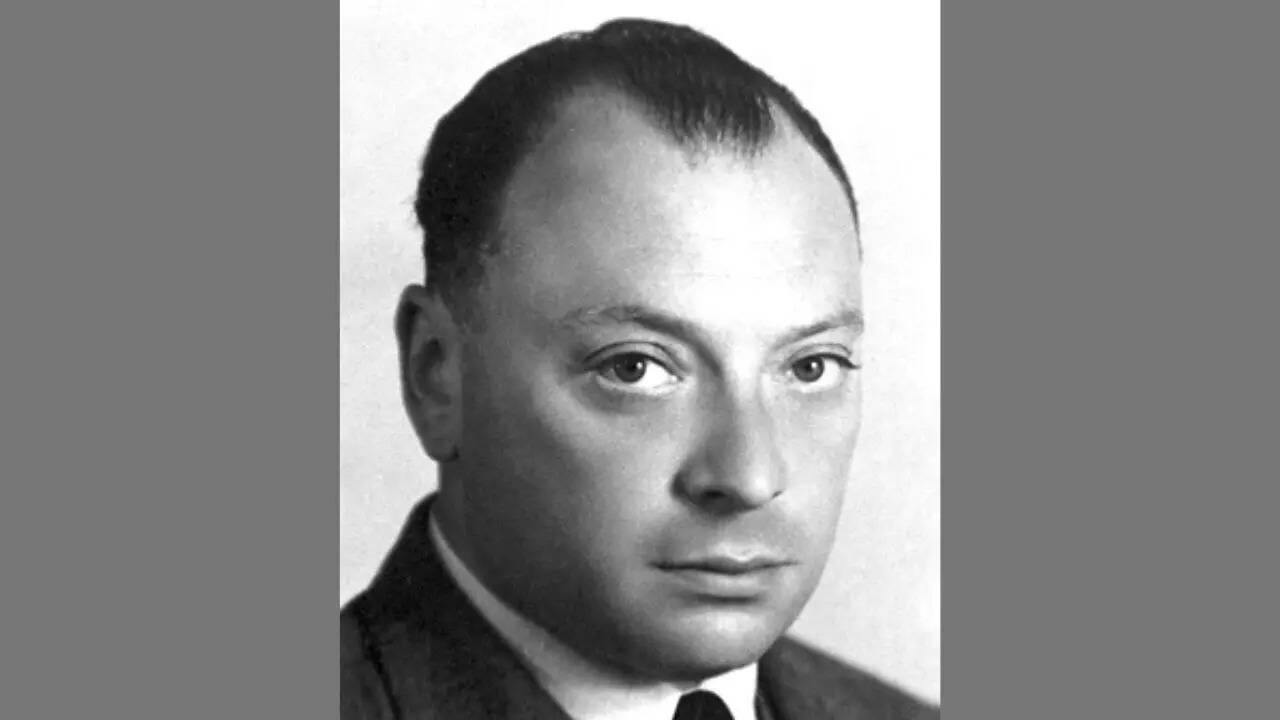
Decades before fiber-optic cables mapped the globe, a fiercely brilliant Austrian physicist paced the floors of European lecture halls, waging a private war against shallow velocity. Wolfgang Pauli was a man of agonizing precision. His peers called him the "Scourge of God" because his critiques were so devastatingly accurate they could dismantle a lifetime of sloppy research in a single sentence.
Pauli looked at the exploding world of early twentieth-century quantum mechanics and saw a dangerous trend. The field was moving fast. Brilliance was abundant, but patience was scarce. Scientists were rushing to print, eager to claim ownership over the mysteries of the atom.
During a particularly chaotic period of academic posturing, Pauli delivered a line that should be chiseled into the bezel of every smartphone and laptop on earth:
"I do not mind if you think slowly, but I do object when you publish more quickly than you think."
It was not a pedantic critique of academic publishing. It was a profound psychological warning. Pauli understood that human thought is a messy, non-linear chemical reaction. It requires incubation. When we force the output valve open before the internal pressure has cooked the raw material into something solid, we do not produce truth. We produce noise.
Think about the physical mechanics of a traditional printing press compared to a digital publish button. To print a page in Pauli’s era, a human being had to physically arrange lead type backwards on a composing stick. Every letter was a deliberate choice. The sheer physical resistance of the medium forced a gap between conception and distribution. That gap was where reflection lived.
Today, that gap has been entirely engineered out of existence. The distance between a half-formed, emotionally volatile thought and global distribution is roughly two millimeters—the depth of a laptop key press.
The Tyranny of the First Draft
We have traded accuracy for presence. In doing so, we have created a culture that suffers from chronic intellectual inflammation.
To understand how we arrived here, we have to look at the economic incentives that govern our attention. Every platform we inhabit behaves like a casino that pays out in validation. The algorithms that dictate what we see do not possess a filter for depth. They possess a filter for engagement. And engagement loves immediacy.
Imagine a writer sitting down to analyze a complex geopolitical event or a nuanced shift in macroeconomic policy. The event happens at 9:00 AM. By 9:05 AM, the first wave of commentary is already trending. These are not analyzed perspectives; they are reflexive spasms. Yet, because they are first, they capture the initial wave of human attention.
The writer who decides to spend a week reading historical precedents, interviewing experts, and revising their thesis is actively penalized by the system. By the time their deeply considered piece is ready, the digital caravan has already moved on to the next outrage.
This creates a terrifying incentive structure. It forces thinkers to become performers. It transforms carefully considered analysis into a race to the bottom of the cognitive barrel.
Let us look at the internal anatomy of a slow thought. When an idea first sparks in the brain, it is fragile. It is often wrong. It relies on cognitive biases, incomplete data, and emotional projection.
If you keep that idea internal, your brain’s default mode network begins to work on it. It collides the new idea against your existing storehouse of memories, historical facts, and counterarguments. It chips away the soft, useless edges. This process is uncomfortable. It feels like doubt. It feels like confusion.
But when you publish that first, unrefined draft of an idea to the world, something toxic happens: you commit to it.
Once an opinion is public, human psychology shifts from investigation to defense. We are tribal creatures. We do not like to admit we were wrong, especially in front of an audience. By publishing more quickly than we think, we freeze our half-baked ideas into permanent intellectual monuments. We stop growing, because to change our minds would require a public retreat.
The Art of the Intellectual Redline
The solution to this hyper-accelerated madness is not to retreat from the modern world or to throw our devices into the sea. It is to cultivate a deliberate internal friction.
We must learn to love the unuttered thought.
Consider the master watchmaker. They do not throw gears into a casing and shake it to see if it ticks. They place each component under a magnifying loupe, examining the teeth for microscopic imperfections. They understand that a fraction of a millimeter of misalignment will eventually ground the entire mechanism to a halt.
We need to treat our assertions with the same artisanal skepticism.
Before you send that email that will alter the trajectory of a project, before you post the commentary that will define your public stance on an issue, before you deploy the code that runs a system, ask the Pauli question: Has the thinking actually finished?
Or are you simply trying to relieve the anxiety of holding an unresolved thought?
The pressure to produce can feel like an existential threat. We worry that if we are quiet, the world will assume we have nothing to say. But the opposite is true. The people who command the most enduring authority are almost always those who refuse to speak until they have actually arrived at a conclusion. Their silence is not emptiness; it is a reservoir of withheld judgment.
When they finally do speak, the room goes quiet. Not because they were the loudest, or the fastest, but because the weight of their preparation is palpable in every word.
The servers will continue to hum. The notifications will continue to cascade down your screen like a digital avalanche. The world will keep demanding that you show your work before the ink is even dry.
But the next time you feel your finger hovering over that glowing green button, remember Sarah in her glass office. Remember Pauli pacing the wood floors of Copenhagen, his eyes narrowed against the flash of cheap brilliance.
Take your hand off the key. Close the tab. Let the thought sit in the dark for another night, unshared, unliked, and unvoted. Let it fight for its life against your own skepticism. If it survives the night, it might just be worth saying tomorrow.