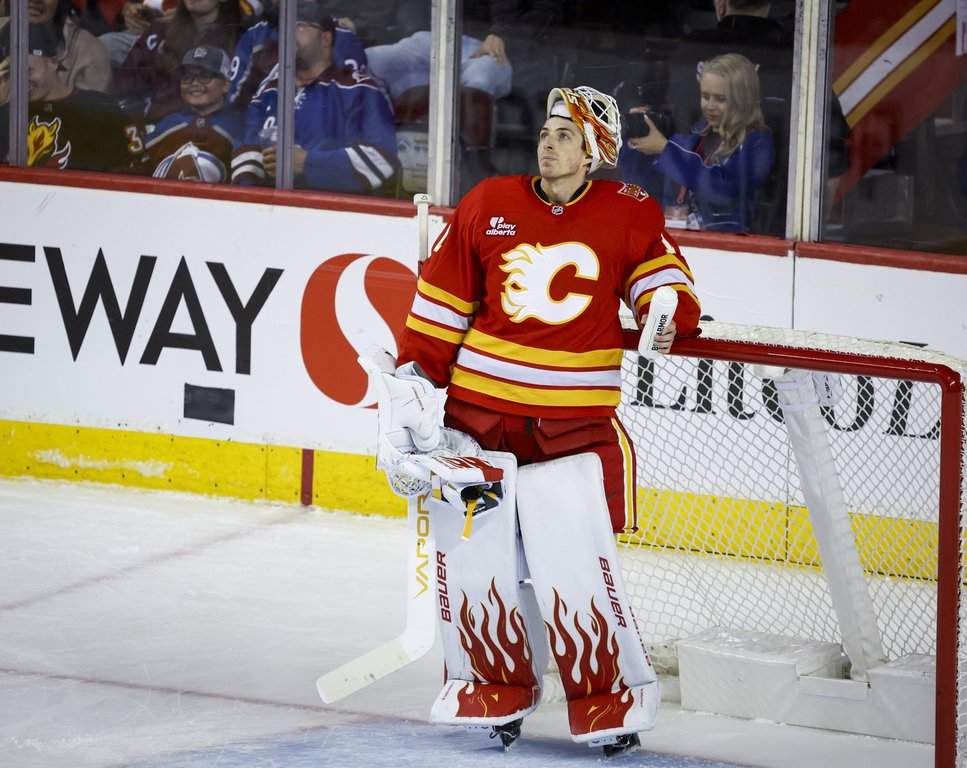
The Calgary Flames placed goaltender Devin Cooley on injured reserve, and the local hockey media immediately reached for the panic button.
Every beat writer and armchair general manager is treating this transaction like a structural failure. They are refreshing waiver wires, speculating about emergency recalls from the Calgary Wranglers, and wringing their hands over organizational goaltending depth. They look at a backup netminder hitting the shelf and see a crisis. Recently making news in this space: How to Survive and Actually Enjoy Spectating the NYC Marathon.
They are completely blind to how modern NHL roster management actually works.
When an organization in Calgary’s exact competitive window loses a depth goaltender to injured reserve, it is not a setback. It is an accidental masterclass in asset protection, cap flexibility, and developmental clarity. The lazy consensus assumes that losing a body on the active roster automatically weakens a hockey club. In reality, keeping three goaltenders on an NHL roster—or carrying a fringe NHL backup who needs fifty starts to develop—is one of the fastest ways to stall a rebuild. Additional information on this are detailed by FOX Sports.
The Myth of the "Fragile" Goaltending Pipeline
Goaltending is the most misunderstood position in professional sports, mostly because fans evaluate depth charts like they are playing a video game. They see an injury tag next to Devin Cooley’s name and assume the Flames are one tweaked groin away from forfeiting games.
Let’s look at the actual mechanics of an NHL roster. Under the Collective Bargaining Agreement, placing a player on standard Injured Reserve (IR) requires them to miss a minimum of seven days from the date of the injury. It does not remove their cap hit—that only happens with Long-Term Injured Reserve (LTIR)—but it immediately opens up a coveted 23-man active roster spot.
For a franchise navigating a transition, active roster spots are currency. I have watched NHL front offices burn millions in dead cap and lose promising waivers-eligible prospects simply because they refused to clear a logjam in the crease. When you carry three goalies, nobody gets enough practice reps. The starter loses rhythm, the backup sits cold for twelve days at a time, and the third stringer rots in the press box eating popcorn instead of facing rubber in the American Hockey League.
Cooley hitting IR instantly solves a logistical headache that general manager Craig Conroy would have otherwise had to manufacture through awkward paper transactions or risky waiver placements.
What Everyone Gets Wrong About Backup Goalie Value
If you ask ten hockey analysts what makes a successful NHL backup goaltender, nine of them will recite the exact same cliché: He needs to steal you five or six games a year and give your starter a breather.
That advice is outdated by a decade.
In the modern NHL, especially for a team that isn't built to win a Stanley Cup this spring, the primary job of a backup goaltender is not to steal points in the standings. In fact, stealing meaningless points in November and January is actively detrimental to a franchise trying to accumulate top-tier draft capital.
The real job of a depth goaltender in Calgary right now is twofold:
- Absorb low-leverage minutes so the primary netminder—specifically Dustin Wolf—isn't ground into dust before he hits his prime.
- Maintain tradeable asset value without blocking the crease for higher-ceiling prospects.
Devin Cooley is a great story. He is an athletic, 6-foot-5 late bloomer who clawed his way through the ECHL and AHL before getting cups of coffee in Buffalo and San Jose, eventually landing in the Flames organization. Fans love an underdog. Media members love a good quote, and Cooley gives great quotes.
But sentimentality loses championships. When you strip away the narrative, Cooley is a 27-year-old journeyman netminder with a limited NHL sample size and a high-variance playstyle. His aggressive depth control and reliance on raw athleticism make him fun to watch, yet those exact traits make him prone to lower-body soft-tissue injuries and erratic rebound control against elite NHL shooters.
Placing him on IR forces the Flames to stop romanticizing the depth chart and start prioritizing the only goaltender in their pipeline who actually matters to their next ten years.
The Dustin Wolf Imperative
Every decision the Calgary Flames make between the pipes must be filtered through one question: Does this help Dustin Wolf become an elite NHL starter?
If the answer is no, the decision is wrong.
Wolf has nothing left to prove in the American Hockey League. He won the Baz Bastien Memorial Award twice as the AHL's top goaltender. He won the Les Cunningham Award as league MVP. He conquered every developmental milestone you can put in front of a prospect, despite scouts constantly questioning his 6-foot-0 frame.
Yet, when an organization carries a crowded crease or leans too heavily on veteran placeholders, young starters get caught in a psychological trap. Every bad period feels like an audition. Every soft goal triggers whispers about splitting the net 50/50.
With Cooley on injured reserve, the crease belongs to Wolf without ambiguity.
Goaltending at the NHL level is 80 percent cognitive processing and spatial awareness. Unlike skaters, who can rely on muscle memory during a 45-second shift, a goalie has to read releases through traffic, track cross-ice seam passes, and manage pucks behind the net for sixty minutes straight. You cannot learn NHL pace from the bench. You only learn it by taking 35 shots a night against Connor McDavid, Nathan MacKinnon, and Auston Matthews, getting beaten clean over the shoulder, adjusting your depth by six inches the next night, and doing it all over again.
By removing Cooley from the immediate equation, Calgary removes the safety net. Wolf gets the consecutive starts required to build real NHL stamina. Even if he struggles, the coaching staff has to let him play through it rather than defaulting to a quick hook. That kind of baptism by fire is the exact crucible that forged franchise workhorses like Juuse Saros and Connor Hellebuyck.
Dismantling the "Emergency Depth" Panic
Whenever a goalie goes down, fans immediately flood social media with the same frantic questions. Let’s dismantle the most common myths circulating right now.
"Should the Flames claim a goalie off waivers?"
Absolutely not. Claiming a player off NHL waivers requires you to keep them on your 23-man active roster. If you try to send them down to the AHL later, they have to clear waivers again—and if you have a healthy roster by then, you just burned a roster spot for three weeks on a replacement-level player who has zero future in your organization. Waiver-wire goalies are on waivers for a reason: their previous team decided they couldn't stop a beach ball.
"Won't this ruin the Calgary Wranglers' season?"
If you are worried about the AHL affiliate's win-loss record when an NHL injury hits, you have lost the plot. The Wranglers exist for one purpose: to manufacture NHL players for the Flames. If recalling an AHL netminder to sit on the bench in Calgary temporarily weakens the Wranglers, so be it. Minor league standings do not hang from the rafters at the Scotiabank Saddledome.
"What if Dustin Wolf gets hurt next?"
Then the Flames lose more hockey games, call up another AHL goaltender, and improve their odds in the NHL Draft Lottery. People act as if experiencing a worst-case injury scenario during a retool is a tragedy. Look at the franchises that drafted generational talent over the last decade—Colorado, Chicago, Tampa Bay, Pittsburgh. Almost all of them suffered catastrophic, season-derailing injury clusters right before they landed the franchise-altering picks that built their dynasties.
The Brutal Reality of NHL Asset Management
I have seen general managers panic over backup goalie injuries and trade mid-round draft picks for veteran "insurance policies" in November. It is almost always a catastrophic waste of capital.
Think about what a fourth- or fifth-round pick represents to a scouting department. While the hit rate on mid-round picks is statistically low—historically hovering around 15 to 20 percent for playing 100 NHL games—those picks are the exact ammunition needed to move up in the first round on draft day, or to acquire undervalued young skaters from cap-strapped contenders at the trade deadline.
Trading a draft pick to patch a short-term IR stint for a backup goalie is like taking out a high-interest payday loan to buy a lottery ticket. You lose long-term equity to solve a temporary inconvenience.
Furthermore, let’s acknowledge the uncomfortable truth about Devin Cooley’s timeline. When a 27-year-old goaltender suffers an injury that warrants an immediate IR placement—especially one whose game relies heavily on explosive lateral pushes and deep butterfly recoveries—rushing him back is career suicide. Groin, hip, and knee strains are the silent killers of athletic goaltenders. If Cooley comes back at 85 percent mobility, his aggressive style falls apart. He gets caught out of his crease, over-slides on east-west plays, and posts an .870 save percentage that tanks whatever trade value he might have built.
Keeping him on IR protects Cooley from himself. It gives the medical staff cover to shut him down completely until his mechanics are 100 percent sound, rather than letting him dress as a compromised emergency backup.
The Hidden Downside Nobody Mentions
Contrarian takes are worthless if they ignore reality, so let’s be brutally honest about the one genuine risk here: burnout.
If Cooley’s IR stint drags from seven days into four weeks, and the Flames lean too heavily on Dan Vladar or a rotating cast of AHL call-ups, the coaching staff might be tempted to overplay Wolf. Young goaltenders are notorious for lying about fatigue. They will tell the goalie coach they feel fresh even when their legs are heavy and their glove hand is dropping half an inch.
If Calgary plays Wolf in 14 out of 16 games because they don't trust their emergency backup, they risk repeating the exact mistake organizations make when they run young starters into the ground before age 24. Fatigue doesn't just cause bad goals; it causes compensatory injuries. When a goalie's quads are exhausted, they rely on their hip flexors and groin muscles to seal the post. That is how a temporary backup injury turns into a long-term starter injury.
The solution isn't trading for a veteran. The solution is rigid workload management. Set a hard cap on Wolf’s starts per month—no more than 10 or 11—and accept whatever happens in the other four games. Even if the backup gives up five goals on 22 shots, you live with the result. You protect the Ferrari in the garage even if it means driving a rusted pickup truck in the rain.
How Smart Front Offices Exploit an IR Slot
While fans are mourning the loss of a depth piece, a sharp front office uses that open 23-man roster spot as a laboratory.
With Cooley on IR, the Flames don't even have to carry a traditional two-goalie tandem on non-game days if they want to get creative with paper transactions, though NHL rules require two dressed goalies on game nights. More importantly, it gives them the flexibility to reward an AHL netminder with NHL paychecks for two weeks—a massive morale boost in the minor leagues that signals to every prospect in the system that hard work gets noticed.
It also clarifies the trade deadline hierarchy months in advance. Every NHL contender looks for cheap goaltending depth in February and March. By giving an AHL call-up a brief showcase in NHL practices and potentially a road start against a non-playoff team, Calgary gathers real-time intelligence on what they actually have in their system. You cannot evaluate a prospect's poise until you see how he handles an NHL morning skate with twenty cameras pointed at his stall.
Stop Mourning Depth Pieces
Hockey culture is obsessed with stability. Coaches want the same lines, the same defensive pairs, and the exact same goalie rotation from October to April. Any disruption to that routine is framed as adversity.
It isn't adversity. It is an audit.
When Devin Cooley went on injured reserve, the Calgary Flames didn't lose a season-defining piece of their core. They lost a depth option whose absence forces the organization to do what it should have been doing all along: give Dustin Wolf the net, keep their draft picks in their pockets, and test the bottom of their organizational depth chart under real pressure.
Let the rest of the league panic over backup goalies. Calgary has a franchise netminder to build—and an empty roster spot to figure out who deserves to stand behind him.


