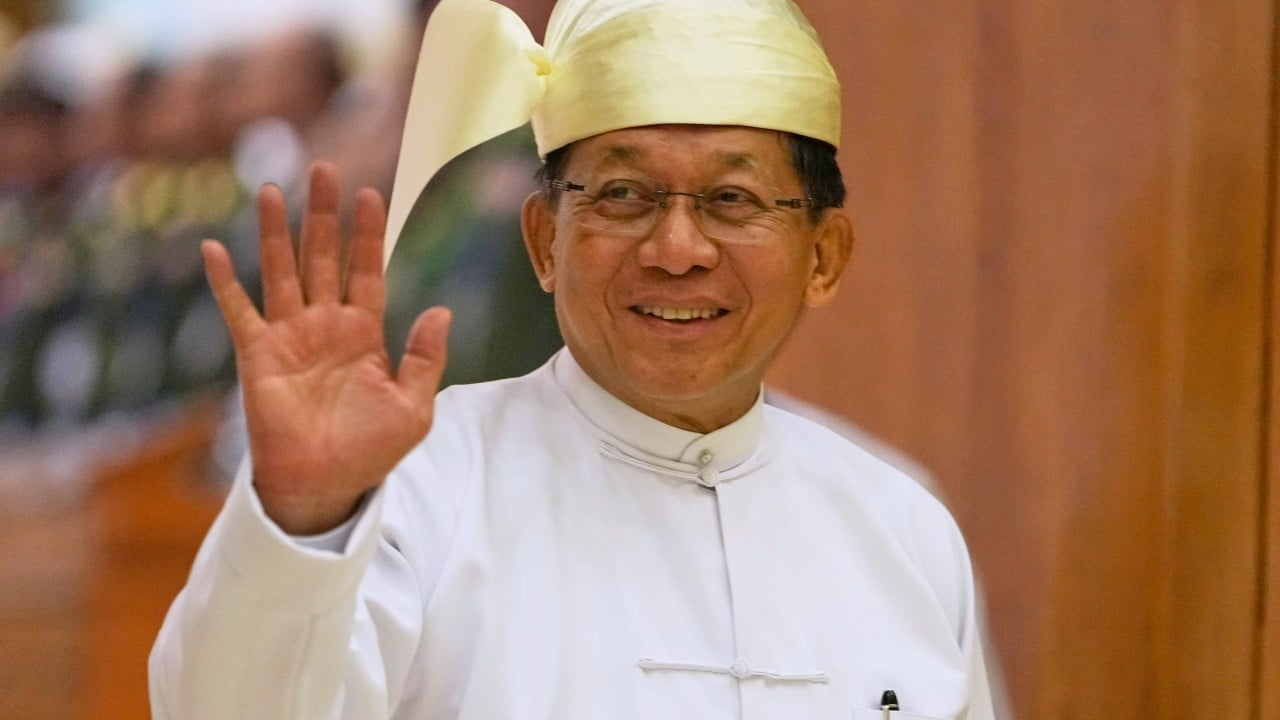
International recognition does not materialize from vacuums; it is systematically acquired through calculated institutional choreography. When U Min Aung Hlaing arrived in Bangkok for his first official state visit since assuming the presidency, observers framed the event through standard narratives of moral outrage and democratic backsliding. That surface-level interpretation obscures the operational reality. This diplomatic maneuver represents a calculated test of regional realpolitik, structured around three distinct variables: border security externalities, economic interdependence, and the institutional boundaries of the Association of Southeast Asian Nations.
To deconstruct why Naypyidaw and Bangkok are actively accelerating normalization despite intense Western opprobrium, one must evaluate the structural mechanics governing the bilateral relationship.
The Security Externality Calculus
For Thailand, managing the western border is not a matter of diplomatic preference; it is an operational necessity driven by geographic vulnerability. The civil war following the 2021 military intervention generated severe negative externalities that spill directly across the Thai frontier: refugee inflows, illicit narcotics transit, and proliferating transnational cyber-scam operations controlled by criminal syndicates embedded in border zones.
Bangkok operates under a cold strategic constraint. Ignoring the de facto administration in Naypyidaw does nothing to mitigate border instability. By hosting the Myanmar president, Thai leadership secures direct channels for operational security coordination. The cost of engaging an internationally isolated head of state is weighed against the security dividend of securing Myanmar military cooperation on border enforcement, refugee management, and the suppression of criminal enclaves.
The Mechanics of Diplomatic Laundering
A primary objective of the visit is the institutional re-entry of Myanmar's leadership into regional forums. Since the 2021 transition of power, the Association of Southeast Asian Nations has maintained a formal exclusion policy regarding Myanmar leadership at high-level summits. However, regional consensus is fracturing under the weight of pragmatic self-interest.
Thailand has assumed the mantle of primary diplomatic broker, utilizing bilateral statecraft to gradually reintegrate Naypyidaw into regional frameworks. This strategy relies on procedural normalization:
- Swapping military uniforms for civilian executive attire to satisfy formal diplomatic protocol.
- Staging national elections to establish a veneer of constitutional continuity, regardless of international skepticism regarding their administration.
- Executing high-profile humanitarian gestures, such as granting International Committee of the Red Cross access to political detainees immediately prior to international trips, designed to appease procedural critics without altering domestic security policy.
This sequence functions as a phased compliance test. By engaging with Thailand, and previously with China and India, Myanmar tests the threshold of regional tolerance, steadily narrowing the diplomatic penalty space imposed by Western actors.
Economic Gravity and Bilateral Pragmacy
Economic survival dictates political accommodation. The bilateral relationship is underpinned by critical energy infrastructure, cross-border labor migration, and bilateral trade corridors that cannot remain severed without inflicting severe domestic costs on both economies.
The Thailand-Myanmar Business Forum serves as the institutional mechanism to insulate commercial ties from political volatility. For Naypyidaw, access to Thai markets and capital represents a vital relief valve against sweeping Western sanctions. For Bangkok, maintaining commercial stability along the western corridor protects vital investments in energy extraction and logistics networks. Economic pragmatism consistently overrides normative foreign policy goals when geographic proximity forces interdependence.
The Limits of Regional Cohesion
The fundamental tension within this diplomatic push lies in the divergence between national sovereignty norms and collective regional frameworks. While Thailand pursues bilateral normalization, the broader regional bloc remains officially bound to the stalled five-point consensus. Myanmar leadership routinely accepts regional engagement while rejecting substantive internal dialogue with armed resistance forces or deposed democratic leadership.
This creates a structural impasse. Naypyidaw seeks the status of a fully normalized state actor without paying the political price of internal structural reform. Neighboring states, prioritizing immediate stability over long-term democratic governance, appear increasingly willing to accept this asymmetry.
Prioritize bilateral security pacts and direct economic engagement frameworks over multilateral normative demands to manage immediate cross-border vulnerabilities.