The air inside the committee room always smelled of damp wool and old paper. Outside, the Manchester rain lashed against tall, soot-stained Victorian windows, blurring the gray silhouettes of protesters holding cardboard signs aloft. Inside, beneath the hum of fluorescent lights, the arithmetic of modern diplomacy was being tallied.
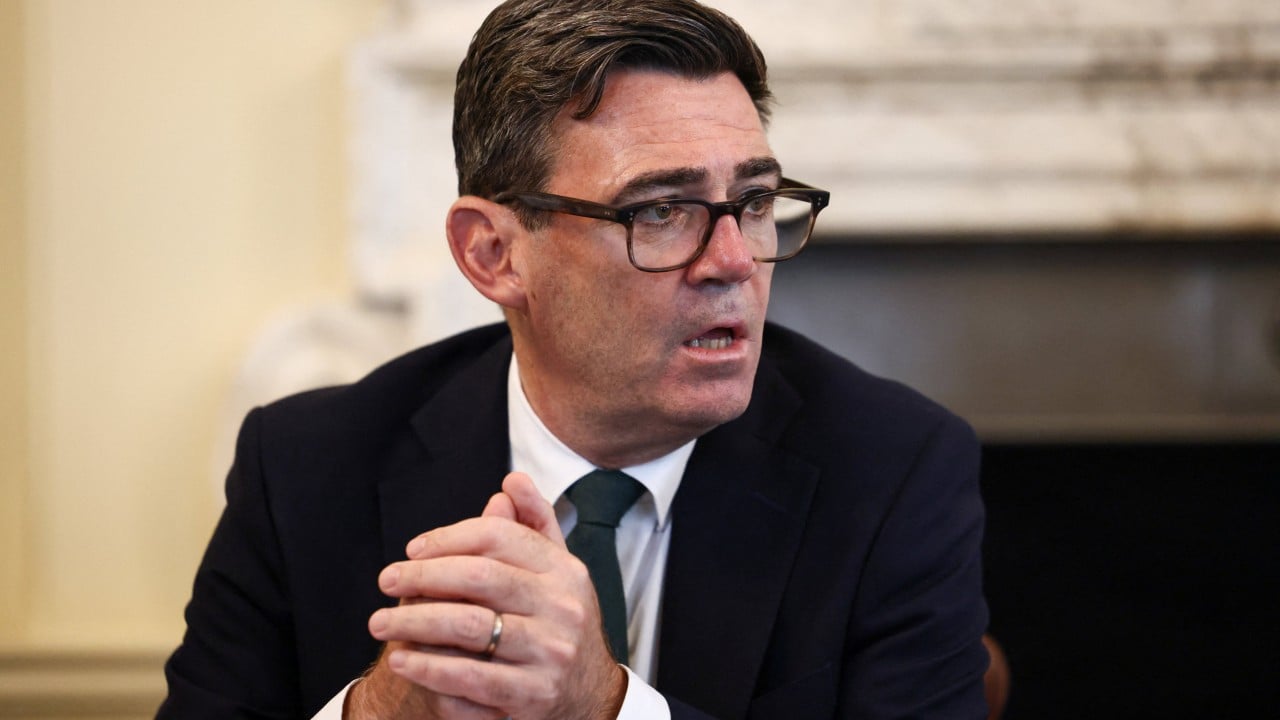
Andy Burnham sat quietly, his fingers steepled, watching the second hand of a clock sweep through another minute of high-stakes ambiguity.
Politics is often taught as a series of grand compromises struck in velvet-draped chambers. But anyone who has spent a decade inside municipal government knows the truth: power is rarely exercised in a grand gesture. It is squeezed out drop by drop, through the friction between what is morally demanded on a rainy Tuesday afternoon and what the grand capitals of the world will tolerate. On this particular afternoon, the friction point was an ocean away, housed in the gilded corridors of Washington, and the stakes were measured not in policy papers, but in real consequences for real people.
Consider what happens next when a regional leader steps past the velvet rope of municipal affairs and into the razor-wire perimeter of international geopolitics.
For months, the pressure had been mounting. Down on the cobbled pavements outside, the chants were relentless. Banners bore slogans that reduced centuries of complex, agonizing history into three-word demands. Inside, council chambers had transformed into proxies for foreign battlefields. Politicians at every level of British governance felt the ground shifting beneath their feet. Voters were no longer content with platitudes about economic growth or pothole repair. They wanted to know where their leaders stood on the morality of global commerce, on weapons exports, on human rights violations broadcasted in high definition onto every smartphone screen in the country.
Burnham, navigating the turbulent waters of regional devolution in northern England, found himself cornered by a paradox. Local leaders are expected to fix local problems—transport deserts, failing high streets, underfunded hospitals. Yet, in an interconnected world, the ripples of global conflict crash directly onto municipal doorsteps. When local pension funds hold investments tied up in defense contractors, or when municipal procurement chains touch disputed territories, the local becomes global.
To understand the weight of what came next, you have to look past the press releases and step into the mindset of an administrator staring at a spreadsheet of municipal liabilities while thousands march outside.
Sanctions are sterile words on paper. They look clean. They appear in bold headlines: New Measures Imposed. They sound like bureaucratic administrative tweaks. But as someone who has tracked the collateral damage of economic restrictions can attest, sanctions are blunt instruments. They are administrative hammers swung in dark rooms, and they rarely strike only their intended targets.
When a regional authority begins flexing its financial muscle—scrutinizing supply chains, divesting from entities implicated in human rights abuses, or enacting localized trade restrictions—it steps onto a very narrow ledge. Below that ledge lies the wrath of international alliances forged in the fires of the twentieth century.
And Washington was watching.
To the strategists across the Atlantic, the trans-Atlantic alliance is a delicate, meticulously balanced chandelier. Pull one crystal too hard, and the whole thing rattles. American administrations, regardless of party, view foreign policy as an exclusive federal franchise. When local officials begin freelancing on international sanctions, alarm bells ring in the State Department. It creates a fractured front. It invites retaliation. It risks provoking the ire of an incoming or sitting American president who views foreign economic maneuvering as an encroachment on sovereign power.
Risk. That is the word that hung over Manchester that week.
Burnham knew the arithmetic. Push too hard on moral grounds, and you invite trade retaliation, diplomatic freezes, and the quiet, punishing retribution of American trade negotiators who hold the keys to lucrative transatlantic tech and manufacturing partnerships vital to northern regeneration. Back down, and you lose the moral authority that keeps a coalition together on the ground.
(To visualize this dynamic, imagine a tightrope walker balancing not with a pole, but with two heavy buckets of water—one labeled domestic legitimacy, the other labeled geopolitical pragmatism. Every step forward risks splashing water from one bucket or the other.)
The core of the issue is not merely about one man or one city. It is about the decentralization of conscience. For decades, foreign policy was locked away in Whitehall and Foggy Bottom, treated as the exclusive domain of ambassadors in tailored suits who spoke in carefully parsed euphemisms. The digital age shattered that isolation. Today, a teenager in Salford can trace the provenance of a component part used in a military aircraft faster than a trade minister can brief a parliamentary committee.
When citizens can see the supply chain, they demand accountability at every link. And politicians, desperate to remain relevant to a hyper-aware electorate, must either run ahead of the mob or get trampled by it.
Yet, diplomacy is allergic to populism.
When news of the proposed localized restrictions filtered through diplomatic channels to Washington, the response was swift, even if private at first. The message delivered through diplomatic backchannels was unambiguous: stay in your lane. The United States does not take kindly to municipal actors playing sovereign state. The specter of Donald Trump—never one to tolerate perceived slights from foreign regional upstarts, let alone European politicians stepping on the toes of American hegemony—loomed large over the discussions. A Trump administration returning to power with grievances about burden-sharing and allied alignment would not hesitate to make an example of a rebellious northern English region.
This is where the narrative shifts from abstract political science to human endurance.
Picture a municipal trade delegation sitting in a sterile hotel conference room in Chicago six months prior, shaking hands with American aerospace executives, securing the investment needed to build a new green-energy manufacturing hub in a post-industrial town that had lost its economic anchor forty years ago. Now, picture that same delegation realizing those very investments could become collateral damage in a diplomatic turf war over Middle Eastern policy.
That is the hidden cost of conviction.
It is easy to demand moral purity from the safety of a podium. It is entirely another to look workers in the eye at a newly opened factory and explain that their jobs are hanging by a thread because local politicians decided to wage economic warfare against a foreign ally's strategic partners.
Burnham’s calculation was not made in a vacuum of pure idealism. It was a calculated, perilous gamble. By signaling a willingness to impose moral filters on regional procurement and investment, he was throwing down a marker. He was betting that the political cost of inaction—of ignoring the deep moral anguish of his electorate—was ultimately higher than the diplomatic cost of incurring Washington's wrath.
History is littered with regional leaders who tried to punch above their weight class and found themselves flattened by the heavy machinery of nation-states. From the Hanseatic League to modern regional devolution, the tension between local autonomy and central foreign policy is as old as trade itself.
As the rain finally eased over Manchester, leaving the streets gleaming under the pale afternoon sun, the press gathered outside the civic center. Microphones bristled like steel reeds. Cameras clicked in a frantic, synchronized rhythm.
Burnham stepped up to the lectern. He adjusted his notes. He didn't offer a soaring, revolutionary call to arms, nor did he retreat into bureaucratic silence. Instead, he spoke measured words about values, responsibilities, and the inescapable interconnectedness of our choices.
The storm clouds over Washington had not parted. The transatlantic alliance remained tense, brittle, waiting to see how far regional defiance would go. But inside that room, the line had been drawn. Not with a sword, but with the quiet, stubborn persistence of a man who realized that in the twenty-first century, no town is too small to escape the world, and no leader is safe from its judgment.