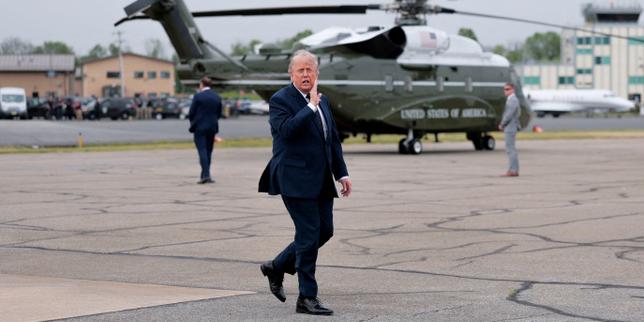
Donald Trump says a deal with Iran is close. Critics call it bluster. Supporters call it a masterstroke. The reality is likely somewhere in the messy middle of Middle Eastern geopolitics and high-stakes ego. During a recent campaign stop, the former president made it clear that he isn't looking for a permanent shadow war with Tehran. He wants a signature. He wants a deal. And he thinks he’s the only one who can get it.
This isn't just about rhetoric. The Middle East is currently a powderkeg. With the war in Gaza continuing to boil and tensions between Israel and Hezbollah reaching a breaking point, the specter of a direct Iranian involvement looms over everything. Trump’s claim that an agreement is "very close" suggests a shift back toward his "maximum pressure" campaign—but with a twist. He’s looking for the exit ramp.
The Art of the Iranian Pivot
Most people think Trump just wants to crush the Iranian economy. They’re half right. While the 2018 withdrawal from the JCPOA (Joint Comprehensive Plan of Action) was a hammer blow to Tehran, the goal wasn't just destruction. It was leverage. Trump’s philosophy is simple: you break the old agreement to force a better one.
Why would Iran talk now? Their economy is in shambles. Inflation is rampant. The rial has lost staggering amounts of value against the dollar. Tehran knows that a second Trump term would likely mean even tighter sanctions and zero tolerance for oil smuggling to China. For the Ayatollah, a deal might be the only way to keep the regime from collapsing under its own weight. It’s a survival play.
If you look at the history of Trump’s foreign policy, he loves the "big stage" moment. We saw it with Kim Jong Un. We saw it with the Abraham Accords. He wants a grand bargain that his predecessors couldn't reach. He doesn't want a "forever war." He wants a signed piece of paper that says he fixed what Obama and Biden couldn't.
What a New Agreement Would Look Like
Forget the old 2015 deal. That’s dead. Any new agreement under a Trump administration would have to go much further to satisfy his base and his allies in Jerusalem and Riyadh.
First, the "sunset clauses" have to go. The biggest Republican gripe with the original deal was that it had an expiration date. Trump will demand permanent restrictions on uranium enrichment. He’ll want "anytime, anywhere" inspections by the IAEA. He isn't going to settle for the limited access that defined the previous decade.
Second, the missiles. The JCPOA ignored Iran’s ballistic missile program. That was a massive oversight. You can't talk about nuclear warheads without talking about the rockets that carry them. Trump has signaled that any "real" deal must include limits on Tehran's regional reach.
Third, the "proxy" problem. Iran spends billions funding groups like Hamas, Hezbollah, and the Houthis. This is the hardest part to negotiate. How do you tell a revolutionary state to stop being revolutionary? You don't. You make the cost of funding those groups so high that they have to choose between a militia in Lebanon or bread in Tehran.
Why Israel and Saudi Arabia Are Watching Closely
Israel doesn't trust Iran. That’s an understatement. Prime Minister Netanyahu has spent years warning that Tehran is minutes away from a "breakout" capacity. If Trump pushes for a deal, he’ll have to balance it with the security concerns of his closest regional ally.
Saudi Arabia is the other piece of the puzzle. The Kingdom has been quietly exploring its own path toward normalization with Israel, but that’s contingent on security guarantees against Iranian aggression. A Trump-led deal with Iran could actually accelerate the expansion of the Abraham Accords. If the "head of the snake" in Tehran is neutralized via a diplomatic pact, the rest of the region might finally fall into a new, more stable alignment.
The Risks of Overpromising
Is a deal actually "close"? Probably not in the literal sense. There are no diplomats in secret rooms right now swapping drafts. When Trump says it’s close, he’s talking about the conditions for a deal. He’s saying the pressure is so high that Iran has no choice but to fold.
But Iran is a master of the long game. They’ve survived decades of sanctions. They’ve built a "resistance economy" that, while battered, still functions. They might just try to run out the clock. If they think they can wait for a different administration or a different geopolitical shift, they’ll take it.
There’s also the risk of a "bad" deal. Critics on the right worry that Trump might be so eager for a win that he accepts a superficial agreement. A deal that gives Iran billions in sanctions relief without truly dismantling its nuclear infrastructure would be a disaster. It would just fund the next round of regional chaos.
Navigating the Volatility
If you’re trying to make sense of the headlines, watch the oil markets. They’re the most honest indicator of what’s happening. If traders start betting on an Iran deal, prices will drop as Iranian crude officially returns to the global market.
Watch the rhetoric from the IRGC (Islamic Revolutionary Guard Corps). They’re the ones who benefit from conflict. If they start getting sidelined by the "reformist" or pragmatic elements in Tehran, that’s a sign that the regime is serious about talking.
Don't expect a smooth process. It’ll be messy. There will be threats, walkouts, and aggressive tweets. That’s the Trump playbook. He’ll bring them to the brink, then offer a handshake. Whether the Ayatollah takes it is the biggest gamble in modern diplomacy.
Keep an eye on the upcoming election cycles both in the US and the internal shifts in Iran. The window for this kind of "grand bargain" is narrow. If it doesn't happen in the first 18 months of a potential new term, it probably won't happen at all. The pressure is on, the stakes are nuclear, and the world is waiting to see who blinks first.
Prepare for more volatility in the defense and energy sectors as these negotiations play out in public. It's going to be a bumpy ride, but the payoff could redefine the Middle East for a generation. Pay attention to the specific demands regarding "breakout time"—that’s the metric that actually matters for global security. Any deal that doesn't push that time back by years is just a temporary bandage on a sucking chest wound.