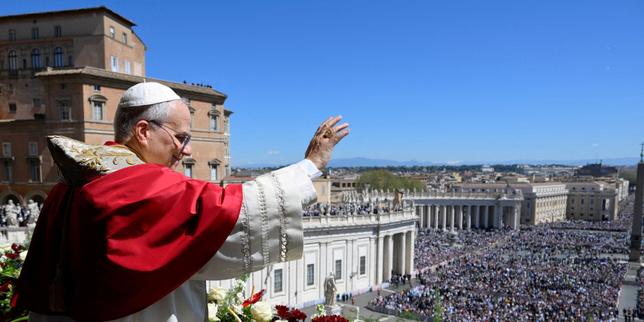
The friction between the White House and the Vatican just hit a boiling point that nobody saw coming. Donald Trump isn't holding back anymore. He's openly targeting Pope Leo XIV, and the rhetoric is getting nasty. "I don't want a pope who criticizes the President of the United States," Trump recently declared. It’s a blunt, aggressive stance that draws a line in the sand between national sovereignty and global moral authority. This isn't just a spat over a single policy. It's a fundamental collision of two worldviews that cannot coexist.
When a sitting or former president decides to take on the leader of the Catholic Church, the stakes move beyond simple politics. It becomes a battle for the soul of the electorate. Trump's "America First" platform is hitting a wall of "Humanity First" from the Vatican. Leo XIV has been vocal about social justice, climate change, and migration—areas where Trump’s base feels the most under threat. The tension was inevitable, but the current volume of the attacks is unprecedented.
Why the Trump and Leo XIV Feud Matters Right Now
You might think this is just two powerful men ego-tripping. It's not. This represents a massive shift in how religious authority interacts with modern populism. For decades, the GOP relied on a solid relationship with religious leaders to secure the "values voter." But Leo XIV isn't playing by the old rules. He isn't interested in the culture wars that defined the 80s and 90s. He’s pushing a globalist, humanitarian agenda that feels like a direct critique of Trump’s nationalist policies.
Trump sees this as an interference in American domestic affairs. His logic is simple. He believes the leader of a foreign city-state shouldn't have a say in how the U.S. secures its borders or manages its economy. When the Pope speaks out against walls or suggests that isolationism is a moral failing, Trump views it as a political hit job dressed up in liturgical robes. He’s telling his supporters that the Pope has stepped out of his lane and into the political arena.
The Border Dispute that Started it All
The core of the animosity usually traces back to the border. Trump made the wall his signature promise. Leo XIV made welcoming the stranger his signature sermon. These two positions are fundamentally irreconcilable. When the Vatican issues statements suggesting that building walls is "not Christian," it’s a direct shot at the heart of Trumpism.
Trump’s response is classic Trump. He doesn't go for a nuanced theological debate. He goes for the throat. By questioning the Pope's right to criticize a world leader, he’s appealing to a sense of American exceptionalism. He’s basically saying, "We don't take orders from Rome." It’s a powerful narrative for a base that already feels like global elites are trying to run their lives.
The Strategy Behind the Virulence
Trump doesn't do anything by accident when it comes to branding his enemies. By attacking the Pope, he’s actually consolidating his power among a specific subset of voters. Many conservative Catholics and evangelicals in the U.S. actually feel more aligned with Trump’s policy goals than with the Pope’s recent encyclicals. They see a gap between their local church experience and the rhetoric coming out of the Vatican.
- Nationalism vs. Globalism: Trump frames the Pope as a globalist elite who doesn't understand the "real" problems of working-class Americans.
- The Sovereignty Play: He insists that American interests must always come before the "vague" moral suggestions of international leaders.
- Media Mastery: These attacks dominate the news cycle. Every time the Pope responds or a Bishop issues a "deeply concerned" statement, Trump gets exactly what he wants—a clear enemy to fight against.
It’s a high-risk gamble. The Catholic vote is huge in swing states like Pennsylvania and Wisconsin. If Trump alienates moderate Catholics, he loses the math. But he’s betting that his supporters will choose their political identity over their religious one. Honestly, looking at the polling data from the last few cycles, he might be right. People are increasingly loyal to their "tribe" over their traditional institutions.
Addressing the Critics of the Pope
Within the Church itself, there’s a growing faction that actually agrees with Trump. They won't say it as loudly, but they feel Leo XIV has moved too far to the left. They worry about the "politicization" of the papacy. This gives Trump cover. He can claim he’s not attacking the faith, but rather a "political" Pope. It's a distinction that his supporters lean on heavily.
Leo XIV hasn't backed down, though. He’s doubled down on his critiques of wealth inequality and environmental neglect. He sees his role as a "disturber of the peace" in a world he believes is losing its way. He doesn't care about American election cycles or the fragile egos of politicians. That’s what makes him so dangerous to a leader like Trump. You can't primary the Pope. You can't vote him out. You can only try to discredit him.
The Impact on the 2026 Political Landscape
As we move deeper into 2026, this conflict will likely escalate. Expect more "truth" posts and rally speeches where the Vatican is framed as part of the "deep state" or the globalist cabal. The language will get sharper. Trump’s "virulence" is a feature, not a bug. It’s designed to force people to pick a side. You’re either with the "America First" movement or you’re with a foreign religious leader who wants to "open the borders."
The Vatican’s diplomatic corps is in a tough spot. Usually, they prefer back-channel discussions and quiet diplomacy. But Leo XIV is a different kind of leader. He’s comfortable with the megaphone. If Trump continues to call him out by name, expect the Vatican to become even more specific in its critiques of nationalist policies. It’s a feedback loop of escalation that leaves no room for middle ground.
How Voters are Reacting to the Rhetoric
The data shows a massive divide. Younger voters often find the Pope’s message on climate and equality refreshing, even if they aren't religious. On the flip side, older, more conservative voters are increasingly skeptical of Rome. They see the Church’s focus shifting away from the issues they care about, like traditional family structures and religious freedom, and toward "secular" issues like immigration.
Trump is tapping into this resentment. He’s telling these voters that their instincts are right. He’s giving them permission to be angry at the Pope. That’s a powerful psychological tool. When you tell someone they don't have to listen to an authority figure they’re already frustrated with, you win their loyalty.
Breaking Down the Sovereignty Argument
Trump’s argument that "I don't want a pope who criticizes the President" is effectively a call for a return to Westphalian sovereignty. This is the idea that the ruler of a territory has total authority over its internal affairs, including religious ones. It’s an old-school approach that clashes violently with the modern idea of international human rights.
The Pope, however, argues that moral laws transcend national borders. If a country’s policy is—in his view—immoral, he believes he has a duty to speak up. It’s the ultimate "unstoppable force meets an immovable object" scenario. Trump wants a chaplain who blesses his decisions; Leo XIV wants to be a prophet who challenges them.
What Happens Next in This Power Struggle
Don't expect a handshake or a photo op anytime soon. The bridge is burned. Trump will continue to use the Pope as a foil to prove his "toughness" against international influencers. He’ll frame any critique from Rome as a badge of honor, proof that he’s doing exactly what he promised his base.
For the average observer, the best way to handle this is to look past the headlines and see the underlying strategy. Trump is building a fortress around his nationalist identity. He’s making it clear that no office, not even the Papacy, is above his "America First" mandate.
If you're following this closely, keep an eye on the following:
- Swing State Policing: Watch how Catholic leaders in the Midwest react. Their "guidance" to their flocks will be the real indicator of whether Trump's strategy is working.
- Vatican Appointments: See if Leo XIV starts appointing more American bishops who are openly critical of the populist movement.
- Rally Rhetoric: Listen for when Trump moves from attacking the "person" to attacking the "institution." That’s when you’ll know the situation has shifted from a feud to a full-scale cultural war.
The days of quiet respect between the White House and the Holy See are over. We’re in a new era where even the most sacred figures are fair game in the quest for political dominance. Get used to the noise—it’s only going to get louder.