The long-standing security architecture of South Asia is cracking under the weight of a failed gamble. For decades, Pakistan’s military and intelligence apparatus viewed the Afghan Taliban as a strategic asset—a way to ensure "strategic depth" and keep a friendly, or at least compliant, regime in Kabul. That illusion has vanished. Recent statements from Islamabad regarding ongoing operations against militants underscore a grim reality: the line between the Afghan Taliban and the Pakistani Taliban (TTP) has effectively disappeared.
Pakistan finds itself in a precarious cycle of kinetic military operations that target the symptoms rather than the disease. While government ministers announce "continued operations" with a sense of bureaucratic inevitability, the ground reality is a messy, violent spillover from a border that remains porous despite billions spent on fencing. The surge in terror attacks within Pakistan’s borders is not a random spike. It is the direct consequence of a neighbor that no longer feels the need to take orders from its former patrons.
The Myth of the Controlled Border
The Durand Line was never just a map coordinate. It is a scar across a tribal heartland where kinship often outweighs national identity. When the Taliban took Kabul in 2021, the celebration in Islamabad was loud, but it was remarkably short-sighted. Officials expected the new regime to restrain the TTP, the domestic insurgent group responsible for thousands of Pakistani deaths. Instead, the Afghan Taliban opened prison doors, releasing TTP commanders who immediately turned their sights back on the Pakistani state.
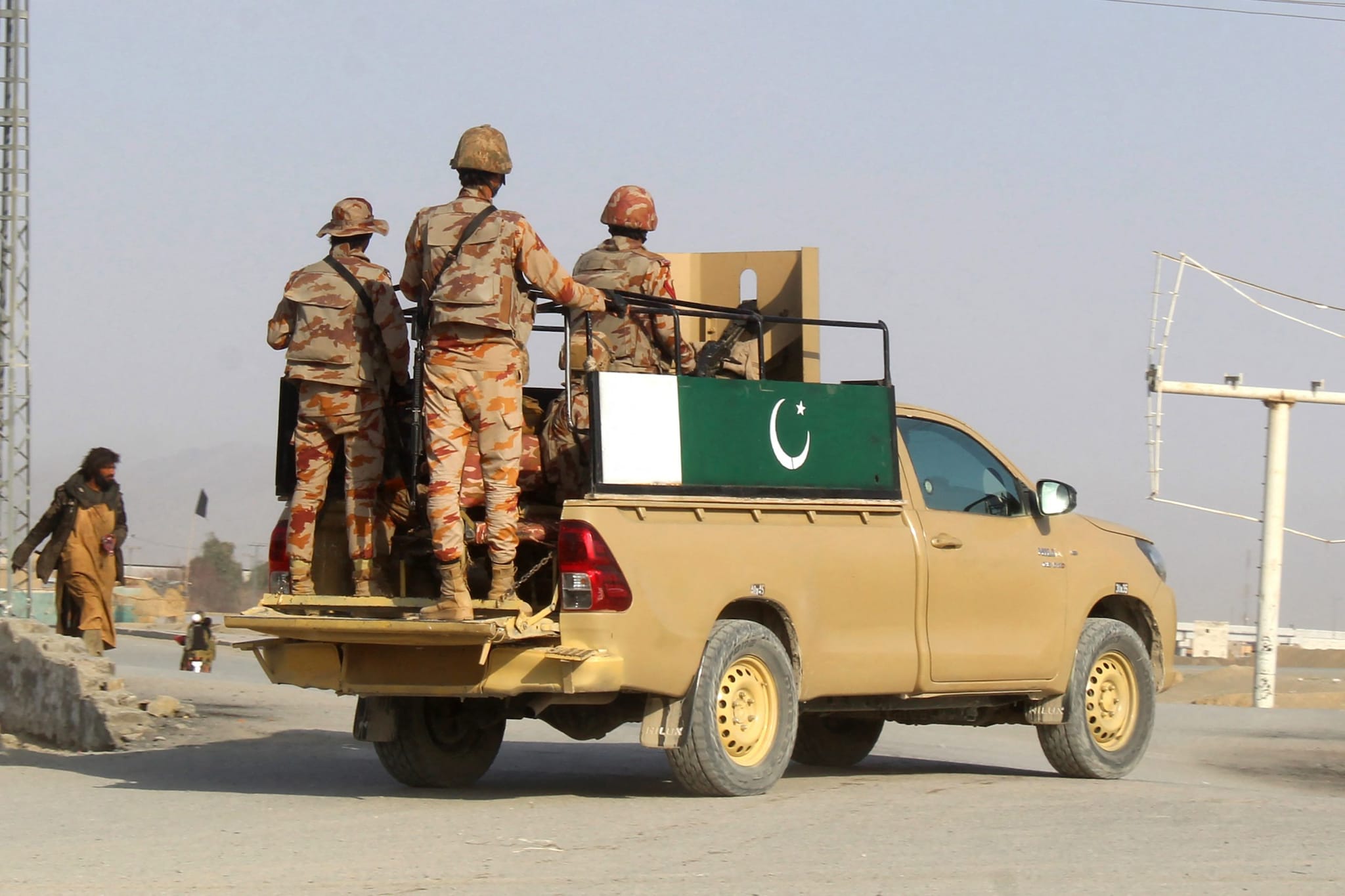
Current operations are focused on the "Khyber Pakhtunkhwa" and "Balochistan" provinces, where the frequency of ambushes on security forces has reached levels not seen in a decade. The military is engaging in intelligence-based operations (IBOs) daily. However, these are defensive measures. They are tactical wins in a losing strategic environment. You cannot secure a house when the neighbor is allowing arsonists to use their backyard as a staging ground.
The Pakistani leadership is now forced to admit what analysts warned about for years: the Afghan Taliban and the TTP are two sides of the same coin. They share the same ideology, the same recruits, and the same historical grievances. By supporting one, Pakistan inadvertently nourished the other.
The Economic Cost of Forever Operations
War is expensive, and Pakistan is broke. The country is currently navigating a treacherous path with the International Monetary Fund (IMF), trying to keep a struggling economy from total default. Constant military mobilization in the northwest drains resources that the treasury simply does not have.
Every billion rupees spent on a new offensive in North Waziristan is a billion rupees not spent on infrastructure or industrial subsidies. Investors hate instability. The persistent threat of suicide bombings and targeted killings in urban centers like Peshawar and Quree has chilled foreign direct investment. It is a feedback loop of misery: poverty breeds recruitment for militancy, and militancy prevents the economic growth needed to alleviate poverty.
The government’s rhetoric about "continuing operations" aims to project strength to a nervous public. Yet, the public sees the mounting casualties. They see the funerals of young soldiers returning to villages in Punjab and Sindh. There is a growing sense of fatigue. The "clear, hold, build" strategy of previous decades has failed at the "build" stage because the "clear" stage never truly ends.
A Diplomatic Dead End
The diplomatic lever is stuck. Pakistan has repeatedly presented "evidence" to the interim Afghan government regarding TTP hideouts in provinces like Khost and Kunar. The response from Kabul has shifted from polite denial to open defiance. The Afghan Taliban, now a sovereign government with billions of dollars’ worth of abandoned American military hardware, no longer sees itself as a junior partner to Pakistan’s Inter-Services Intelligence (ISI).
In fact, the Taliban in Kabul are using the TTP as leverage. It is a reversal of the old dynamic. By keeping the TTP active, the Afghan Taliban ensures that Pakistan remains distracted and desperate, preventing Islamabad from exerting too much pressure on Kabul’s internal affairs. This is the "Frankenstein’s Monster" scenario of geopolitics.
- Weaponry: The proliferation of M4 carbines and advanced night-vision goggles—remnants of the US withdrawal—has given militants a technological edge over local Pakistani police units.
- Sanctuary: The geography of the border regions provides a natural fortress that no amount of drone surveillance can fully penetrate.
- Ideology: The victory of the Taliban over a global superpower in 2021 served as a massive propaganda win, radicalizing a new generation of fighters who believe the Pakistani state is the final obstacle to a regional caliphate.
The Intelligence Gap
The biggest failure isn't on the battlefield; it is in the hallways of power. There was a fundamental misreading of the Taliban’s DNA. The Pakistani establishment believed the Taliban were nationalists who would prioritize the Afghan state’s stability. They aren't. They are pan-Islamist revolutionaries whose primary loyalty is to their version of divine law, not to Westphalian borders.
As the operations continue, the focus has shifted toward "repartition." This involves moving TTP fighters away from the border, a proposal that has been met with deep skepticism in Pakistan. Moving a wolf from the front porch to the backyard doesn't make the house any safer. It only changes the direction of the attack.
The military is now stuck in a high-stakes game of whack-a-mole. When they strike in one district, the militants melt across the border. When the heat dies down, they return. This creates a state of permanent low-level insurgency that bleeds the state dry without ever reaching a definitive conclusion.
The Balochistan Complication
While the northern border burns, the southern province of Balochistan is seeing a different, yet related, fire. Secular Baloch separatists have occasionally formed tactical alliances with religious militants. Their common enemy is the Pakistani state. This "marriage of convenience" between polar opposite ideologies is a nightmare for security planners.
The ongoing operations must now account for a two-front internal war. The security forces are stretched thin, guarding Chinese-funded CPEC (China-Pakistan Economic Corridor) projects while simultaneously fighting insurgents in the mountains. China, Pakistan’s "all-weather friend," is losing patience. Beijing’s demands for better security for its workers put even more pressure on an already exhausted military.
A New Doctrine of Necessity
The old playbook is shredded. Pakistan can no longer afford to distinguish between "good" and "bad" militants. The distinction has proven fatal. A new doctrine is emerging, one that prioritizes internal security over external influence, but implementing it requires a level of political stability that the country currently lacks.
Internal political squabbles in Islamabad further complicate the mission. When the government and the opposition are at each other's throats, the national narrative on counter-terrorism becomes fragmented. Militants thrive in the silence left by a divided government.
The operations will continue because there is no other choice. A state that cannot protect its citizens or its borders ceases to be a state. However, the reliance on kinetic force alone is a proven failure. Without a total overhaul of the country’s foreign policy toward Afghanistan and a serious attempt at de-radicalization at home, the military will be fighting this same war ten years from now.
The era of using proxies to manage neighbors is over. The proxies have become the masters, and the "strategic depth" has become a strategic graveyard. Pakistan's leaders must decide if they are willing to burn the bridge to the past to save the future of the country.
Stop looking for a quick victory. There is no "Mission Accomplished" banner waiting at the end of this tunnel. The only path forward is a grueling, multi-decade commitment to border integrity and the painful admission that the policies of the last forty years were a catastrophic mistake.
Demand a transparent accounting of the cost of these operations and the strategic failures that made them necessary. Without public oversight and a shift in fundamental strategy, the "continued operations" are merely a funeral march for a dying policy.