Every time a new poll drops in Taipei showing that nearly half the population doubts Washington will bleed for the island, international relations nerds lose their minds. Panic spreads across think tanks in Washington, cable news anchors clutch their pearls, and pundits diagnose a terminal rot in Taiwanese morale. They treat the poll like a barometer of betrayal. They assume that if confidence in the American security guarantee drops, deterrence is collapsing.
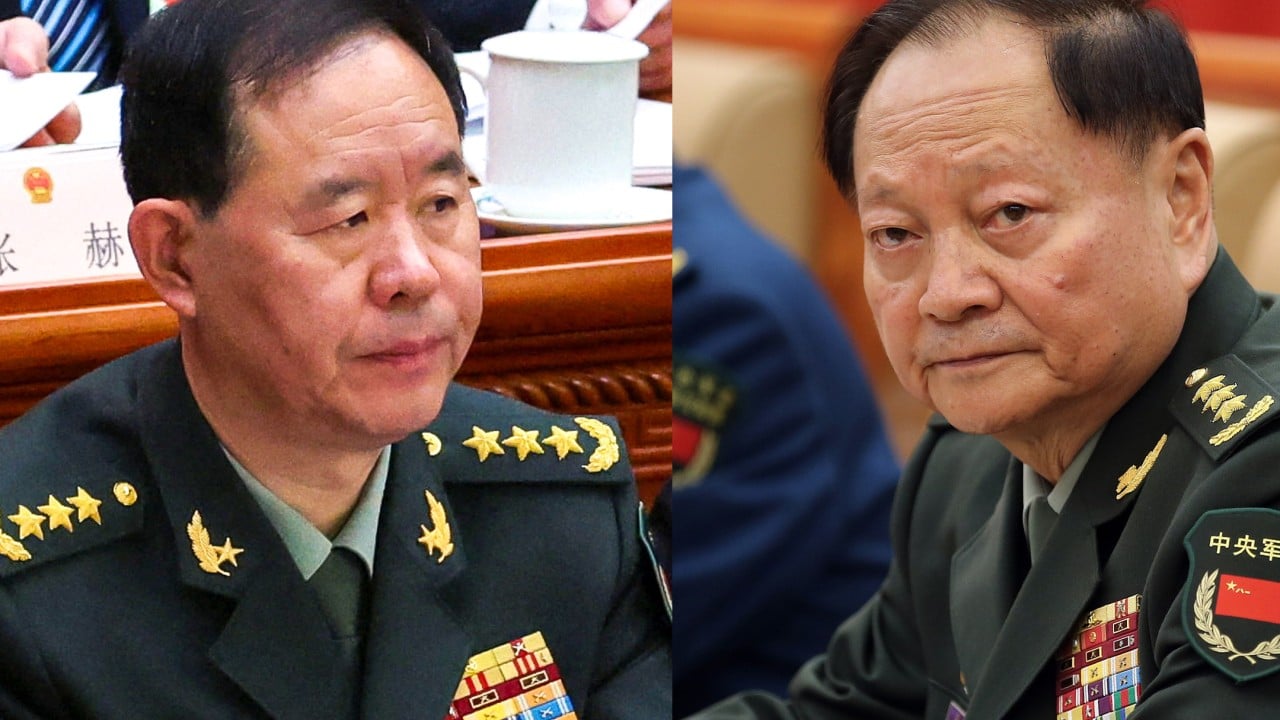
They are entirely, dangerously wrong. Also making headlines lately: Why Beijing is Purging Its Top Military Brass Right Now.
That skepticism isn't a sign of cowardice or strategic failure. It is the sound of a population waking up from a dangerous geopolitical fairy tale.
I have spent years watching defense analysts treat bilateral security treaties like marriage vows, assuming that pieces of paper and congressional speeches can override cold, hard geographical math. They measure deterrence in warm fuzzies and public opinion percentages. But when you spend time talking to people actually living under the shadow of the Taiwan Strait, you realize that trusting a hyper-polarized superpower thousands of miles away isn't a strategy. It's a prayer. And relying on prayers in modern military planning gets cities leveled. Further information into this topic are covered by Associated Press.
Let us strip away the diplomatic varnish and look at what that poll actually measures. It does not measure a lack of courage. It measures a surplus of common sense.
The Fatal Flaw of the Security Blanket
For decades, Taiwan’s political establishment operated under a comforting delusion. The script was simple: Taipei buys expensive second-hand hardware, Washington issues stern warnings in diplomatic cables, and everyone pretends that the Seventh Fleet will materialize over the horizon like the cavalry in a western film the second trouble starts.
This dynamic created a moral hazard of epic proportions. It allowed successive administrations in Taipei to underfund domestic defense infrastructure, drag their feet on painful reserve force reforms, and treat national security as an insurance policy paid for by American taxpayers and blood. Why build a truly indigestible porcupine defense when you can outsource your survival to a distant republic whose attention span is shorter than a social media video clip?
When Taiwanese citizens look at Washington today, what do they see? They see a political system careening from one self-inflicted crisis to the next. They see a Congress paralyzed by partisan warfare, a national debt eclipsing thirty-four trillion dollars, and an electorate increasingly exhausted by foreign entanglements. To look at that chaotic legislative circus and hand over a blank check of absolute trust is not loyalty. It is negligence.
When forty-odd percent of a population says they doubt America will show up, they are not expressing despair. They are stating a self-evident truth about great-power politics. Empires do not fight wars out of charity; they fight them out of cold, unvarnished national interest. If the cost of intervention threatens to eclipse the value of the asset being defended, any rational hegemon hesitates. Pretending otherwise is how smaller nations end up as smoking craters while their distant allies debate the legal definitions of aggression in air-conditioned committee rooms.
The Porcupine That Refused to Grow Spines
Let us address the military reality on the ground, because the conversation in Washington completely ignores the tactical mechanics of the theater.
The prevailing defense orthodoxy insists on the porcupine strategy—turning the island into a bristling fortress of mobile, distributed, survivable anti-ship and anti-air munitions that make an amphibious invasion economically prohibitive for Beijing. It is a brilliant concept on paper. It relies on asymmetric warfare, decentralized command, and the absolute saturation of the strait with things that go boom.
There is just one problem. For years, the Taiwanese military establishment resisted it. For generations, generals raised on heavy armored divisions and gleaming fighter jets clung to legacy platforms. They wanted big capital ships and prestige fighter wings—things that look magnificent in military parades but would burn at their piers in the opening twenty minutes of a conflict.
Conscription was hollowed out into a four-month joke that taught young men how to sweep floors rather than operate anti-tank guided missiles. Reserve training was a paper exercise. Only under intense, bruising pressure from American planners did Taipei finally begin extending mandatory service and shifting procurement priorities toward distributed lethality.
When citizens watch their own military struggle with recruitment, antiquated training pipelines, and bureaucratic inertia, their skepticism of external rescue grows sharper. They know that if your own house is built of matchsticks, hoping the fire department drives fast from across the ocean is a terrible retirement plan. The lack of confidence in Washington is a mirror reflecting the historical lack of urgency in Taipei.
The Brutal Calculus of the Proxy Trap
There is another layer to this anxiety that elite strategists love to sweep under the rug. It is the fundamental dread of becoming a battlefield rather than a beneficiary.
In Washington, defense intellectuals talk about the Taiwan Strait with a clinical, academic detachment. They model attrition rates, compute missile expenditures, and game out semiconductor supply chain disruptions over artisanal coffee. To them, Taiwan is a strategic node on a global chessboard, a critical chokepoint in the first island chain that must be held to contain authoritarian expansion.
To the person sitting in a Taipei high-rise or tilling a field in Yunlin, that same conflict looks entirely different. It looks like total societal destruction. It looks like twenty-three million people caught in the grinding gears of a modern industrial war between nuclear-armed superpowers.
Even if the United States wins a hypothetical naval war in the strait—sinking the invading fleet and breaking the blockade—what is left of the island? The infrastructure reduced to rubble, the economy vaporized, the semiconductor foundries molten slag, and the population decimated. Victory, under those conditions, looks remarkably like defeat.
When half the population expresses doubt about American commitments, part of that calculation is a visceral understanding of what total war actually entails. They are not just asking whether the US Navy will sail across the Pacific. They are asking whether the cure is worse than the disease. That is not defeatism. That is survival instinct operating at peak efficiency.
Rewriting the Playbook for Survival
So, what happens when we stop treating public anxiety as a public relations problem to be managed by embassies and start treating it as a diagnostic tool?
The entire framework of the debate needs to be detonated. We must stop measuring Taiwan's security by how much faith the public places in foreign declarations. Faith is a poor substitute for ordnance.
First, Taipei must accelerate the transition to genuine asymmetric defense with terrifying speed. Every village, every highway interchange, and every coastline must be integrated into a resilient, decentralized defense architecture that does not depend on central command survival. The goal must not be to convince Beijing that America will intervene. The goal must be to convince Beijing that an invasion is impossible to digest, period, regardless of what Washington does or does not do.
Second, Washington must stop treating Taiwan as a charity case or a geopolitical pawn in a congressional messaging war. If the United States intends to deter aggression, it needs to stop relying on strategic ambiguity—which has become an excuse for strategic incoherence—and start prepositioning massive stockpiles of munitions, hardening logistics networks, and integrating command structures before the shooting starts. Stop talking about resolve and start shipping hardware.
Most importantly, we need to stop treating skepticism as a pathology. A skeptical population is a discerning population. When people stop believing that a foreign superpower will ride to their rescue on a white charger, they demand better of their own leaders. They demand rigorous defense budgets, honest threat assessments, and real military readiness.
The poll that terrified the pundits is actually the healthiest thing to happen to Taiwanese strategic thinking in decades. Illusions of rescue are a luxury for the naive. Real security is forged in the cold, clear recognition that nobody is coming to save you, which means you have no choice except to become impossible to destroy.