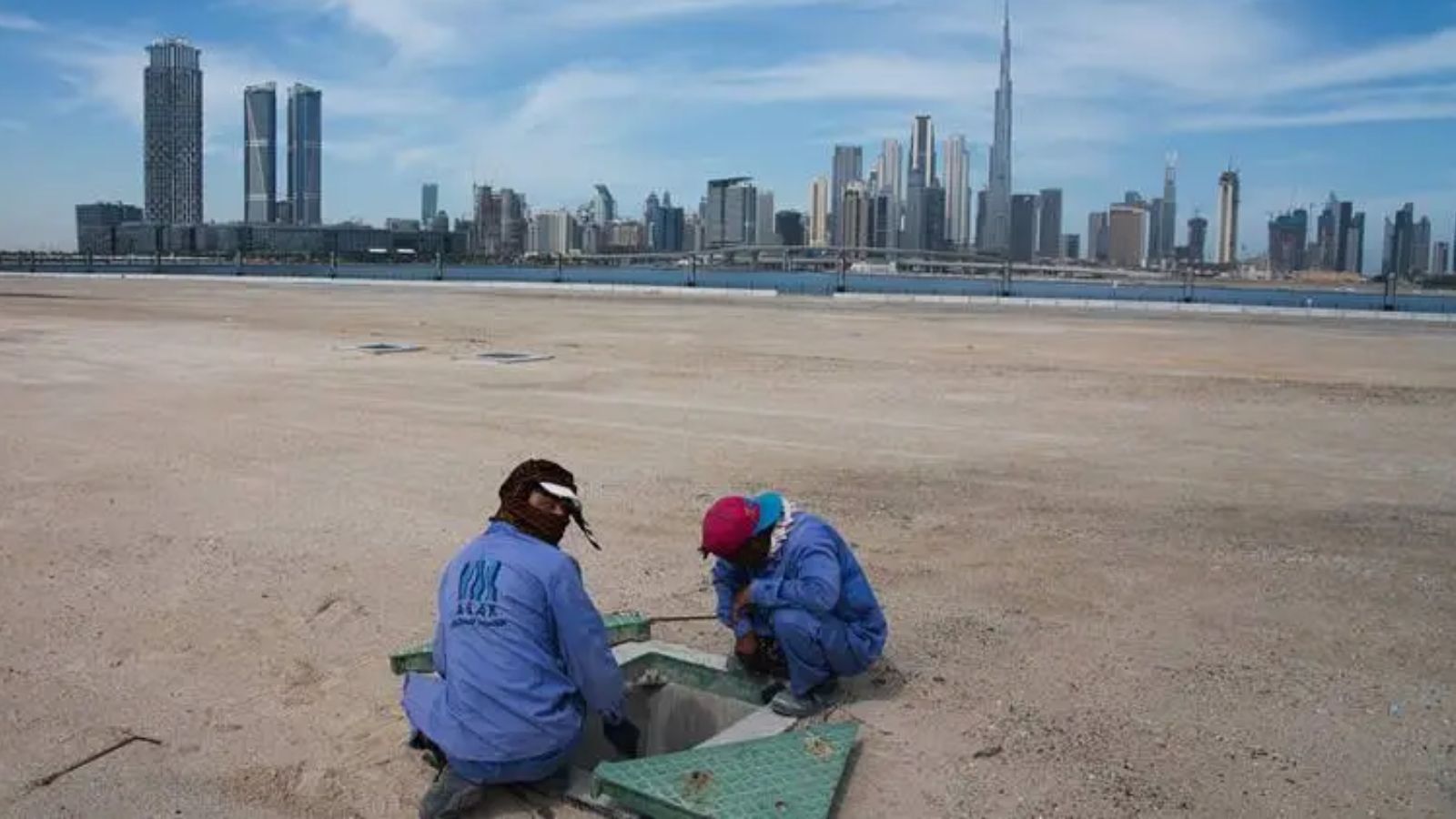
The glittering promise of the Gulf is cracking. For decades, moving to Dubai was the ultimate ticket to a better life for millions of migrant workers from India, Pakistan, and the Philippines. You pack your bags, endure the intense heat, send money home, and build a safety net for your family. But that math changed completely in 2026.
When the conflict involving Iran spilled directly into the Gulf earlier this year, it didn't just disrupt international flight paths. It slammed the brakes on the entire regional economy. If you think Dubai is insulated from geopolitical crossfire, you aren't paying attention to the ground reality. Missiles and drones hitting regional trade hubs have triggered an economic ripple effect that is crushing the middle class and lower-wage expats.
The numbers painting this picture are stark. A recent ManpowerGroup survey of 546 employers in the United Arab Emirates revealed that one in four companies plans to cut headcount. Nearly a third of those surveyed have frozen hiring entirely. This isn't a minor hiccup. It is a full-blown employment emergency for the people who keep the city running.
The Brutal Reality on the Ground
Walk through the residential neighborhoods of Dubai right now and you'll see a quiet desperation. The shiny marketing brochures don't show the lines of people handing out paper resumes to random strangers.
Consider the story of Joy Vivanda, a domestic worker from the Philippines. She lost her job when the family she worked for packed up and fled the region as tensions escalated. For months, she has walked the streets checking notice boards in the suffocating heat. Going home means cutting off financial support for her four children. So she stays, hoping for a miracle in a market that is actively shrinking.
The pain cuts across all income brackets. White-collar professionals are hitting the same brick walls. Mujeeb Rahman, an Indian accountant, found himself jobless when the catering company he managed ran completely out of money. Tourism dried up, events were postponed, and the cash flow evaporated. When companies can't pay their suppliers, the employees are the first to get cut.
Even those who kept their jobs are taking massive financial hits. Employers are quietly shifting workers from fixed salaries to commission-only structures. An Egyptian sales worker at a retail kiosk reported that her daily sales plummeted below $150 because foreign visitors simply aren't flying in. No tourists means no commissions, which means rent doesn't get paid.
Skyrocketing Costs and the Strait of Hormuz Blockade
It gets worse. Finding a job is hard enough, but surviving the day-to-day costs in the city has become an absolute nightmare. The maritime blockades and disruptions around the Strait of Hormuz threw grocery supplies into chaos earlier this year. The Gulf states rely heavily on that single shipping lane for food imports.
When those routes faced disruption, local neighborhood grocery stores—the baqalas where low-income workers buy their food—saw prices skyrocket. Basic vegetables and staples doubled or tripled in price almost overnight. While big government-monitored hypermarkets kept prices somewhat stable, the smaller shops where workers have credit lines could not absorb the shock.
Think about the math. Your salary is cut, your overtime is gone, and your food bill just tripled. The financial equation that made Dubai attractive for thirty years is broken.
The Massive Outflow Back to India
The Indian government reports that over one million citizens have already returned from the Gulf region since this crisis took off. This massive exodus is sending shockwaves back home.
Historically, Indian workers in the Gulf have been financial powerhouses for their home states, particularly places like Kerala. They send back roughly 38% of India's massive $135 billion annual remittance pool. Now, that faucet is turning off.
Organizations like the International Institute of Migration and Development have warned that the domestic fallout in India is just beginning. When hundreds of thousands of workers return home unexpectedly, local unemployment spikes. The real estate markets in Indian towns, long funded by Gulf money, are stalling. It is a vicious cycle. Venkat, a hotel housekeeper who had to return to India, summed it up perfectly when he noted that his children's school fees depended entirely on his Dubai salary. Now, he's scrambling for day labor just to buy groceries.
Increased Surveillance and the Fear Factor
You might wonder why you aren't seeing more of this on your social media feeds. There is a reason for that. Human Rights Watch documented a sharp rise in phone searches, workplace warnings, and social media monitoring across the Gulf states during this conflict.
Authorities are desperate to protect the image of absolute stability. They want to safeguard foreign investment and luxury tourism. As a result, migrant workers face heavy fines or deportation if they post photos of smoke plumes, conflict damage, or even complain about worsening labor conditions online. Police random checks have left workers terrified to text their families about what's actually happening. They are self-censoring just to survive.
What to Do If You Are Caught in the Crisis
If you are an expat currently balancing on a financial tightrope in Dubai, hoping things will just slide back to normal next month is a dangerous strategy. The International Labour Organization expects the regional labor market strain to persist well into next year. You need a practical survival plan immediately.
First, check your visa grace periods. The UAE allows visa holders to remain for up to 90 days after job termination, with options to extend. Use this time to aggressively audit your expenses. Move out of expensive shared apartments and cut all non-essential spending.
Second, look at alternative labor markets. Migration experts are already noticing a structural shift. Workers are bypassing the Gulf entirely and targeting opportunities in Eastern Europe, parts of Central Asia, or safe domestic sectors back home. The old shortcut to quick wealth is closed for now. If your company transitions you to a commission-only structure or stalls your salary payments, start planning your exit before your savings vanish completely. Guard your emergency cash closely. You might need it for a plane ticket home sooner than you think.