Eastern Congo is facing a terrifying medical crisis, and the world is largely looking the other way. Confirmed cases of Ebola in the latest outbreak have officially blown past the 1,000 mark. Health authorities just confirmed 1,003 cases, with the death toll climbing to 254. If you look at the raw math, that means roughly one in four people who catch this virus are dying.
The numbers are bad enough on their own. But the real panic comes from what we don't know. The outbreak, centered in Ituri province, was declared on May 15. In just over a month, it has outpaced everything health workers have thrown at it.
You might remember the massive Ebola campaigns from a few years ago. You might think we have vaccines and experimental drugs ready to deploy. We don't. Not for this one.
The Threat of the Bundibugyo Strain
Most people assume Ebola is a single disease with a single solution. It's not. This specific outbreak is driven by the Bundibugyo virus, a rare strain of Ebola.
During the major West African outbreak and the subsequent scares in Congo, medical teams used the Ervebo vaccine to protect communities. It worked incredibly well against the Zaire strain. But that vaccine does absolutely nothing against Bundibugyo. There are no approved vaccines for this variant. There are no approved antiviral treatments either.
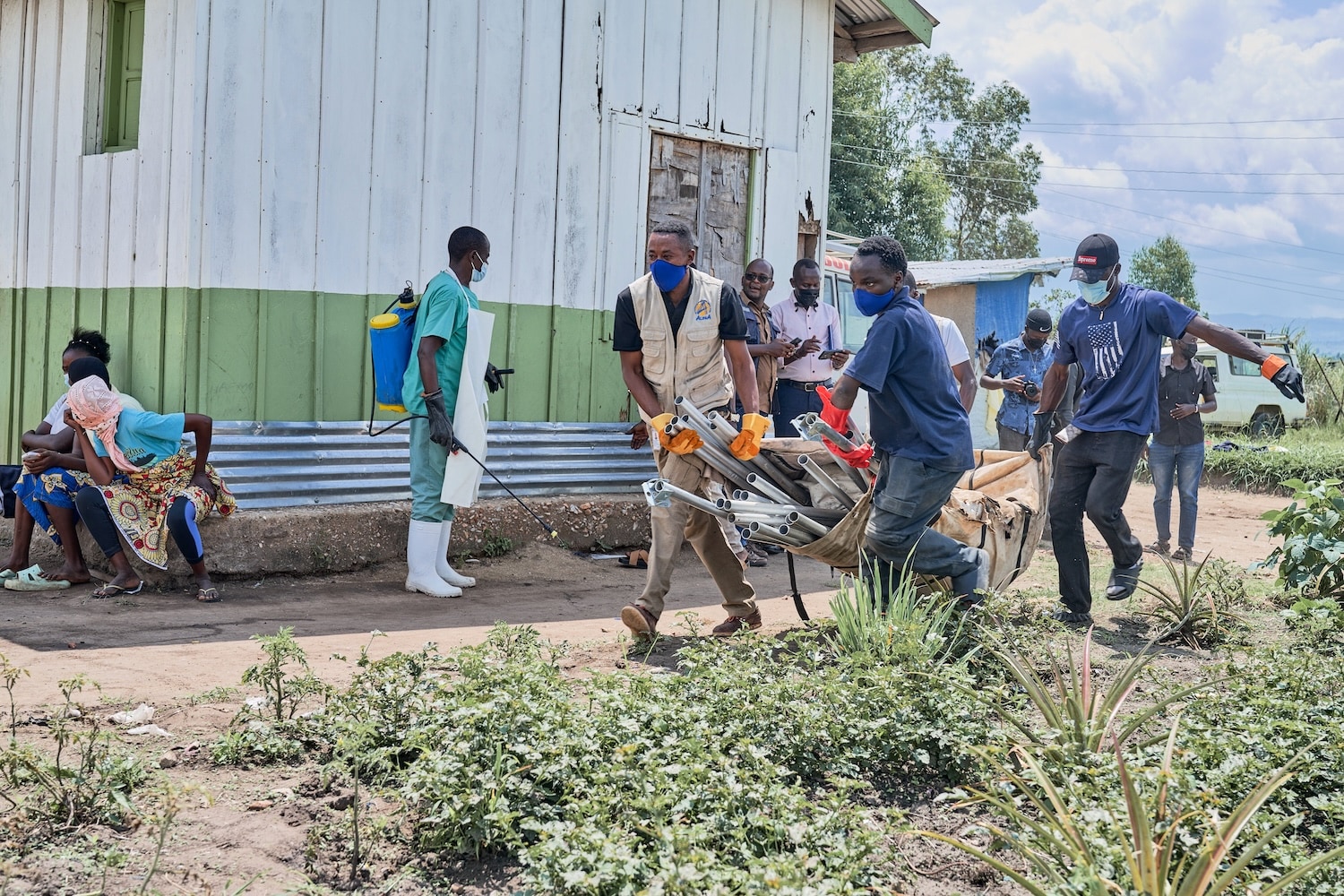
When someone gets sick in Ituri right now, doctors can only offer supportive care. They give fluids, manage pain, and treat secondary infections. Basically, patients are forced to fight off one of the deadliest viruses on earth with nothing but their own immune systems.
Health officials openly admit this is the worst first month of an outbreak they've ever recorded for this strain. It's a completely different playing field when you can't vaccinate a perimeter around a hot zone.
The Math Behind a Broken Tracking System
Controlling Ebola depends on a simple, exhausting process called contact tracing. When someone tests positive, you find everyone they've stood near, talked to, or touched. You isolate them. You monitor them for 21 days. If you miss even one person, the chain keeps growing.
Right now, Congo's Ministry of Health has achieved a contact tracing coverage rate of just 55 percent. That's a failing grade in epidemiology.
Dr. Jean Kaseya, the Director-General of the Africa Centers for Disease Control and Prevention, recently warned that teams have no idea when this outbreak actually started. They haven't found patient zero. If you don't know where the fire started, you can't know which way the wind is blowing the embers.
Think about the numbers left hanging. Authorities have identified more than 35,000 people who came into contact with infected individuals. They haven't tracked them down yet. 35,000 potential cases are walking around, boarding public transport, cooking for their families, and visiting markets.
The official tally sits at 1,003 cases. In reality, the true scale is likely much larger.
War Zones and Red Zones
It's easy to blame a slow medical response on poor infrastructure. But the reality on the ground in eastern Congo is far more complicated and dangerous. Health workers aren't just fighting a virus. They are dodging bullets.
Ituri province is an active conflict zone. Rebels backed by the Islamic State group, specifically the Allied Democratic Forces, carry out regular attacks on civilians. They hack people to death in their fields. They burn down villages.
Because of this constant violence, entire communities are permanently on the move. When a village gets attacked, everyone flees. If someone in that village was incubating Ebola, they carry it right into the next town or a crowded displacement camp.
Medical teams can't enter certain villages because the roads are controlled by armed militias. When a health worker can't safely walk down a street to take a temperature, the virus wins by default.
The Displacement Camp Nightmare
The biggest wild card right now is the Kigonze displacement camp in Bunia, the capital of Ituri province. The camp holds more than 20,000 people who fled rebel violence. They live in tightly packed tents with terrible sanitation and minimal clean water.
Last week, camp officials reported that 10 people died in unusual, sudden circumstances.
So far, no Ebola cases have been officially confirmed inside the Kigonze site. But 10 sudden deaths in a week is unprecedented. If the virus gets inside a camp holding 20,000 displaced people, containment becomes virtually impossible.
The UN refugee agency notes that at least two million displaced people live in areas directly at risk of Ebola transmission across Congo. Crowded conditions speed up the spread of fluids. Ebola spreads through sweat, vomit, and blood. In a camp where multiple families share a single latrine, a single undiagnosed case can spark an absolute catastrophe.
Cross Border Risks
This isn't just Congo's problem. Ituri shares a highly porous border with Uganda. People cross back and forth every single day to trade, visit family, or flee rebel raids.
The World Health Organization has already noted confirmed cases linked to this outbreak across the border. When a virus moves internationally, the response teams have to coordinate across different governments, languages, and health systems.
Local hospitals are already overwhelmed. Currently, at least 365 patients are filling up isolation wards and hospital beds across Ituri. Only 100 people have officially recovered since May 15. The healthcare system in eastern Congo was fragile before this started. Now, it's buckling under the weight of hundreds of highly infectious patients.
What Needs to Change Immediately
The current strategy isn't working. The virus is moving faster than the bureaucratic response. To stop this from turning into a regional disaster, several immediate shifts must happen.
First, global health agencies need to pivot resources toward field testing equipment. If a clinic has to send blood samples hours away through rebel territory to get a PCR result, the patient either dies or infects their family before the diagnosis comes back. Rapid, secure testing at the village level is non-negotiable.
Second, security corridors must be negotiated. Local civil society leaders have more influence than international bodies. Security forces and local leaders need to guarantee safe passage for medical teams into conflict areas. Treating this purely as a medical issue ignores the political reality of Ituri.
Finally, international support must focus on aggressive survival care. Since we don't have a vaccine for Bundibugyo, the focus has to shift toward keeping people alive through severe dehydration. High-volume fluid replacement and electrolyte monitoring can drop the mortality rate significantly, even without targeted antivirals. When communities see that entering an isolation center means survival rather than a death sentence, they stop hiding their sick relatives. That's how you get contact tracing above 55 percent.