The envelope sits on the kitchen table. Plain white. No return address.
Next to it is a half-eaten bowl of cereal and a child's drawing of a house with a crooked chimney. For a hypothetical member of parliament—let's call her Sarah—that envelope is no longer a mundane piece of constituent mail. It is a threat. Inside might be a hastily scribbled note detailing her daughter's walk to school, or a crude drawing of a noose, all because Sarah voted the wrong way on an infrastructure bill three days ago.
Sarah isn't real, though her story is assembled from hundreds of police reports across Australia. The threat, however, is entirely concrete.
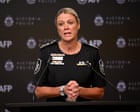
Recently, the head of the Australian Federal Police, Commissioner Reece Kershaw, stepped up to a podium and delivered a stark, unvarnished warning to the nation. He didn't talk about abstract policy failures or geopolitical shifts. He talked about words. Specifically, he pointed a finger directly at the escalating, heated rhetoric coming from politicians themselves, stating plainly that this kind of inflammatory language is actively fuelling real-world threats against parliamentarians.
The Architecture of Outrage
We have grown accustomed to the theater of politics. We expect the sharp jabs during Question Time, the dramatic pauses for the evening news cameras, the carefully rehearsed soundbites designed to fit neatly into a fifteen-second social media clip. For decades, this was just the background noise of a functioning democracy. You yelled across the aisle, you went to the pub, and life moved on.
Something broke.
Think of public discourse like a dry forest in the middle of an Australian summer. For years, the underbrush has been piling up—economic anxiety, social isolation, the relentless churn of outrage algorithms that reward fury over nuance. When a politician stands behind a microphone and uses the language of war, betrayal, or existential destruction to describe an opponent's policy, they aren't just scoring political points. They are flicking a lit cigarette into that dry brush.
And the wind is blowing hard.
According to data released by the Australian Federal Police, reports of harassment, nuisance, offensive, and threatening communications against federal parliamentarians have surged dramatically in recent years. We are talking about nearly a thousand incidents assessed by the AFP's dedicated protection teams over just a few financial years. These aren't grumpy letters complaining about potholes. These are death threats, bomb hoaxes, and targeted harassment campaigns that force elected officials to install panic buttons in their bedrooms and hire private security just to attend a local community barbecue.
Commissioner Kershaw's warning wasn't a partisan attack. It was a plea from the people tasked with keeping the peace. When leaders frame political disagreement not as a difference of opinion, but as an act of evil, someone out there in the dark is going to believe them. And a fraction of those people will decide that extreme rhetoric demands extreme action.
Inside the Pressure Cooker
I remember sitting in the press gallery years ago, watching a particularly vicious debate unfold on the floor below. From the cheap seats, it looked like sport. The backbenchers were jeering, the ministers were smirking, and the journalists were furiously typing out the sharpest insults for the morning headlines. It felt electric, almost intoxicating.
Then I walked out into the corridor and saw a junior staffer crying quietly beside a vending machine. Her crime? Answering the electorate office phone all afternoon while angry callers, parroting the exact buzzwords used by a shadow minister on morning television, screamed graphic threats at her until her hands shook too badly to hold a pen.
That is the invisible toll of political theater. The people at the top—the ones with the security details and the media training—often treat inflammatory language like a tactical tool. They deploy a loaded phrase, watch their fundraising numbers tick up, and move on to the next news cycle. They rarely stay around to sweep up the broken glass.
Consider what happens next when that rhetoric leaves the chamber and enters the digital bloodstream.
An MP makes an offhand remark accusing the opposing party of "destroying the fabric of the nation." Within minutes, that clip is stripped of context, overlaid with ominous music, and pushed into the feeds of tens of thousands of people who are already feeling alienated and angry. An algorithm doesn't care about parliamentary privilege or rhetorical hyperbole. It only cares about engagement. Fury keeps eyes on screens. So the machine amplifies the anger, feeding it back to the user until the hyperbole hardens into absolute certainty.
By the time that anger reaches the doorstep of a local electorate office, the nuance is entirely gone. What started as a metaphor in Canberra becomes a literal mission for someone sitting alone in a darkened room at two in the morning.
The Slow Erosion of the Middle Ground
Why does this matter to those of us who don't hold public office? Why should anyone care if politicians are getting a taste of the toxicity they sometimes help generate?
Because democracy relies on a fragile, unwritten contract. We agree to settle our deepest disagreements through words, ballots, and institutions rather than fists and intimidation. For that system to work, ordinary, decent people have to be willing to put their hands up and run for office.
Imagine a brilliant local doctor, a dedicated schoolteacher, or a pragmatic small business owner thinking about entering politics. They want to fix the local hospital, improve public transit, or support regional industries. Then they look at the reality of the job. They see the relentless abuse directed at sitting MPs. They hear about female politicians needing escorts to their cars and their children being targeted online.
They look at their own families, and they walk away.
When the price of public service becomes the safety of your loved ones, you don't just lose a few good candidates. You filter out everyone except the zealots, the narcissists, and the people who thrive on conflict. The moderate, thoughtful voices—the ones who actually know how to compromise and govern—retire early or never run at all. What remains is a parliament hollowed out by fear, dominated by the loudest and most extreme voices in the room.
It is a terrifying feedback loop. Heated rhetoric drives away reasonable people, leaving behind more extreme voices, which in turn generates even hotter rhetoric.
The Historical Echoes We Ignore
We have seen this movie before, and the ending is never good. History shows us time and again that political violence rarely erupts out of nowhere. It is almost always preceded by a steady, deliberate dehumanization of political opponents.
When language shifts from "my opponent is wrong" to "my opponent is an enemy of the people," the guardrails begin to buckle. In the United Kingdom, the tragic murders of MPs Jo Cox and David Amess sent shockwaves through the democratic world, forcing a painful reckoning over how public figures are treated and spoken about. In the United States, the sharp rise in threats against lawmakers, judges, and local election workers has become a permanent, grim feature of public life.
Australia has long prided itself on being immune to the worst of that polarization. We have compulsory voting, which naturally pulls parties toward the political center, and a healthy cultural skepticism toward self-important politicians. We like to think we are too laid-back for things to get truly dark.
Commissioner Kershaw's intervention is proof that our exceptionalism is wearing thin. The sheer volume of threats being investigated by the AFP tells a story that contradicts our national self-image. We are not immune. We are simply a few years behind the curve, standing at the edge of the same cliff, debating whether the wind is really blowing that hard.
Choosing the Temperature of the Room
It is easy to feel helpless watching this unfold. You cannot control what an algorithm promotes, and you cannot stop an unstable individual from sending a threatening email. There is a genuine, lingering fear among observers that the genie is already out of the bottle—that once the norms of basic decency are broken, they cannot be glued back together.
Yet norms are not laws of physics. They are choices made every single day by people with microphones.
Lowering the temperature doesn't mean turning politics into a polite, sterile tea party. Democracy is supposed to be loud, passionate, and fiercely contested. There are real injustices to fight against and profound ideological battles that deserve full-throated debate. You can tear an opponent's policy to shreds without questioning their right to exist safely in public. You can fight hard without burning the house down.
The shift requires a quiet kind of courage from leaders across the spectrum. It means refusing to take the cheap shot when the cameras are rolling. It means calling out toxic behavior on your own side of the aisle, not just when it comes from your opponents. Most of all, it means remembering that the person standing across the dispatch box is a fellow citizen, not a monster.
The Weight of a Word
Back in that hypothetical kitchen, Sarah picks up the plain white envelope. She doesn't open it. Instead, she slips it into a plastic sleeve, places it in her briefcase to hand over to the federal police, and walks over to check on her daughter, who is still coloring at the table.
Outside, the morning sun is hitting the street, completely ordinary and indifferent to the quiet dread sitting in the pit of Sarah's stomach. She will still go to work today. She will still walk into the chamber, take her seat, and cast her vote.
Somewhere across the building, a microphone is already being switched on, waiting for someone to decide whether the next sentence spoken into it will be a bridge, or a match.