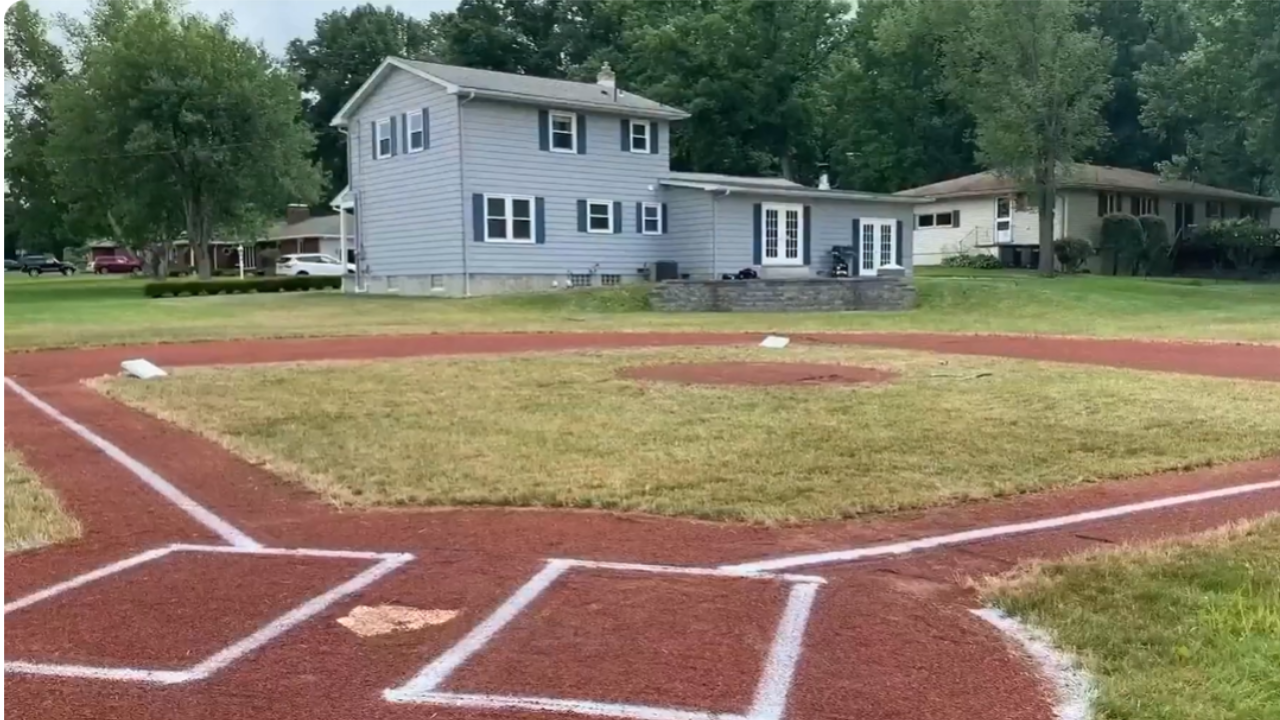
Spending $30,000 on a residential baseball field for a five-year-old is less a sports investment and more an exercise in capital allocation under extreme asset specificity. A standard human-interest story treats a project like this as a heartwarming gesture or an eccentric display of parental devotion. A structured analysis strips away the sentiment and examines the underlying mechanics: fixed versus variable costs, temporal mismatch between childhood development and capital depreciation, spatial constraints on residential land, and opportunity cost.
This article establishes a framework for evaluating large-scale residential athletic builds. Rather than relying on anecdotes or treating headline numbers at face value, it breaks down the cost structure of a home diamond, maps the causal chains that turn a modest request into a five-figure capital outlay, and defines the operational trade-offs parents face when converting yard space into a specialized sporting venue.
Deconstructing the Competitor Narrative
Human-interest coverage of backyard baseball builds typically relies on a three-part story arc. First, it introduces a simple catalyst: a young child asks for a place to play. Second, it highlights a dramatic price tag, such as $30,000, to create shock value and contrast a child's scale with an adult-sized financial commitment. Third, it frames the completed project as proof of dedication or generosity.
That structure is entertaining, yet analytically thin. Reporting a $30,000 figure without specifying what that money actually bought leaves out the most important variables in residential construction. Does $30,000 cover earthmoving and grading, or does it include fencing, netting, turf, lighting, drainage, or a pitching mound? Without those distinctions, a single number obscures whether the spend went toward durable land improvement or short-lived sporting fixtures.
The second flaw in conventional coverage is ignoring time horizons. A five-year-old operates on a completely different developmental clock than a piece of civil or landscape work. Physical coordination, bat speed, throwing distance, and interest in structured sports shift rapidly between ages five and twelve. Treating a backyard field as a static solution for a five-year-old misses how quickly a child outgrows a youth setup or pivots to another activity.
The third omission is second-order spatial and neighborhood friction. A residential lot is not a municipal park complex. Adding backstops, foul-ball containment, leveled infield dirt, or turf alters drainage patterns, sightlines, noise exposure, and neighbor relations. A headline that stops at the parent's checkbook misses the system dynamics of turning private residential land into a high-impact activity zone.
The Cost Function of a Residential Field
To evaluate a $30,000 backyard project rigorously, it helps to separate the outlay into distinct functional categories rather than viewing it as a single lump sum. In residential construction and landscaping, total project cost behaves as a sum of site preparation, surface engineering, containment structures, and optional performance upgrades.
- Site Preparation and Earthwork: Raw residential yards are rarely flat, level, or uniformly drained. Clearing vegetation, regrading slopes, hauling soil, and installing subsurface drainage often consume a disproportionate share of early budget before any baseball-specific element appears.
- Playing Surface Selection: Natural infield mix, standard turf grass, and synthetic athletic turf carry vastly different upfront prices and maintenance curves. Natural dirt and grass require ongoing moisture management, edging, dragging, and mowing, whereas synthetic surfaces demand higher initial capital and careful base compaction.
- Ball Containment and Safety Perimeters: Backstops, sideline fencing, and overhead netting exist to protect windows, vehicles, adjacent yards, and passersby. In dense suburban lots, containment is not cosmetic; it is the primary constraint governing how hard a ball can be hit safely.
- Training and Play Accessories: Portable or fixed batting cages, pitching mounds, bases, and foul poles add functional utility, though their lifespan and weather resistance vary widely depending on materials and anchoring methods.
- Permits, Utilities, and Soft Costs: Local zoning rules, setback requirements, utility locates, equipment delivery access, and labor markups create friction that can swell budgets even when material lists look modest.
A critical distinction separates sunk capital from ongoing operating expense. Once a yard is graded and trenched for drainage, that labor is largely sunk into the property. By contrast, mowing, topdressing, replacing torn netting, and repairing turf edges represent recurring time and cash commitments. A parent who budgets only for initial installation frequently underestimates the maintenance load required to keep the surface playable.
Why Headline Price Tags Mislead
A $30,000 figure can represent two completely different realities depending on local labor rates, site access, and scope. On a flat, wide-access lot where minimal grading is needed, $30,000 might fund high-grade perimeter netting, a quality synthetic hitting/infield zone, and clean transitions to the rest of the yard. On a sloped or tight-access lot in a high-cost metro area, the same sum might barely cover excavation, drainage tile, haul-off, and basic turf restoration.
There is also a structural difference between value to the household and resale value on the housing market. In real estate economics, bespoke recreational installations often suffer from narrow buyer appeal. A dedicated baseball setup may delight a buyer with young ballplayers, yet strike another buyer as an expensive removal project if they prefer gardens, privacy trees, or a conventional lawn. Capital spent on a backyard diamond should therefore be modeled primarily as consumption and family utility rather than guaranteed home equity.
Cause-and-Effect Chains in Backyard Builds
When a simple request from a five-year-old leads to a major construction project, a predictable chain of cause and effect unfolds. Tracing these links exposes bottlenecks that rarely show up in upbeat stories.
First, scale mismatch drives over-engineering. A five-year-old needs short distances, forgiving ground surfaces, and low-velocity environments to build confidence and motor skills. Adults building a "real" field often design for aesthetics, durability against harder impacts, or future growth. Building too big or too rigid for a young child's current physical capacity can make the space awkward for entry-level play while locking up yard area early.
Second, containment pressure dictates geometry. Even a soft-core or youth baseball travels fast enough to break glass or dent siding when propelled by a solid swing or throw. Tight residential setbacks force builders to choose between shrinking the hitting zone, raising fence or net height, or restricting play to wiffle/foam balls. Each choice alters how the space is actually used day to day.
Third, water and wear create a feedback loop. High-frequency foot traffic in batter's boxes, pitcher's areas, and base paths strips grass cover quickly. Bare soil exposed to rain compacts or turns to mud, which accelerates rutting when children run or slide on wet ground. Without proper grading and drainage, minor surface wear compounds into an unusable mud pit.
Fourth, maintenance burden shapes usage frequency. A field that requires twenty minutes of prep or cleanup every time it is used faces higher friction than a space ready on demand. When upkeep becomes a chore after work or on weekends, the project shifts from an effortless daily hangout to an occasional event.
Asset Specificity and the Childhood Timeline
In economics, asset specificity refers to how easily an asset can be redeployed to another purpose without losing value. A standard flat lawn has low asset specificity: it can host tag, soccer, lawn games, pets, picnics, or quiet lounging. A specialized baseball field has higher asset specificity because its layout, surfacing, and boundaries are tuned to a particular sport and set of dimensions.
This matters enormously when paired with child development. Between ages five and twelve, children experience rapid shifts in strength, attention span, social dynamics, and competing interests. A child who asks for a baseball field at five may still love baseball at ten, or may shift toward soccer, basketball, track, music, or gaming. Even if baseball remains central, the physical demands of a five-year-old differ sharply from those of a ten-year-old throwing harder and hitting farther.
| Dimension | Early Childhood (Ages 5-7) | Middle Childhood (Ages 8-12) | Analytical Implication |
|---|---|---|---|
| Physical Scale | Short throws, low exit velocities, compact movement radius | Longer throws, higher ball speeds, wider field coverage | Oversized or rigid setups can feel intimidating or restrictive early on |
| Skill Focus | Hand-eye coordination, basic catching, fun and repetition | Mechanics, situational play, team drills, higher intensity | Surface wear concentrates in specific high-repetition zones |
| Interest Stability | High curiosity, rapid shifts across activities | Stronger identity around favored hobbies, yet still evolving | High-cost, single-purpose builds carry higher timeline risk |
| Space Trade-Off | Competes with general play and family yard use | Competes with dedicated practice gear or other sports | Modular layouts preserve flexibility as priorities change |
This table is a conceptual mapping rather than a rigid rulebook. Individual children vary widely in maturity and commitment. Still, the underlying mechanism holds: the longer the capital payback horizon required to justify a costly build, the greater the risk that the child's needs will evolve faster than the physical asset can adapt.
Opportunity Cost and Capital Allocation
Every dollar committed to a backyard project carries an opportunity cost—the value of the next best alternative foregone. For a household considering a $30,000 outlay, the comparison is not merely "baseball field versus nothing." It is "baseball field versus other uses of $30,000 and the associated project management time."
Alternative allocations include:
- Years of Structured Coaching and Leagues: Registration fees, private lessons, clinics, and travel tournaments expose children to peers, varied coaching styles, and competitive environments that a solo yard cannot replicate.
- Modular Backyard Alternatives: A portable hitting net, tee, pitching machine or trainer, and a smaller multi-use turf pad can deliver high-frequency skill work at a fraction of civil construction cost while keeping most of the yard adaptable.
- Broader Family or Household Priorities: Home repairs, emergency reserves, college savings, or multi-purpose family spaces compete directly for the same capital pool.
A rigorous decision separates emotional return from financial return. A parent might knowingly accept zero financial resale gain because watching their child play outside every evening brings immense personal satisfaction. That is a valid preference—provided the decision is made with clear eyes about trade-offs rather than rationalized as an investment that pays for itself.
Operational Execution Framework for Parents
If a family decides to build a home baseball space, disciplined execution reduces wasted spend and prevents common construction headaches. Rather than starting with a contractor quote for a "full field," treat the project as a sequence of operational gates.
- Audit the Site and Constraints First: Measure exact buildable dimensions, slopes, tree roots, utility lines, and distance to neighboring structures and streets. Identify local municipal rules on fences, structures, drainage runoff, and noise.
- Define the Primary Use Case and Ball Type: Clarify whether the space is meant for soft-core/training balls, standard baseballs, hitting off a tee/soft-toss, or running bases. Ball velocity and flight path determine how heavy containment needs to be.
- Separate Core Infrastructure from Add-Ons: Lock down grading, drainage, and base surface stability first. Treat perimeter netting upgrades, mound enhancements, or extra accessories as phase-two items that can wait until core usage proves consistent.
- Plan Drainage and Surface Upkeep Before Pouring or Laying: Verify how stormwater exits the site so runoff does not flood the yard or adjacent properties. Match surface material to the amount of weekly maintenance the household realistically wants to perform.
- Preserve Multi-Use Flexibility Where Possible: Favor clean edges, removable or modular components, and adaptable zones so the yard can still serve general family life if interests shift.
Limitations and Edge Cases
No framework eliminates uncertainty in residential construction. Subsurface surprises—such as buried debris, rock shelves, clay pockets, or poor soil percolation—can shift costs quickly once excavation begins. Contractor availability and seasonal weather windows can also compress schedules or extend timelines.
Furthermore, no backyard setup can substitute for social play or structured team environments. A child practicing alone or with one parent gets repetition, yet misses the camaraderie, unpredictability, and rules of group games. Treating a home field as a supplement rather than a complete replacement keeps expectations grounded.
Strategic Play for High-Stakes Home Projects
When a young child asks for an ambitious physical space, the strongest strategic move is to cap early irreversible spend while validating sustained demand. Start with a low-friction, high-utility setup—such as a safe hitting/throwing zone, durable containment where needed, and basic surface care—and observe how consistently the space is used across seasons and shifting interests. Only commit major capital to permanent grading, heavy structures, or specialized surfacing once site constraints are thoroughly vetted, maintenance responsibilities are clear, and genuine, ongoing engagement justifies locking up both cash and yard real estate.