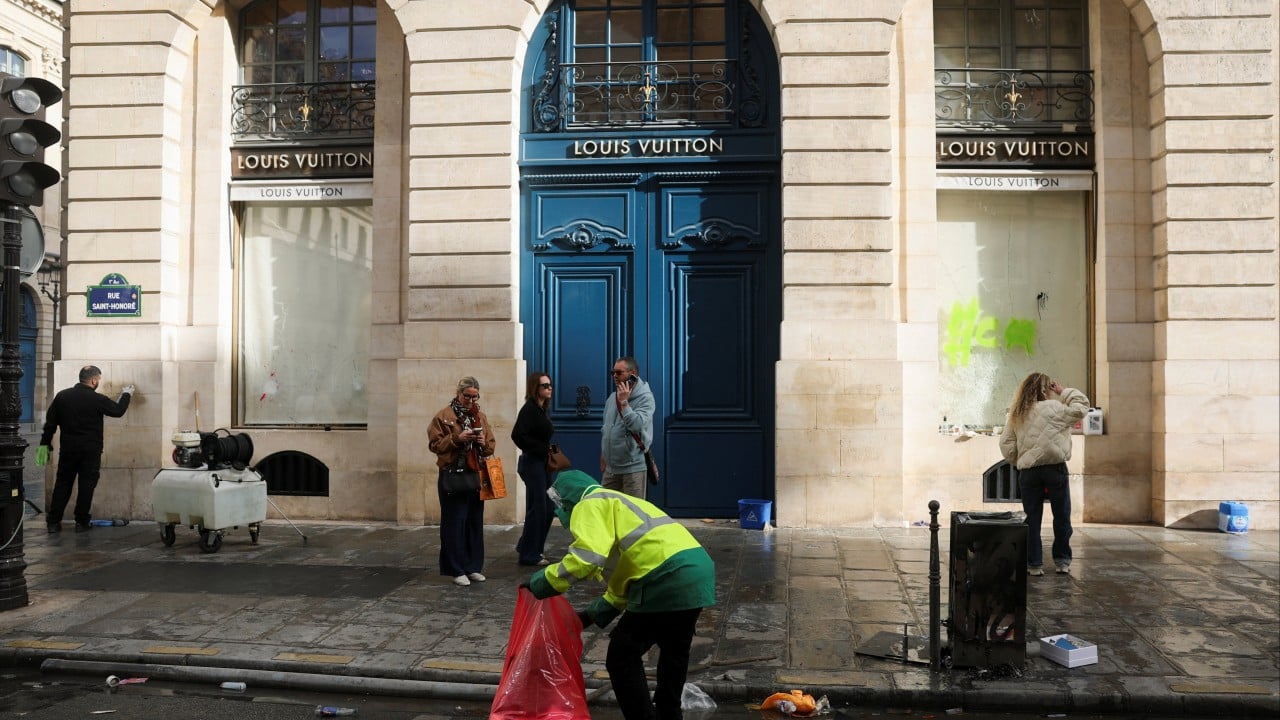
Civil unrest targeting luxury retail corridors creates immediate operational shocks, shifting the cost function of physical storefronts from margin optimization to existential risk management. When high-density urban protest transitions into systematic looting, the traditional metrics governing retail real estate valuation—foot traffic, store productivity per square foot, and visual merchandising exposure—become secondary to asset hardening and liquidity preservation.
The financial exposure of flagship luxury stores during periods of sustained civil disruption extends far beyond stolen inventory. Evaluating this vulnerability requires a rigorous breakdown of direct costs, operational friction, capital expenditure shifts, and insurance market dynamics.
The Cost Function of Urban Retail Vulnerability
Operating a high-value physical asset in a metropolitan center relies on an implicit social contract regarding public safety and the rule of law. When civil unrest breaks that contract, the baseline economic model of the luxury boutique breaks down into distinct financial vectors.
Direct Loss and Inventory Volatility
Inventory in the luxury sector is characterized by high unit value, low liquidity on secondary black markets without authentication papers, and serialized tracking limitations. However, during coordinated looting events, physical theft is rarely about immediate resale value alone; it represents a catastrophic instantaneous loss of working capital.
The immediate financial impact encompasses:
- Replacement cost of merchandise at wholesale value multiplied by supply chain lead times.
- Physical damage to architectural glass, reinforced display cases, security shutter systems, and interior millwork.
- Destruction of point-of-sale hardware, biometric security terminals, and customer relationship management databases housed locally.
Insurance Premium Spikes and Coverage Withdrawal
Property and casualty insurance markets operate on probabilistic risk modeling. When riot frequency increases in a specific ZIP code, underwriters immediately re-evaluate the risk profile.
The resulting economic feedback loop operates through three phases:
- Deductible Realignment: Insurers shift from percentage-based property deductibles to fixed high-dollar thresholds specifically for civil commotion or riot perils.
- Exclusion Clauses: Policies are rewritten to exclude civil unrest entirely, transferring the complete tail-risk back to the corporate balance sheet.
- Premium Escalation: Surviving policies experience compounding annual premium increases that erode store-level operating margins, forcing brands to re-calculate the net present value of keeping a physical location open.
Capital Expenditure Shifts: Fortification vs. Open-Air Experiential Retail
Luxury retail strategy over the past two decades has emphasized transparency—floor-to-ceiling glass facades, inviting entryways, and minimal physical barriers between the street and the product. Civil unrest forces an abrupt strategic pivot toward defensive architecture.
Physical Hardening Economics
The implementation of security retrofits introduces capital expenditure that depreciates the brand's primary marketing asset: its aesthetic appeal.
- Dynamic Rolling Shutters: Retrofitting historical or architecturally protected facades with exterior steel or aluminum roll-down shutters introduces severe municipal code friction and diminishes night-time window shopping visibility.
- Ballistic and Impact-Resistant Glass: Upgrading standard laminated glass to multi-layer polycarbonate or ballistic composites alters structural load-bearing requirements and incurs massive capital costs per square meter.
- Reinforced Perimeter Control: Installing bollards, blast-resistant framing, and reinforced secondary interior security doors changes the consumer ingress experience from frictionless luxury to controlled access environments.
Operational Staffing and Security Protocol Realignment
Labor costs escalate as store management transitions from clienteling and sales generation to threat mitigation.
- Private Security Integration: Deploying armed or unarmed tactical security personnel alters the ambient environment of the boutique. The economic cost includes hourly rates, specialized liability insurance, and the risk of brand dilution associated with heavily fortified entrances.
- Emergency Protocol Training: Corporate overhead increases via mandatory crisis management simulations, evacuation drills, and real-time intelligence monitoring subscriptions to track protest movements across urban centers.
Real Estate Liquidity and the Spatial Redistribution of Risk
The long-term consequence of sustained civil unrest is the structural devaluation of traditional high-street retail corridors. Brands must weigh the prestige value of an iconic address against the recurring operational friction of localized instability.
The Foot Traffic Disconnect
Luxury retail relies on agglomeration effects—the concentration of complementary brands drawing high-net-worth consumers. When one flagship is targeted, adjacent stores experience immediate foot traffic contraction. Consumers substitute physical shopping for digital channels or travel to suburban or secondary luxury hubs with stable security profiles.
This spatial flight leads to a divergence in lease negotiations:
- Flagship locations on primary arteries face downward rent pressure masked by long-term master leases.
- Pop-up strategies and private appointment-only salons gain favor as brands seek to decouple revenue generation from street-level vulnerability.
Supply Chain and Logistics Friction
Civil unrest disrupts the urban logistics matrix. Curfew implementations, street closures, and police cordons prevent standard stock replenishment cycles, cash-in-transit security pickups, and maintenance contractor access. This operational bottleneck leads to out-of-stock conditions on high-velocity items, driving revenue leakage directly to e-commerce competitors who operate from secured, decentralized fulfillment centers.
Strategic Asset Allocation and Risk Mitigation Architecture
Mitigating systemic urban risk requires transitioning from reactive defense to quantitative scenario planning. Retail executives must treat civil unrest not as an unpredictable black swan event, but as a predictable variable within a macroeconomic cycle of social friction.
The optimal response framework demands the immediate decoupling of inventory storage from consumer-facing display spaces. By implementing high-security, off-site holding vaults for high-value merchandise while maintaining low-stock floor models, brands can cap their maximum loss exposure per incident. Simultaneously, investment must pivot toward regional logistics redundancy, ensuring that inventory can be dynamically re-routed away from volatile metropolitan centers within hours of civil unrest indicators reaching critical thresholds.