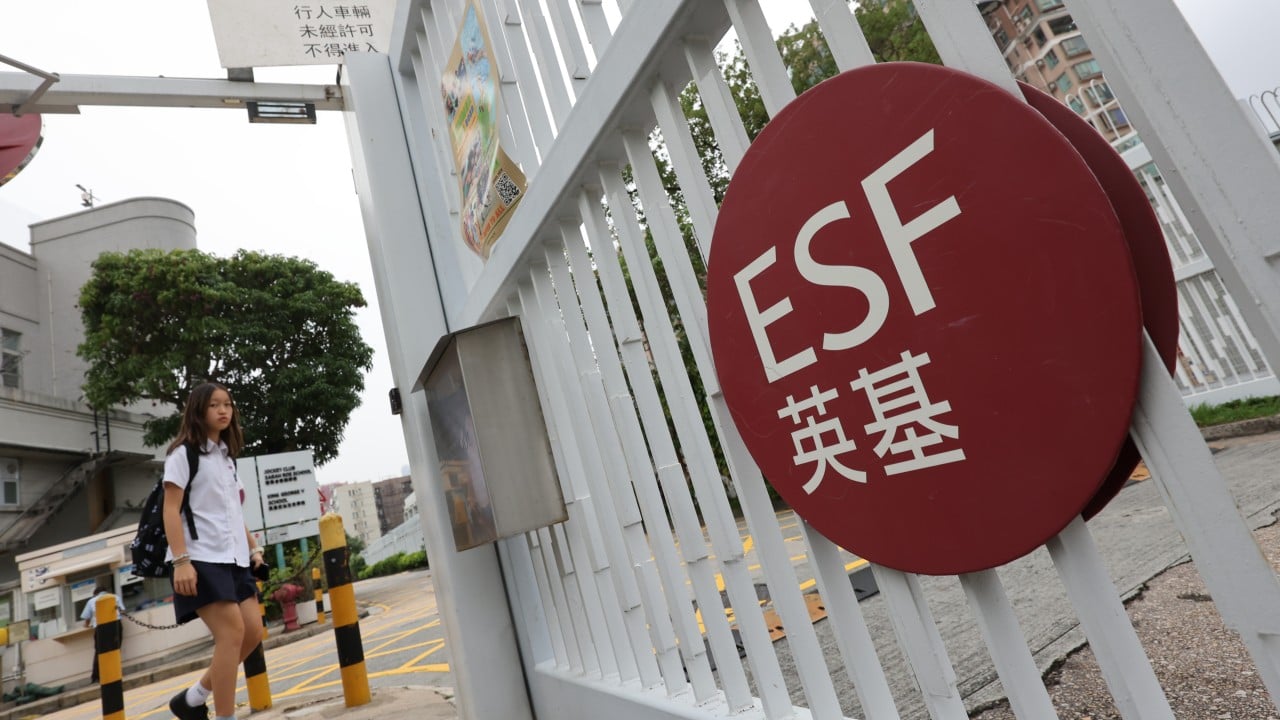
The English Schools Foundation (ESF) recently announced an average tuition increase of 4.1% for the 2024-25 academic year, a move that signals a broader recalibration of the Hong Kong private education market. While a 4.1% adjustment might appear incremental relative to historical inflation, it represents a compounding pressure point for middle-class and expatriate families. This price adjustment is not a solitary event; it is the output of a specific cost-plus pricing model common in non-profit educational institutions where labor costs represent the overwhelming majority of the expenditure base. To understand the sustainability of this model, one must deconstruct the interplay between teacher retention, government subsidy withdrawal, and the competitive landscape of the Hong Kong Special Administrative Region (HKSAR).
The Structural Drivers of Tuition Inflation
The ESF fee hike is driven by a rigid internal cost function. Unlike a traditional corporation that can scale through technology or manufacturing efficiencies, a premium K-12 educational group is constrained by "Baumol’s Cost Disease." This economic phenomenon occurs when salaries rise in jobs that have experienced no increase in labor productivity, typically in response to rising salaries in other sectors. In a school setting, you cannot simply increase the "output" of a teacher without compromising the quality of the service.
The Labor-Capital Imbalance
In the ESF ecosystem, personnel costs typically account for 75% to 80% of total operating expenses. To maintain its status as a top-tier provider, the foundation must compete globally for specialized pedagogical talent. This creates a mandatory upward pressure on fees because any meaningful salary increase for staff—essential for retention in a high-cost city like Hong Kong—must be funded almost entirely by tuition when other revenue streams remain static.
The Subsidy Sunset Effect
A critical, often overlooked factor in the ESF pricing strategy is the long-term phase-out of the government subvention. Historically, the HKSAR government provided a significant subsidy to ESF, which allowed it to offer "private-grade" education at a subsidized rate. The government began withdrawing this subvention in 2016, a process scheduled over 13 years. Each year, as the per-student subsidy drops, the "funding gap" must be bridged by parental contributions. This creates a structural deficit that necessitates annual fee increases regardless of the prevailing inflation rate.
Segmenting the 4.1% Increase
The "average" 4.1% figure masks the granular reality of the fee structure across different year groups. ESF’s pricing is tiered, reflecting the different resource requirements for primary, secondary, and International Baccalaureate (IB) levels.
- Primary Years (Years 1-6): These years often see the most significant percentage jumps because they have historically been the most heavily subsidized. As the subvention disappears, the relative increase is felt most acutely here.
- Secondary Years (Years 7-11): At this level, the cost increases are tied to specialized facilities—laboratories, design studios, and sports complexes—which carry higher maintenance and depreciation costs.
- The IB Diploma (Years 12-13): This is the high-margin, high-cost "capstone." The 4.1% increase here is often a reflection of the global market for IB examiners and specialized university counseling staff.
The Competitive Moat and Market Elasticity
Why can ESF raise prices by 4.1% while Hong Kong's general CPI remains lower? The answer lies in the price elasticity of demand for "brand-name" education. In the Hong Kong market, education is often viewed as a "positional good"—its value is derived not just from the instruction, but from the relative advantage it provides the student in global university admissions.
The Supply-Demand Asymmetry
Despite the migration of some families out of Hong Kong, demand for ESF places remains high due to its reputation for IB results. This creates a "sticky" demand curve. Parents are highly unlikely to move a child out of a school system once they are enrolled due to high switching costs (social adjustment, curriculum alignment, and secondary school entrance hurdles). ESF leverages this inertia to pass through cost increases that might be rejected in other service sectors.
The Institutional Competitors
ESF sits in a unique market position between the ultra-high-end international schools (e.g., Harrow, Hong Kong International School) and the local Direct Subsidy Scheme (DSS) schools.
- The Premium Ceiling: If ESF raises fees too high, they risk losing "aspirational" families to the top-tier international schools where the marginal cost of the "prestige" becomes smaller.
- The DSS Floor: If they don't maintain quality, they lose families to high-performing DSS schools that offer similar academic outcomes for a fraction of the price.
Operational Risks and the "Quality Trap"
The primary risk for ESF is not a lack of students, but the erosion of the value proposition. When fees rise, parental expectations rise disproportionately. A 4.1% increase in cost often leads to a demand for a 10% increase in facilities or extracurricular options.
The Facility Maintenance Backlog
Hong Kong’s climate is brutal on physical infrastructure. Many ESF campuses are aging. A portion of the fee increase is inevitably diverted to capital expenditure (CapEx) for building maintenance. If these funds are prioritized over teacher salaries, the school risks a "brain drain" of talent. If they are prioritized over technology, the school looks "dated" compared to newer, flashy international competitors.
The Curriculum Pivot
The move toward more vocational pathways (like the BTEC) alongside the IB Diploma adds another layer of operational complexity. Managing multiple curricula requires more administrative overhead, which further inflates the cost base.
Strategic Implications for Stakeholders
For families navigating this landscape, the 4.1% hike should be viewed as a baseline, not an anomaly. Given the ongoing subvention withdrawal and the global competition for teachers, a 3% to 5% annual increase is the most probable long-term trend line.
Financial Planning for Parents
Families entering the ESF system in Year 1 must model a compounding 4% increase over a 13-year horizon. A tuition fee of $130,000 HKD today will, at a 4% CAGR, exceed $210,000 HKD by the time the student reaches Year 13. This "tuition creep" requires a capital preservation strategy that outperforms standard savings accounts.
The Institutional Play
ESF must find ways to decouple revenue from student numbers. This involves expanding "non-tuition" revenue streams, such as language learning centers, sports academies, and summer programs that utilize the school's physical assets during "down" hours. Without these alternative revenue prongs, the burden on the primary tuition payer becomes unsustainable in a downturn.
The 4.1% increase is a calculated gamble that the ESF brand remains strong enough to absorb the rising costs of the "Hong Kong premium." As the city continues to redefine its role as a global hub, the affordability of its "middle-market" international schools will be the ultimate litmus test for its ability to attract and retain global talent.
The immediate strategic requirement for the ESF board is a radical transparency regarding the allocation of the "Capital Levy" versus "Tuition." By separating the cost of "learning" (salaries) from the cost of "environment" (buildings), the foundation can better manage parental expectations and justify the inevitable future hikes required to remain competitive in the Asian educational theater.