Deregulating methane emissions in upstream oil and gas extraction shifts compliance costs from operator balance sheets onto the atmospheric commons while creating a structural split between tier-one operators and marginal producers. When federal mandates under the Clean Air Act—specifically New Source Performance Standards (NSPS) Subpart OOOOb and Emissions Guidelines Subpart OOOOc—are targeted for rollback, the immediate operational effect is not a uniform industry-wide windfall. Instead, it removes the federal floor on Leak Detection and Repair (LDAR) protocols, pneumatic controller zero-emission mandates, and routine flaring prohibitions, forcing capital allocation decisions to bifurcate along corporate governance lines.
To understand the operational and financial fallout of loosening federal methane rules, analysts must strip away political rhetoric and examine the physical mechanics of hydrocarbon extraction alongside the capital markets governing the sector.
The Physical Mechanics of Upstream Methane Loss
Methane ($CH_4$) is the primary component of natural gas and possesses a global warming potential roughly 28 to 36 times greater than carbon dioxide over a 100-year period, and over 80 times greater over a 20-year horizon due to its shorter atmospheric lifetime and high radiative forcing efficiency. In upstream and midstream operations, methane escapes into the atmosphere through three distinct operational channels.
- Fugitive Emissions: Unintentional leaks caused by mechanical failure, thermal expansion, or seal degradation in pressurized equipment. Primary culprits include flanges, valves, thief hatches on storage tanks, and compressor seals.
- Vented Emissions: Intentional releases built into equipment design or maintenance procedures. High-bleed pneumatic controllers—which use pressurized natural gas to actuate valves and intentionally bleed gas into the atmosphere during every cycle—represent a massive source of continuous venting. Liquid unloading, the process of clearing accumulated fluids from aging gas wells to restore flow, also vents substantial volumes when performed without plunger lifts or vapor recovery units.
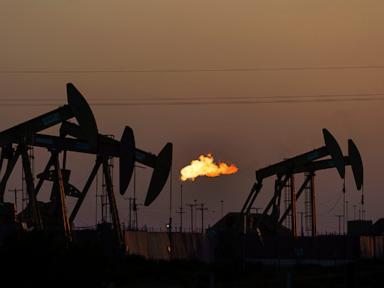
- Incomplete Combustion (Flaring): The burning of associated natural gas produced alongside crude oil when gathering pipeline infrastructure is unavailable or capacity-constrained. While flaring converts methane into carbon dioxide, unlit flares or inefficient combustion tips operating in high crosswinds routinely slip unburned methane directly into the atmosphere.
Federal regulations established under the EPA’s 2023/2024 rulemaking and the Inflation Reduction Act’s Methane Emissions Reduction Program (MERP) targeted all three vectors simultaneously. They mandated frequent optical gas imaging (OGI) surveys, phased out gas-driven pneumatic devices in favor of instrument air or electric actuators, and instituted a progressive Waste Emissions Charge (WEC) starting at $900 per metric ton of methane above specific intensity thresholds, rising to $1,500 per metric ton.
Loosening these restrictions dismantles the federal enforcement mechanism behind these technical upgrades, altering the unit economics of marginal wells.
The Asymmetric Cost Function of Compliance
A critical analytical failure in standard media coverage is treating the oil and gas industry as a monolith that uniformly benefits from deregulation. In reality, compliance costs exhibit steep economies of scale, creating a sharp divergence between supermajors and small independent operators.
Tier-One Operators and Export Constraints
Multinational energy firms and large publicly traded independents operate under capital discipline dictated by institutional investors and international buyers. For these entities, federal deregulation does not trigger a return to legacy venting practices for two structural reasons.
First, capital expenditures for zero-emission pneumatic retrofits and continuous monitoring networks have largely been sunk or committed in multi-year budgets. Stripping out installed electric actuators to revert to gas-bleed devices makes zero economic sense.
Second, international market access increasingly requires verified emissions intensity. European Union methane regulations, which impose strict monitoring, reporting, and verification (MRV) requirements on imported fossil fuels, act as a de facto global standard. Liquefied Natural Gas (LNG) exporters feeding European and Asian utilities cannot afford high methane intensity profiles without risking long-term off-take agreements or facing carbon border adjustments. For major producers in the Permian Basin or Haynesville Shale, maintaining low methane intensity—often targeted below 0.20% of total gas produced—is a commercial prerequisite for market access, entirely independent of EPA enforcement.
Marginal Producers and Stripper Wells
The true beneficiaries of regulatory rollback are small, privately held operators managing mature, low-producing assets, commonly known as stripper wells (wells producing fewer than 15 barrels of oil equivalent per day).
For a stripper well operating on razor-thin margins, the fixed cost of quarterly OGI camera inspections, third-party aerial flyovers, and retrofitting legacy tank batteries can exceed the net present value of the well's remaining reserves. Under strict federal mandates, operators face a binary choice: spend capital to seal leaks on a depleting asset, or plug and abandon the well prematurely.
Loosening federal methane rules acts as an immediate operating expense (OpEx) subsidy for these marginal assets. By eliminating mandatory LDAR frequencies and removing the threat of the federal Waste Emissions Charge, small operators can extend the economic life of aging wells without deploying capital for emissions abatement. Because marginal wells disproportionately account for a massive percentage of total U.S. upstream methane leaks relative to their minor share of total hydrocarbon production, keeping these wells online without abatement protocols guarantees a disproportionate spike in aggregate emissions.
The Structural Tension Between Federal Rollbacks and State-Level Regimes
Rolling back EPA rules does not create a regulatory vacuum across all producing basins. Oil and gas extraction is governed by a patchwork of federal and state jurisdictions, meaning the impact of deregulation varies wildly depending on basin geography.
In states with aggressive environmental mandates—most notably Colorado and New Mexico—state agencies enforce rules that match or exceed federal baselines. Colorado’s Air Quality Control Commission (AQCC) enforces stringent LDAR schedules, zero-bleed pneumatic rules, and strict flaring bans that remain legally binding regardless of federal shifts. Similarly, New Mexico’s Oil Conservation Division (OCD) enforces a mandatory 98% gas capture rule across the state's portion of the Permian Basin.
Conversely, states like Texas, North Dakota, and Wyoming rely heavily on federal baselines or maintain far more permissive state-level flaring and venting exemptions. In the Texas side of the Permian Basin, where the Railroad Commission of Texas routinely grants flaring permits, federal deregulation immediately removes the primary regulatory constraint on associated gas management. This creates a sharp regulatory arbitrage within the exact same geological formation: a well drilled in Lea County, New Mexico, remains bound by strict capture mandates, while a well drilled five miles south in Loving County, Texas, reverts to permissive state oversight.
Technological Substitution and the Invisible Monitoring Layer
Even if federal inspectors stop enforcing LDAR protocols and the EPA suspends reporting mandates under Subpart W of the Greenhouse Gas Reporting Program, the informational asymmetry that once allowed operators to leak methane undetected no longer exists.
Over the past five years, remote sensing technology has shifted methane detection from an internal, self-reported compliance exercise to an external, continuous surveillance regime.
- Orbital Spectroscopy: Satellites equipped with short-wave infrared (SWIR) spectrometers—including MethaneSAT, Carbon Mapper’s Tanager constellation, and the European Space Agency’s Sentinel-5P—continuously scan global oil and gas basins. These platforms detect point-source super-emitters down to plumes of 100 kilograms per hour or less, attributing leaks directly to specific facility coordinates.
- Aerial LiDAR and Hyperspectral Surveys: Commercial flyover campaigns conducted by academic consortia, environmental NGOs, and institutional investors regularly map entire basins, publishing facility-level leak rates in peer-reviewed journals and public databases.
This transparency creates a permanent reputational and financial liability. Institutional lenders, insurance underwriters, and ESG-mandated equity funds ingest this third-party satellite data directly into their risk models. An operator flagged repeatedly by orbital sensors as a chronic super-emitter faces a higher cost of capital, wider credit spreads, and increased scrutiny during mergers and acquisitions, even if their emissions are entirely legal under weakened federal statutes.
The Economic Paradox of Captured Gas
A persistent flaw in conventional analysis is viewing methane abatement purely as a deadweight regulatory cost. Because methane is a saleable commodity, every molecule vented or leaked represents lost revenue.
The economic viability of capture depends entirely on the spread between the capital cost of abatement equipment and the local realized price of natural gas. In basins with robust takeaway capacity—such as the Marcellus Shale in Appalachia—capturing fugitive gas often yields a positive internal rate of return (IRR) when Henry Hub prices sit above $3.00 per MMBtu.
The breakdown occurs in associated gas plays like the Permian Basin or the Bakken Formation, where operators drill primarily for crude oil. When pipeline takeaway capacity hits bottlenecks, local natural gas hub prices (such as the Waha Hub in West Texas) frequently drop to zero or turn deeply negative, meaning producers must pay midstream companies to take the gas off their hands.
Under negative pricing conditions, the market incentive to capture methane collapses completely. Without a federal regulatory mandate penalizing venting and flaring, rational profit-maximizing operators will vent or flare associated gas whenever local takeaway capacity tightens, prioritizing high-margin crude oil extraction over valueless natural gas capture. Federal regulations previously forced operators to internalize this externality, compelling them to throttle oil production or pay for expensive gas-gathering infrastructure during pipeline bottlenecks. Removing those rules restores the economic incentive to flare during capacity crunches.
Operational Limitations of Voluntary Industry Initiatives
Proponents of deregulation frequently argue that voluntary industry frameworks—such as the Oil and Gas Methane Partnership (OGMP 2.0) or the Environmental Partnership—render federal mandates redundant. Operational reality exposes severe limitations in relying on voluntary compliance.
Voluntary programs suffer from acute selection bias. Membership is dominated by large, well-capitalized public companies that already possess the engineering teams and balance sheets required to execute advanced MRV protocols. Private equity-backed drillers, distressed asset aggregators, and legacy stripper-well operators rarely participate in rigorous voluntary frameworks because they face no public shareholder pressure and possess no international export ambitions.
Furthermore, voluntary initiatives lack enforcement teeth. Failing to meet a voluntary intensity target carries no statutory fines, no permit revocations, and no legal injunctions. When commodity prices crash and operators enter cash-preservation mode, voluntary sustainability budgets are invariably the first line items cut during operational restructuring. Federal regulation exists specifically to enforce compliance across the tail end of the distribution curve—the laggard operators who lack internal incentives to abate emissions.
Strategic Execution for Energy Operators and Investors
Navigating a fragmented regulatory environment where federal mandates retreat while state rules, international import standards, and satellite surveillance tighten requires precise strategic positioning.
- Maintain Tier-One MRV Infrastructure: Upstream operators should resist the temptation to dismantle OGI survey schedules or pause continuous monitoring deployments. The capital cost of maintaining measurement-informed inventory systems is minor compared to the valuation discount applied by institutional buyers and LNG off-takers when a producer cannot verify low methane intensity.
- Exploit Regulatory Arbitrage Carefully in M&A: Acquirers evaluating bolt-on acquisitions in deregulated states like Texas must price future regulatory snap-back risk into their discounted cash flow (DCF) models. Federal rules enacted via executive action or agency rulemaking are inherently cyclical; assets acquired with high fugitive emission profiles carry contingent liabilities that will materialize the moment political control shifts or state agencies tighten flaring permits.
- Target High-ROI Abatement via Marginal Abatement Cost Curves: Operators should abandon blanket compliance spending and instead deploy capital strictly along a site-specific Marginal Abatement Cost (MAC) curve. Prioritize zero-cost or negative-cost interventions—such as fixing leaking thief hatches, optimizing flare combustion efficiency, and replacing high-bleed pneumatic controllers in basins with positive gas netbacks—while deferring capital-intensive electrification projects on late-life wells slated for plugging within 36 months.
- Hedge Takeaway Capacity in Associated Gas Plays: With federal flaring restrictions loosened, pipeline operators in the Permian Basin face reduced urgency to overbuild gathering capacity for marginal pads. Oil-weighted producers must lock in firm midstream takeaway agreements early to avoid forced production curtailments if state regulators or ESG-sensitive lenders restrict flaring during future Waha Hub price collapses.