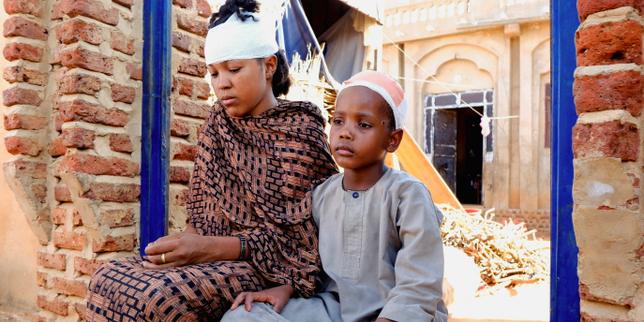
The international community has issued another urgent warning. The UN, various human rights watchdogs, and Western diplomatic missions are sounding the alarm over El-Obeid, the strategic capital of North Kordofan in Sudan. They warn of imminent "mass atrocities" as the Rapid Support Forces (RSF) tighten their grip around the Sudanese Armed Forces (SAF) stronghold. The consensus is clear: the world must watch, condemn, and prepare a humanitarian intervention framework.
The consensus is also completely blind.
For decades, the standard playbook for African conflicts has relied on this exact sequence: localized escalation, generic international condemnation, high-level "atrocity alerts," and the eventual deployment of toothless monitoring mechanisms. This setup does not just fail to stop violence. It actively accelerates it. By treating the siege of El-Obeid as an isolated humanitarian emergency waiting to happen, the international community misreads the structural reality of Sudan's war.
The Western policy apparatus remains obsessed with the idea that public shaming and symbolic diplomatic pressure can deter commanders on the ground. I have spent years tracking armed group dynamics and logistics networks across East Africa, watching well-meaning diplomatic declarations morph into tactical assets for warlords. The hard truth is that international outcry does not deter the RSF or the SAF. It signals their strategic value.
The Flawed Premise of the Atrocity Alert
The mainstream narrative treats El-Obeid as a passive victim caught in a sudden geopolitical storm. Western analysts ask: "How can we pressure the RSF to prevent a massacre?"
This is the wrong question. It assumes the RSF operates like a traditional state actor sensitive to international legitimacy or future diplomatic sanctions. It does not. The RSF is a highly mobile, financially self-sufficient paramilitary network fueled by regional gold smuggling networks and foreign patronage.
When the UN or Washington issues a high-profile alert about an imminent battle, they are not setting a moral boundary. They are publishing a map of critical vulnerabilities.
[International Atrocity Alert Issued]
       │
       ▼
[Signals Tactical Value & Impending Collapse]
       │
       ▼
[RSF Accelerates Offensive / SAF Hoards Resources]
An international warning acts as validation that a target is on the verge of breaking. For the RSF, an atrocity alert confirms that the SAF's defensive lines in El-Obeid are under maximum strain. It tells them that the international community expects the city to fall, which lowers the perceived cost of the final push. For the SAF, these alerts are leveraged not to protect civilians, but to extract more unconditional military aid and weapons from regional allies by playing the victim card.
Why El Obeid is Not Darfur
The media routinely compares the threat to El-Obeid with the horrors witnessed in El Fasher or wider Darfur. This lazy comparison misses the complex ethnic and economic mechanics of North Kordofan.
Darfur's violence is deeply rooted in historic, structured ethnic polarization between Arab and non-Arab communities, weaponized over decades by the central state. El-Obeid is entirely different. It is a commercial hub, the historical nerve center of the global gum arabic trade, and a critical logistical crossroads connecting Khartoum to the west.
The battle for El-Obeid is not an ideological or ethnic cleansing campaign. It is a cold, calculated fight for a logistics choke point.
- The SAF Perspective: Losing El-Obeid means losing the last major defensive buffer protecting central Sudan from total western encirclement.
- The RSF Perspective: Securing El-Obeid provides a permanent, paved supply line from their tribal heartlands directly into the capital.
When you treat a resource and logistics war as an ethnic hate crime in waiting, your prescriptions fail. You suggest human rights monitors when the situation actually dictates a complete disruption of the fuel and arms supply lines entering the theater.
The High Cost of Selective Directives
The conventional wisdom dictates that the UN should broker localized ceasefires or "safe zones" for civilians in El-Obeid.
Let us look at how that actually plays out on the ground. In every major urban siege in recent Sudanese history, localized ceasefires have been systematically used by both factions to regroup, rearm, and clear out civilian populations that get in the way of heavy artillery.
A designated "safe zone" in a city like El-Obeid quickly becomes an operational constraint for defensive forces and a concentrated target for besieging forces. When civilians gather in a single sector under nominal international protection, it allows the SAF to abandon its policing duties and repurpose its infantry for aggressive counter-offensives. Conversely, it provides the RSF with an easy leverage point: shell the civilian concentration to force a military surrender.
The downside to acknowledging this reality is brutal. It means admitting that short-term humanitarian band-aids often prolong the combat lifecycle. But ignoring it means continuing to fund a theater of protection that yields nothing but body counts.
Dismantling the Global Sanctions Myth
Whenever an atrocity alert is published, the inevitable follow-up demand from global capitals is "targeted sanctions" against individual commanders.
This strategy is an absolute joke. The top brass of the RSF and the senior generals of the SAF do not hold their wealth in liquid retail banking accounts in New York or London. Their operations are sustained via decentralized hawala networks, physical gold hand-offs, and front companies operating out of regional logistical hubs that consistently ignore Western diplomatic pressure.
Sanctioning a general while leaving the regional gold markets untouched is like trying to stop a wildfire by suing the wind. It looks busy on a press release, but it changes absolutely nothing on the front lines in Kordofan.
The Reality of Local Resilience
Stop expecting a fractured, paralyzed international community to fly in and save El-Obeid. The only mechanisms that have consistently mitigated civilian casualties in this conflict are the local Resistance Committees and emergency response rooms.
While international agencies evacuate their staff at the first sign of mortar fire, these youth-led local networks stay. They manage the field hospitals, distribute grain, and negotiate directly with mid-level militia commanders to keep water stations running.
If external actors genuinely want to alter the trajectory of the siege, they must stop filtering aid through top-heavy, risk-averse UN bureaucracies that spend 80% of their budgets on logistics and security in neighboring countries. They need to route funds directly into the crypto-wallets and cash networks of the Sudanese youth running the emergency kitchens on the ground.
Take the keys away from the diplomatic corps. Stop issuing useless declarations that serve as tactical green lights for paramilitaries. Cut the funding to the boardroom talks and pivot entirely to backing the local networks that actually understand the terrain.


