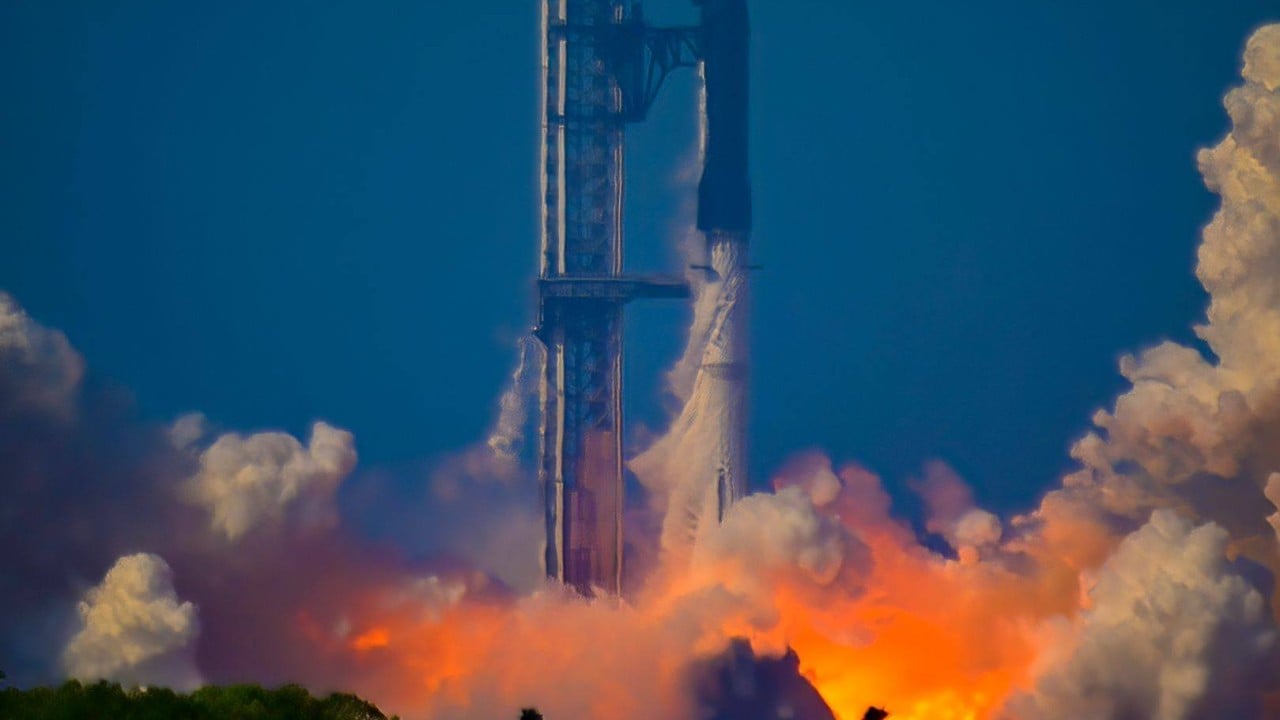
Ground-based electromagnetic launch (EML) systems acting as a zero-stage booster represent a theoretical mechanism for lowering mass-to-orbit costs. Deploying this scale of infrastructure on the Tibetan Plateau—frequently termed the roof of the world—presents a complex optimization problem. The core objective is to inject high initial kinetic energy into a launch vehicle prior to main engine ignition, bypassing the steepest portion of Earth’s gravity and atmospheric wells. While the combination of high altitude and electromagnetic propulsion offers undeniable physics-based advantages, the operational realities, infrastructure bottlenecks, and engineering tolerances introduce significant structural limitations.
The Mathematical Foundation of Ground-Based EML Assist
To evaluate the utility of an EML track on the Tibetan Plateau, the system must be analyzed through the Tsiolkovsky rocket equation, modified to account for an initial velocity injection: For a more detailed analysis into similar topics, we suggest: this related article.
$$\Delta v_{required} = v_{orbital} + v_{losses} - v_0$$
Where $v_{orbital}$ is the required terminal velocity for low Earth orbit (approximately $7.8 \text{ km/s}$), $v_{losses}$ accounts for atmospheric drag and gravitational steering losses, and $v_0$ is the exit velocity achieved via the electromagnetic track on the ground. For broader information on this issue, in-depth analysis can be read on Gizmodo.
The standard mass ratio equation determines how much propellant a vehicle must carry:
$$\frac{m_0}{m_f} = \exp\left(\frac{\Delta v_{required}}{I_{sp} g_0}\right)$$
In a conventional vertical launch, the vehicle must lift its entire initial mass ($m_0$), including the massive propellant load required to break through the dense lower atmosphere. By introducing a ground-based $v_0$ of Mach 1.6 (approximately $550 \text{ m/s}$), the required onboard delta-v drops directly by that margin.
The relationship between the injected velocity and payload capacity is non-linear. Because the mass ratio is exponential, a $7%$ to $10%$ reduction in required delta-v can translate to a $50%$ to $100%$ increase in net payload mass for a fixed liftoff weight. China’s Ziyang Commercial Space Launch Technology Research Institute and private aerospace firms like Galactic Energy are actively targeting this specific optimization for vehicles like the Ceres-2.
The Atmospheric and Topographical Calculus
The primary justification for locating an EML facility on the Tibetan Plateau rather than at sea level is the reduction in atmospheric density. At an average elevation of 4,500 meters, the ambient barometric pressure is roughly $57%$ of sea-level value, dropping from $101.3 \text{ kPa}$ to approximately $58 \text{ kPa}$.
This geographic positioning alters the aerodynamic drag equation:
$$D = \frac{1}{2} \rho v^2 C_d A$$
Where $\rho$ is the atmospheric density, $v$ is the vehicle velocity, $C_d$ is the drag coefficient, and $A$ is the cross-sectional area.
Reducing $\rho$ by more than $40%$ lowers the mechanical stress and aerodynamic drag experienced by the vehicle during its hyper-velocity transit down the launch track. Lower density permits a much higher $v_0$ before the vehicle encounters the structural barrier of maximum aerodynamic pressure ($q_{max}$).
The Thermal Deficit
The altitude advantage introduces an adversarial thermodynamic property: the speed of sound drops as temperature decreases. The ambient temperature at 4,500 meters elevation routinely drops to $-15^\circ\text{C}$ or lower. The speed of sound ($a$) is governed by the ideal gas relationship:
$$a = \sqrt{\gamma R T}$$
Lower absolute temperatures ($T$) compress the acoustic velocity. A vehicle traveling at $550 \text{ m/s}$ at sea level moves at roughly Mach 1.6. On the cold Tibetan Plateau, that same absolute velocity corresponds to a higher Mach number. This acceleration into high supersonic regimes increases the localized aerothermal heating rates along the vehicle’s nose cone and leading edges prior to track separation. The vehicle skin must be engineered with advanced thermal protection systems (TPS) simply to survive the ground-run phase, adding dead-weight that penalizes the upper-stage mass fraction.
The Energy Infrastructure Bottleneck
The energy function required to accelerate a flight vehicle to supersonic speeds over a finite ground track dictates the physical scale of the power infrastructure. To launch a medium-class vehicle weighing 50 metric tons ($50,000 \text{ kg}$) to a target exit velocity ($v_0$) of $600 \text{ m/s}$ requires a massive injection of kinetic energy ($E_k$):
$$E_k = \frac{1}{2} m v^2 = \frac{1}{2} (50,000) (600)^2 = 9 \times 10^9 \text{ Joules}$$
Assuming a track length of 3 kilometers, the duration of the acceleration event ($t$) is brief:
$$t = \frac{2d}{v_0} = \frac{2(3000)}{600} = 10 \text{ seconds}$$
Delivering 9 Gigajoules of energy over a 10-second window requires a sustained average power output of 900 Megawatts. Factoring in mechanical, electromagnetic, and thermal conversion inefficiencies—which typically limit system efficiency to roughly $30%$ to $40%$ even with matrix switching and segmented power supplies—the grid draw or storage discharge rate must exceed 2.2 Gigawatts during the pulse window.
[Power Generation Grid / Hydro/Solar Array]
                    │
                    ▼
       [Flywheel Energy Storage Banks]
                    │
                    ▼
     [Matrix Switching Control Network]
                    │
                    ▼
  [Segmented High-Temp Superconducting Maglev Track]
                    │
                    ▼
     [Rocket Vehicle Kinetic Injection]
A direct grid draw of this magnitude would destabilize regional electrical architecture. The launch facility requires localized energy storage networks. The Ziyang facility has verified the use of heavy flywheel energy storage blocks paired with high-temperature superconducting magnetic levitation. These flywheels operate as mechanical batteries, spinning up slowly via steady grid power over hours, then discharging their accumulated angular momentum via generators in a massive, multi-gigawatt burst lasting seconds.
Structural and Civil Engineering Constraints
Maintaining sub-millimeter structural tolerances across a multi-kilometer EML track is highly challenging on the Tibetan Plateau. The region is characterized by two distinct geologic liabilities:
- Active tectonic faulting and seismic displacement.
- Permafrost degradation and seasonal freeze-thaw cycles.
Linear Synchronous Motors (LSMs) rely on a minute, precise air gap between the moving launch carriage (the sabot) and the stationary stator coils on the guide track. If ground settling or permafrost shifting warps the track by even a few millimeters over a 100-meter span, the magnetic field uniformity collapses. This variation introduces asymmetric normal forces, causing structural contact between the sabot and the track at supersonic speeds, resulting in catastrophic mechanical failure.
The foundations must penetrate deep into the bedrock beneath the active permafrost layer, utilizing active thermal stabilization piles—similar to those deployed along the Qinghai-Tibet railway—to prevent seasonal shifting. The structural maintenance overhead for an EML track under these conditions creates an ongoing operational cost penalty that reduces the economic advantage over traditional, mobile vertical launch pads.
Strategic and Orbital Utility
The geopolitical utility of a Tibetan EML facility lies in high-cadence, highly resilient launch capabilities. Traditional vertical liquid-propellant rockets require lengthy assembly, transport, erection, and fueling timelines on the pad. An EML facility using solid-fueled or pre-integrated liquid upper stages can execute rapid-succession launches, limited primarily by the recharge cycle of the flywheel energy storage banks and the cooling rates of the stator segments.
This rapid-turnaround architecture aligns with China's deployment goals for large-scale low Earth orbit internet architectures, such as the Qianfan (Thousand Sails / SpaceSail) constellation. When thousands of active satellites must be sustained and depleted assets replaced instantly, the launch bottleneck shifts from vehicle manufacturing to pad throughput.
Furthermore, dual-use technology linkages are already evident. The underlying engineering principles developed by naval researchers like Ma Weiming for aircraft carrier catapults (EMALS) have transitioned into modular, truck-mounted EML military rocket artillery systems tested by the People's Liberation Army Rocket Force in high-altitude border sectors. A fixed, orbital-scale EML facility acts as the logical technological extension of these mobile, tactical systems.
Economic Viability Realities
The deployment decision hinges on a classic capital expenditure (CapEx) versus operational expenditure (OpEx) trade-off.
- Traditional Reusable Rockets (e.g., Long March 12B, Falcon 9): Low initial pad CapEx; higher per-flight OpEx tied to propellant consumption, hardware wear, and complex marine or land recovery logistics for the first-stage booster.
- Ground-Based EML Assist: Extreme upfront CapEx to construct the maglev track, energy storage banks, and specialized thermal-hardened launch vehicles; near-zero first-stage hardware disposal per flight, dropping the incremental OpEx to the cost of electricity and upper-stage components.
The system only achieves parity if the launch frequency is high enough to amortize the massive infrastructure cost across thousands of payloads. If China’s commercial and state satellite demand remains distributed across diverse orbital inclinations, a fixed EML track on the Tibetan Plateau suffers an inclination penalty.
Because the track is a permanent geostationary structure, it fires projectiles into a fixed azimuth. Altering the orbital plane after launch requires significant propellant expenditure from the spacecraft itself, nullifying the delta-v savings gained from the ground launch. Consequently, a Tibetan EML site is fundamentally optimized for high-volume, single-inclination constellation deployment, rather than acting as a flexible, multi-purpose spaceport.
The strategic play for this technology requires restricting the EML architecture to a specific mass envelope—such as small to medium tactical reconnaissance or communications satellites—while utilizing traditional vertical reusable systems for heavy, variable-inclination payloads. Rather than replacing conventional spaceflight, the Tibetan electromagnetic launch pad functions as a highly specialized, ultra-high-cadence orbital delivery mechanism designed to secure rapid satellite replenishment capabilities.