Most actors spend their nineties collecting dust on a mantelpiece and calling it a legacy. Ellen Burstyn decided to spend hers playing a one-hundred-year-old Marilyn Monroe.
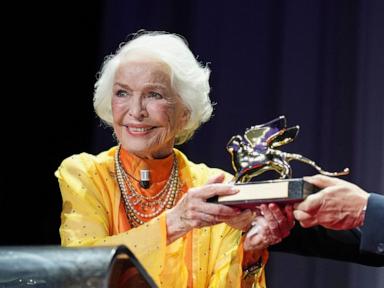
At ninety-three, Burstyn didn't just travel to the Venice Film Festival to accept a Golden Lion for Lifetime Achievement. She arrived with a 17-minute short film called Flesh Impact, directed by Maggie Gyllenhaal, where she embodies Monroe at a century old, standing alone on a stage to audition. It is terrifying, brilliant, and completely untethered from the polite expectations we place on aging legends. Meanwhile, you can find similar events here: Inside the Tragic Legal Reckoning Facing Former Reality TV Star Deshundre Vinson.
We love to put older artists in glass boxes. We honor them, we applaud their past work, and we quietly expect them to retire from taking risks. Burstyn smashed that box to pieces on the Lido.
The Shared Lineage Between Two Icons
Playing Marilyn Monroe when you are ninety-three sounds like a bad internet rumor. Yet, the connection runs deeper than a simple casting stunt. To understand the bigger picture, check out the recent analysis by Associated Press.
While Burstyn never crossed paths with Monroe as an inner-circle friend, their lives brushed against each other in subtle ways. They shared a massage therapist early on. That same therapist once lent Burstyn a heavily worn copy of The Thinking Body—a book belonging to Monroe. Inside its pages were old receipts and marginalia left behind by a woman the public thought they knew, but entirely misunderstood.
Burstyn understood something crucial about her predecessor long before Gyllenhaal handed her this script. Monroe wasn't just a passive victim of studio machinery. She was a creator.
"She created the whole concept of Marilyn Monroe and played it," Burstyn noted.
Once, years ago, Burstyn spotted Monroe in a crowded nightclub. The blonde star caught a young Burstyn's eye, held her gaze, and offered a quiet nod of recognition. That single moment stuck. It wasn't just starstruck wonder; it was one working actress acknowledging the sheer armor required to survive the gaze of Hollywood.
Why Maggie Gyllenhaal Chose the Hardest Possible Angle
The project started in an unusual boardroom corner. Genesis, the luxury car brand, approached Gyllenhaal to create a piece tied to what would have been Monroe's one-hundredth birthday. Most directors would have leaned into nostalgia, archival footage, or a glossy, romanticized pastiche.
Gyllenhaal did the exact opposite. She imagined Monroe at one hundred years old, stripping away the glamour to face the most vulnerable ordeal imaginable for an actor: an audition, completely alone on a stage.
She immediately dialed Burstyn. She didn't want a younger actress in heavy aging prosthetics. She wanted a living legend who actually carried the weight of decades in the cinema.
The collaboration worked because both women share an absolute intolerance for superficiality. When you watch Flesh Impact, you aren't watching a historical reenactment. You are watching two distinct generations of cinematic rebels stripping away every defensive layer.
Surviving a Century of Cinema Without Allies
You cannot talk about Burstyn's longevity without talking about how radically the industry has shifted beneath her feet. When she broke into the business over half a century ago, the environment was hostile to women in ways younger filmgoers can barely fathom.
"When I first started working, which was 150 years ago, there were no women on the set," Burstyn reflected during her Venice press appearance. "There were no women crew. There was no woman behind the camera. If a woman was on set, that meant that she was an actress."
The shift didn't happen by accident. She openly credits cultural architects like Gloria Steinem for cracking open the collective consciousness of film sets. Today, Burstyn walks onto sets populated by female crew members, directors, and executives—a landscape she helped build through sheer endurance and uncompromising choices.
Her filmography reads like a masterclass in refusing to be typecast. From her breakthrough in The Last Picture Show to the bone-chilling terror of The Exorcist, her Oscar-winning turn in Alice Doesn't Live Here Anymore, and later genre-bending work in Requiem for a Dream and Interstellar, she has never repeated herself. She looks for scripts that disturb her, challenge her, and force her to dig deeper.
The Truth About Craft Over Trophies
When festival director Alberto Barbera handed her the Golden Lion, he praised her rare intensity and civic engagement within the craft. Yet, standing on stage in her gown, Burstyn admitted she felt slightly overwhelmed, questioning what she had actually done to deserve such a monumental laurel.
The answer is simple. She survived the meat grinder of American cinema by trusting her foundation.
She constantly points back to her training at the Actors Studio, where she learned the rigorous internal mechanics of the Method under Lee Strasberg. That training is the anchor keeping her grounded while contemporary culture treats aging icons like fleeting internet content.
Most people assume a lifetime achievement award is a polite retirement package. A gold-plated gold watch telling you to go home.
Ellen Burstyn used hers to step back onto a stage, put on the ghost of Marilyn Monroe, and show every younger actor in the business how the work is actually done. She isn't looking back at her history. She is too busy making sure the present remains entirely hers.