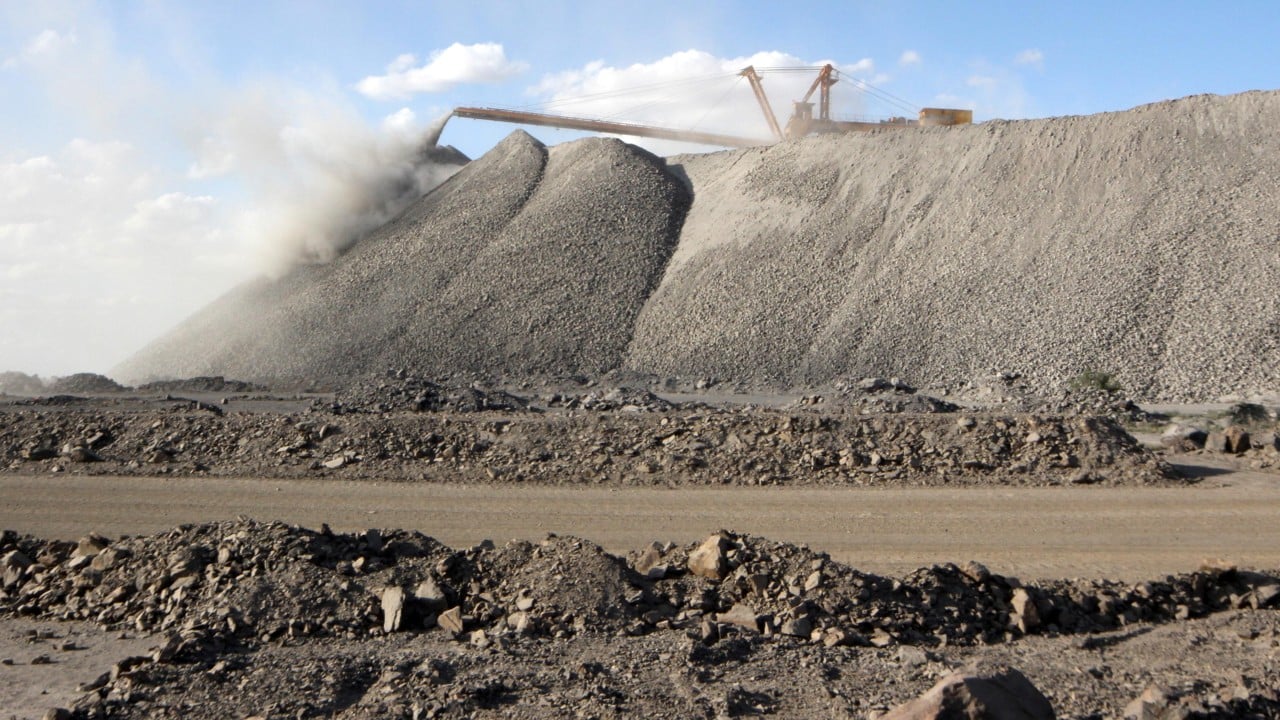
Two seemingly disconnected headlines—falling American travel to China and a massive rare earth discovery in Turkey—actually tell the exact same story about the fracturing global economy. While Beijing struggles to lure Western tourists back despite aggressive visa waivers, Ankara is racing to turn 694 million tons of newly publicized ore in Eskişehir into a Western alternative to Chinese mineral dominance. Both efforts are hitting a wall built out of hard economics, geopolitical friction, and decades of structural neglect.
For decades, global commerce ran on a simple bargain. The West outsourced heavy, dirty industrial processing to China while keeping high-margin finance, technology, and consumer spending at home. People moved freely between Washington, New York, Beijing, and Shanghai to grease the wheels of that trade. Today, that human bridge is collapsing, and trying to rebuild the physical supply chain elsewhere is proving far harder than politicians admit.
The Human Disconnect Behind Falling China Travel
Airline executives do not care about diplomatic talking points. They care about load factors and fuel burn. Right now, the math on transpacific routes is brutal.
Despite Beijing rolling out unilateral visa-free entry for dozens of countries and loosening payment restrictions for foreign credit cards, American and European travelers are staying away. Major international carriers—including British Airways, Lufthansa, Virgin Atlantic, and Qantas—have slashed or outright canceled routes to mainland China because the seats simply are not selling.
Why Visa Waivers Cannot Fix a Broken Experience
The drop in US visitors is driven by three concrete barriers that policy tweaks cannot erase overnight:
- Punitive Airfare and Routing: Because Western airlines are barred from Russian airspace, flights between the United States and China require longer, fuel-heavy detours. Tickets regularly cost two to four times what they did in 2019, pricing out casual vacationers and forcing corporations to replace in-person meetings with video calls.
- The Digital Walled Garden: China operates on an entirely separate technological stack. Without a local bank account, a Chinese phone number, and mastery of super-apps like Alipay or WeChat, basic survival—ordering food, hailing a cab, buying a train ticket—becomes a daily obstacle course. Western maps, search engines, and messaging apps are blocked behind the Great Firewall.
- Perceived Legal Risk: State Department travel advisories warning of exit bans and arbitrary enforcement of local laws have chilled corporate travel. Multinational firms no longer send mid-level executives to Shanghai on a whim; every trip now requires legal sign-off and burner devices.
When people stop visiting a country, capital follows. Foreign direct investment into China has dried up alongside tourist arrivals. Business is built on trust, and trust does not survive when executives stop shaking hands.
Turkey's Rare Earth Gamble Hits a Metallurgical Wall
While Western travelers pull back from East Asia, Western governments are desperately hunting for ways to break Beijing's stranglehold on critical minerals. Enter Turkey.
Ankara has spent the last few years touting a massive deposit in the Beylikova district of Eskişehir, claiming 694 million tons of ore containing 17 different rare earth elements. On paper, that makes it the second-largest deposit on earth, trailing only China's Bayan Obo complex. Turkish officials have framed the find as an instant geopolitical trump card—a NATO ally ready to supply Europe and the United States with the raw materials needed for electric vehicles, wind turbines, and fighter jets.
The reality on the ground is far messier.
Resource Estimates Are Not Proven Reserves
In the mining industry, there is a vast gulf between finding rocks in the ground and running a profitable mine. Turkey's 694-million-ton figure is a resource estimate, not a proven reserve. Proven reserves require rigorous, independent drilling and economic modeling to prove the minerals can actually be extracted at a profit under current market prices.
Current geological modeling puts the Beylikova deposit at an average total rare earth oxide grade of roughly 1.75 percent. That is respectable, yielding a theoretical potential of around 12.5 million tons of oxides. However, the ore is locked inside a complex matrix alongside fluorite, barite, and—most critically—thorium and uranium.
The Processing Bottleneck Nobody Wants to Own
Rare earths are not actually rare. They are scattered across the earth's crust in dozens of countries. China dominates the sector not because it holds a monopoly on rocks, but because it spent forty years absorbing the environmental damage and mastering the brutal chemical engineering required to separate those rocks into usable metals.
Turkey currently possesses zero commercial-scale rare earth separation capacity. State mining giant Eti Maden operates a pilot plant at Beylikova, which is a necessary first step. Scaling a pilot facility into an industrial refinery capable of producing high-purity neodymium or praseodymium for permanent magnets takes fifteen to twenty years and billions of dollars in capital.
| Supply Chain Stage | China's Current Position | Turkey's Current Reality |
|---|---|---|
| Raw Ore Extraction | Controls roughly 60-70% of global mining | Unverified resource estimate of 694M tons |
| Chemical Separation | Controls nearly 90% of global refining | Pilot plant only; no commercial separation |
| Radioactive Waste | Established industrial containment zones | Zero institutional experience with thorium |
| Magnet Manufacturing | Dominates global sintered magnet output | No downstream alloy or magnet industry |
Even more problematic is the radioactive byproduct. Separating Beylikova ore generates low-level radioactive thorium and uranium waste. Turkey has no commercial nuclear fuel cycle experience and a troubling recent track record on mining safety, highlighted by the catastrophic 2024 heap-leach landslide at the Çöpler gold mine. Western automakers and defense contractors face strict environmental, social, and governance audits. They cannot buy minerals refined in facilities that dump radioactive tailings into unlined pits.
The Geopolitical Tug of War Over Refining
Ankara knows it lacks the proprietary chemical engineering to crack the Beylikova ore alone. That realization triggered a quiet diplomatic bidding war between Beijing and Washington.
In late 2024, Turkish officials signed a preliminary memorandum with Chinese state-backed entities to explore developing the site. The talks quickly hit a wall. Beijing wanted to dig up the raw ore in Turkey and ship it to China for refining, keeping the high-value chemical processing and intellectual property firmly inside Chinese borders. Ankara refused. Having watched its trade deficit with China balloon past $40 billion annually, Turkey is tired of exporting cheap raw commodities while importing expensive finished goods.
That stalemate pushed Turkey back toward the United States and European partners. Western governments are eager to fund non-Chinese supply chains, yet private Western capital remains hesitant.
"Building a rare earth refinery without state-backed price floors is financial suicide. Whenever a Western project nears completion, Beijing simply floods the market, crashes the price of neodymium oxide, and bankrupts the newcomer before they pour their first ingot."
For a hypothetical consortium of European industrial firms looking at Beylikova, the risk profile is daunting. Beyond the technical headache of separating complex fluorite-barite ore, investors must weigh Turkey's currency volatility, shifting regulatory rules, and Ankara's habit of using strategic assets as bargaining chips in broader diplomatic disputes with NATO allies.
Why Both Stories Point to the Same Structural Shift
Look at the empty business-class cabins on flights to Beijing and the stalled refining negotiations in Ankara side by side. They are two halves of the same fractured system.
For thirty years, efficiency was the only metric that mattered. If China could refine rare earths cheaper than anyone else, the world let China do it. If American executives needed to check on a factory in Shenzhen, they hopped on a direct flight for twelve hundred dollars.
That era is dead. Resilience has replaced efficiency as the primary goal of industrial policy, and resilience is wildly expensive.
- The Cost of Isolation: As Westerners stop visiting China, domestic consumption inside China turns inward, and foreign companies accelerate "China Plus One" manufacturing strategies. Yet moving a factory to Vietnam, Mexico, or India does not sever the cord if the raw materials inside the products still pass through a Chinese refinery.
- The Illusion of Quick Fixes: Politicians love announcing massive mineral discoveries or new visa-free travel schemes because they generate immediate headlines. Neither solves the underlying plumbing problem. You cannot decree a supply chain into existence, and you cannot force tourists onto ten-hour detours into a digital ecosystem that locks them out.
Western policymakers often treat critical minerals like oil—a simple matter of drilling a hole and pumping the product onto a tanker. Rare earths are closer to pharmaceuticals. They require precise chemical recipes, specialized reagents, and years of trial-and-error metallurgy to reach commercial purity.
Until Washington and Brussels put real money behind guaranteed price floors and midstream refining infrastructure—rather than just celebrating raw dirt in Turkey—Beijing will keep its grip on the industrial choke points, no matter how empty its international airports become.