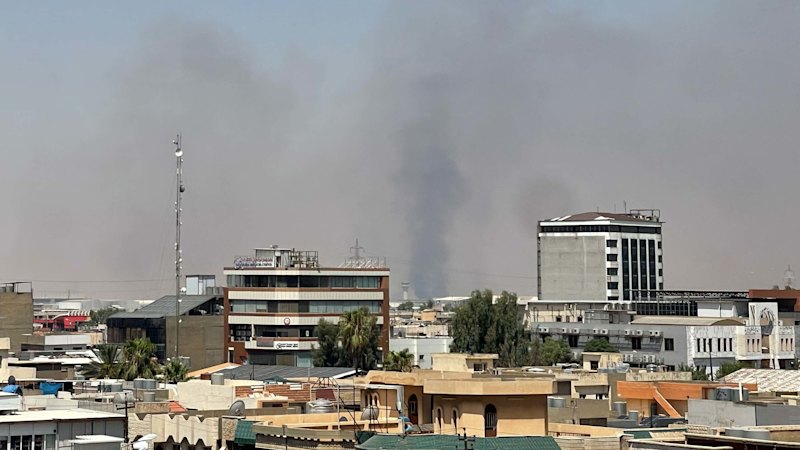
Every time Washington and Riyadh trade blows with Iranian proxies in Baghdad, the mainstream commentariat reaches for the exact same worn-out script. They dust off phrases about protracted quagmires, escalating regional friction, and the inevitable slide into total conflagration. It is lazy, predictable, and fundamentally wrong.
The lazy consensus says we are watching the prelude to an expanding regional war. The reality is far more clinical. What we are witnessing is not an escalation spiraling out of control, but a heavily managed, highly contained containment exercise. Both sides know the boundaries of the sandbox, and neither has any appetite to break the glass.
I have spent decades watching foreign policy analysts confuse loud rhetoric with strategic intent. They treat every tactical strike in Iraq as a signpost toward catastrophe, ignoring the cold, transactional math driving every single move in the Persian Gulf. Let us strip away the theater and look at what is actually happening beneath the surface.
The Myth Of The Accidental Escalation
The dominant narrative relies on a core misconception: that military friction in Iraq naturally compounds into a regional catastrophe through sheer momentum. This ignores how modern deterrence actually functions.
State actors and their proxies operate within strict parameters. When a drone hits a facility or a retaliatory airstrike flattens a militia warehouse, observers panic about a slippery slope. But the slope is greased in reverse. Both Washington and Tehran have perfected the art of the calibrated response. They trade predictable blows precisely calibrated to satisfy domestic political constituencies without crossing the threshold of total war.
Consider the mechanics of these engagements. Intelligence agencies track these movements down to the millimeter. Targets are chosen for their symbolic value rather than their existential threat to regime survival. When an outpost gets hit, it is usually because both sides tacitly agreed that a strike needed to happen to absorb domestic political pressure.
Calling this a march toward endless war misunderstands the objective. This is not a failure of diplomacy. This is the baseline equilibrium.
Follow The Capital Not The Missiles
If you want to understand why this conflict never boils over into the catastrophic regional showdown the pundits predict, stop looking at the defense budgets and start looking at economic survival.
Iran cannot afford a total war. Its internal infrastructure is brittle, its currency faces chronic depreciation, and its population is one spark away from widespread unrest. A direct, sustained conventional conflict with the United States and its Gulf allies would trigger an immediate regime collapse. Tehran knows this better than anyone in Washington.
On the other side, Riyadh has spent billions executing a massive economic overhaul under Vision 2030. You cannot build futuristic entertainment cities, attract foreign direct investment, or position a desert kingdom as a global financial hub while your oil infrastructure is burning from ballistic missile barrages. Saudi leadership knows that peace is the ultimate prerequisite for capital retention. They want economic dominance, not a scorched-earth theater.
When two actors face existential ruin if the conflict escalates beyond a certain point, they do not escalate. They manage the friction. They absorb the occasional strike, issue a sternly worded condemnation, and go right back to trading through back channels.
The Danger Of Misdiagnosis
Why does this bad analysis persist? Because panic sells.
Media outlets thrive on the narrative of an imminent explosion. It keeps eyeballs glued to screens and justifies the bloated budgets of think tanks that need a perpetual crisis to justify their existence. But misdiagnosing a managed rivalry as an uncontainable fire leads to terrible strategic decisions.
When policymakers buy into the idea that a regional war is inevitable, they start advocating for preemptive overreactions. They push for maximalist stances that actually provoke the very escalation they claim to want to avoid. By treating every militia skirmish in Iraq as a existential crisis, Washington risks stumbling into a trap of its own making—not because the enemy forced their hand, but because their own panic did.
The truth is much simpler and far less cinematic. The strikes in Iraq are not the opening chapters of a grand apocalyptic saga. They are routine maintenance in a cold, permanent standoff.
Stop treating every tactical flashpoint as the end of days. Recognize the constraints holding both sides back, look at the economic ledgers driving their actual decisions, and understand that the current posture is designed to endure, not explode.
The next time a headline screams about a widening war in the Middle East, remember that the loudest voices are usually the ones profiting most from your panic.