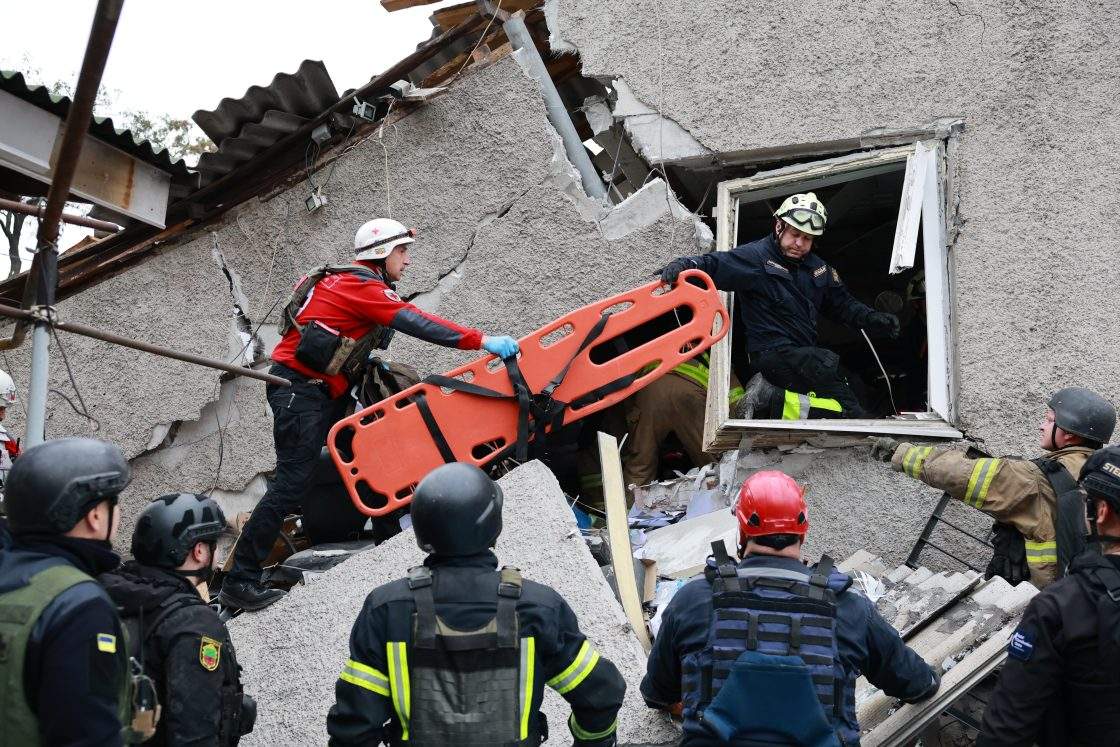
Moscow is hitting Ukrainian power plants while Washington announces a truce. Cue the outrage. Cue the recycled wire copy framing every drone swarm as a dramatic betrayal of a fragile peace deal.
Wrong question. Wrong frame. Also making news recently: Why White House Press Access Battles Keep Escalating.
The lazy consensus assumes a ceasefire is a light switch—on or off, honorable or broken. When Ukrainian officials report fresh strikes on power infrastructure despite Donald Trump announcing an energy pause, commentators treat the contradiction as news. In war, unilateral declarations without verifiable enforcement aren't treaties. They're bargaining chips tossed onto a moving chessboard.
Let's be clear about what energy infrastructure means in this conflict. It isn't a single commodity. It's a split system with asymmetric pain points. For Ukraine, grid assets—substations, thermal plants, transformers—keep heat on in winter, run rail logistics, and power air-defense command loops. For Russia, refineries, pipelines, and export terminals generate hard currency, supply fuel to domestic regions and military columns, and anchor global petroleum markets. Additional information regarding the matter are explored by Associated Press.
Calling those two targets equivalent is analytical malpractice. A transformer takes weeks or months to source and install; a refined fuel bottleneck bites into domestic pumps and logistics chains almost immediately.
The Illusion of a "Broken" Deal
When a U.S. president announces an energy ceasefire and strikes continue hours later, readers reach for a simple villain: bad faith. Bad faith exists. Plenty of it. Yet treating every strike after a diplomatic announcement as a shock misses how wartime coercion actually works.
Neither side enters a pause out of goodwill. Each side calculates whether freezing energy strikes helps or hurts its leverage at that exact week of the calendar. As winter approaches, hitting heating and electricity networks carries seasonal pressure that doesn't exist in July. Meanwhile, deep strikes against Russian oil refineries hit refining throughput—industry estimates put affected capacity and processing drops in the tens of percent during sustained autumn drone campaigns.
A ceasefire announced in public before terms, monitoring, and reciprocity are locked in isn't a pause button. It's an opening bid.
Consider the incentive structure when Washington leans on Kyiv to hold back on refinery strikes while Moscow tests or ignores limits on grid attacks. If Kyiv freezes deep oil strikes unilaterally, it gives up its sharpest economic and logistical lever inside Russia. If Moscow keeps hitting power nodes, it extracts winter leverage without paying the matching cost at its own refineries.
No serious strategist expects one side to hand over asymmetric pressure for free without ironclad verification.
What Energy Markets Actually Price
Retail news readers watch headlines about a "ceasefire" and expect oil or gas prices to swing on the word alone. Commodity traders don't trade press releases. They trade barrels, crack spreads, shipping insurance, and physical bottlenecks.
I've watched energy desks and corporate risk teams blow millions chasing political headlines while ignoring physical flows. You can spend six figures hedging a "peace rally" on a Monday morning, only to get wiped out by Wednesday when refinery runs stay depressed or transit risk stays elevated. Political rhetoric moves algorithms for ten minutes; physical supply balances move balance sheets for quarters.
Even when strikes hit major refining hubs—facilities in regions like Ryazan, Yaroslavl, Kirishi, or along the Volga—the market reaction depends on spare capacity, crude rerouting, product inventories, and export restrictions. A damaged distillation unit doesn't automatically erase every barrel of crude from global trade; sometimes crude backs up domestically while refined products tighten.
People also ask: Does hitting energy sites force a faster peace?
Usually, the opposite happens in the short run. Public anger hardens resolve, and leaders use infrastructure pain to justify domestic mobilization, tighter security controls, or tougher negotiating demands. Energy attrition raises costs over time; it rarely produces a neat surrender overnight.
Another common question: Why would a leader claim a ceasefire if attacks keep happening?
Because political signaling serves domestic and diplomatic audiences simultaneously. A mediator wants credit for momentum. A warring capital wants to show openness to talks while blaming the adversary for violations. Both can be true at once without either side observing a real freeze on the ground.
Mechanics of Infrastructure Attrition
To read these strike reports without getting played by spin, break down the mechanics into four variables:
| Variable | Grid & Power Strikes | Refinery & Fuel Strikes |
|---|---|---|
| Primary Effect | Blackouts, heating strain, industrial & command friction | Reduced refining runs, domestic/logistics fuel strain |
| Repair Profile | Substations & transformers face supply/lead-time bottlenecks | Modular repairs & rerouting can partially offset output loss |
| Political Leverage | High visibility ahead of cold weather | High pressure on state revenue, fuel supply, and trade |
| Verification Trap | Debris vs. direct hit claims; partial outages obscure scope | Satellite & throughput estimates lag real-time shifts |
Notice the blind spot in most reporting: attribution and scope get messy fast. Defenders claim interceptions; attackers claim precision; local officials report outages or fires; independent verification takes time. When a "ceasefire" exists only as a verbal claim or an unconfirmed framework, every grey-zone incident turns into a blame game.
Where This Contrarian View Can Fail
Being contrarian isn't a free pass to be cynical about everything. There is a real downside to dismissing diplomatic announcements as pure theater.
Sometimes a partial or informal pause does start small—a temporary lull on specific target sets or a testing window before formal talks. Analysts who treat every lull as fake can miss genuine shifts in negotiating posture or tactical pauses that precede real deals.
There's also a risk of over-reading single-week strike numbers. A spike in drone activity on one day and a dip on another can reflect weather, air-defense reloads, logistics cycles, or target rotation rather than a grand strategic reversal.
What to Do Instead of Reading Outrage
Stop treating "ceasefire announced, strikes continue" as a paradox. Treat it as the baseline state of an active war with competing diplomatic tracks.
If you run a business with European or Eurasian energy exposure, supply-chain dependencies, or currency/commodity risk, do three things:
- Audit physical exposure, not headline sentiment. Map where your suppliers, freight, or energy contracts touch refined fuels, power reliability, or transit corridors—and build buffers around physical chokepoints rather than trading off diplomatic rumors.
- Separate verbal claims from verified constraints. Watch actual operational indicators—outage duration, refinery run estimates, export rules, and air-defense or intelligence shifts—rather than taking any side's press briefing at face value.
- Price asymmetry into contingency plans. Assume reciprocity is fragile until formal, verifiable terms exist. Plan for sudden resumption of strikes right alongside diplomatic headlines.
When negotiators talk while drones still fly, the truce isn't dead. It was never born.