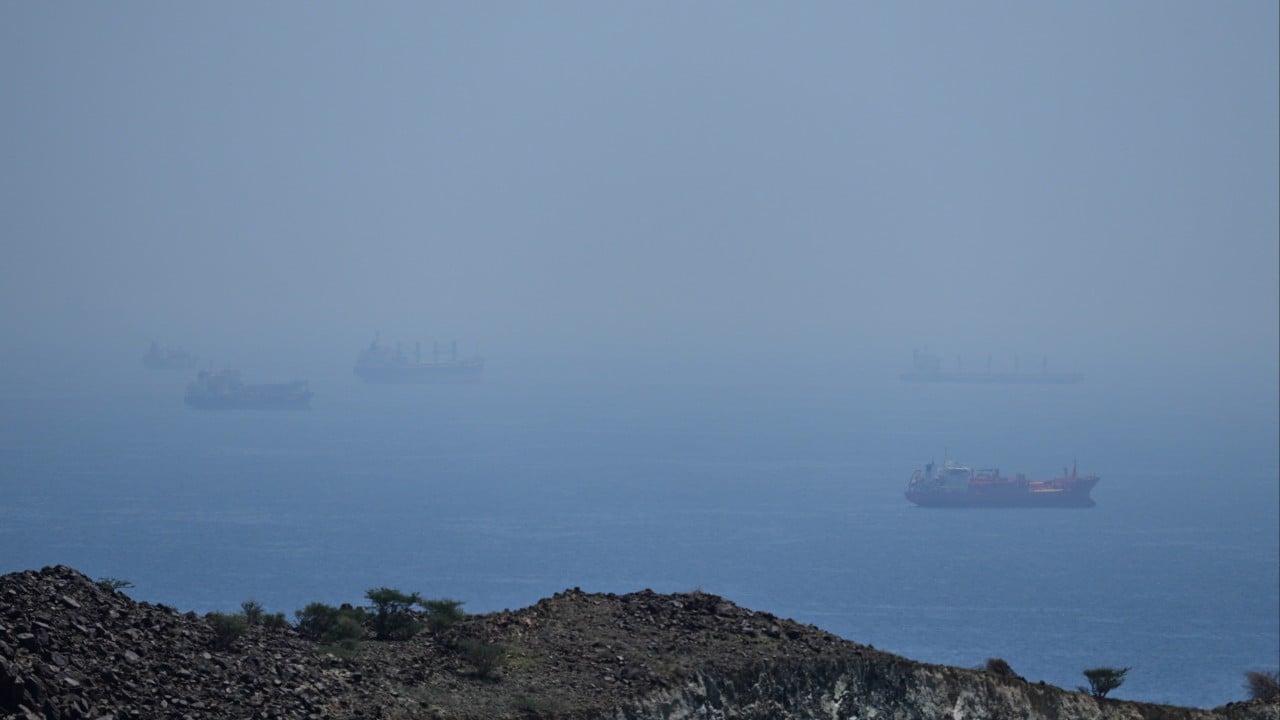
The chattering classes have a new favorite hobby: declaring the death of American energy dominance every time a drone flies over a Persian Gulf refinery. They tell you that US oil production is a "false promise" because it can’t single-handedly keep gas at two dollars a gallon when Tehran gets restless. They claim that because we are part of a global market, our domestic output is irrelevant.
They are dead wrong.
This isn't just a difference of opinion. It’s a fundamental misunderstanding of how power—both electrical and geopolitical—actually functions in the 2020s. Critics argue that since the price of Brent or WTI is set globally, American drilling is a vanity project. That’s like saying a man with a private well is just as thirsty as his neighbor during a drought because they both use the same brand of glass.
Ownership of the molecule is the only thing that matters when the world catches fire.
The Crude Reality of the "Global Price" Myth
The most frequent argument against US energy independence is the "Integrated Market Trap." The logic goes like this: if Iran blocks the Strait of Hormuz, global prices spike, and Americans pay more at the pump regardless of how much Permian Basin crude we pump.
This is a half-truth masquerading as wisdom. It ignores the Balance of Payments.
When the US was a net importer, every dollar spike in oil prices was a direct wealth transfer from American pockets to foreign regimes—many of whom don't like us. Today, when prices rise, that capital stays within the domestic ecosystem. It flows to workers in Midland, tech providers in Houston, and shareholders in New York. We aren't just consumers anymore; we are the house. And in a volatile market, you always want to be the house.
Furthermore, the "global price" argument ignores the physical reality of supply chains. Having the oil on-continent means we aren't bidding against China for a tanker currently sitting in the Indian Ocean. We have the logistics. We have the pipelines. We have the refineries calibrated specifically for the light sweet crude we pull out of the ground.
Why Iran Proves the Point, Not the Exception
Every time tensions rise in the Middle East, the "energy dominance is a myth" crowd comes out to play. They point to the inevitable price volatility as proof of failure.
In reality, US production is the only thing preventing a total global collapse. Imagine a scenario where the US was still importing 10 million barrels a day, as it did in the mid-2000s, while Iran threatened the shipping lanes. We wouldn't just be looking at $100 oil; we'd be looking at $250 oil and rolling blackouts.
Our domestic surge has created a massive global buffer. We have become the "swing producer" that OPEC+ used to be. By flooding the market with over 13 million barrels per day, the US has stripped the "oil weapon" from the hands of the world's most volatile actors. Iran's ability to blackmail the West is at an all-time low precisely because we don't need their barrels to keep our lights on. We only need the market to stay liquid.
The Intellectual Laziness of the "Green Transition" Pivot
The competitor’s article likely suggests that the solution to this volatility isn't more drilling, but a faster shift to renewables. This is a dangerous oversimplification that ignores the Energy Density Gap.
I’ve sat in boardrooms where "holistic" energy strategies are discussed, and the math almost never adds up. You cannot run a military-industrial complex on hope and intermittent solar arrays. Transitioning is a 50-year project, not a 5-year fix. To fund the transition to future tech, you need the massive tax revenue and cheap feedstock provided by the current oil and gas industry.
The people telling you to abandon oil dominance because "it doesn't stop price spikes" are the same people who would have told you to stop building wooden ships because they occasionally sink. You don't abandon the dominant tech until the replacement is actually ready to scale. Right now, it isn't.
The Physics of Power
Let’s talk about the Energy Return on Investment (EROI).
$$EROI = \frac{\text{Energy Delivered}}{\text{Energy Required to Get That Energy}}$$
Historically, fossil fuels offered an EROI of roughly 30:1 or higher. Early renewables were struggling at 5:1. While that gap is closing, the sheer scale of American shale is what provides the surplus energy required to build out a new grid. If we surrender our energy dominance now, we lose the capital and the literal fuel needed to build whatever comes next.
The Geopolitical Insurance Policy
Energy dominance isn't about isolationism; it's about leverage.
Because the US is the world's largest producer of oil and gas, we can sanction adversaries without bankrupting our own citizens. In 2008, sanctioning a major oil producer would have been an act of economic suicide for Washington. In 2026, it’s a standard Tuesday.
Our energy surplus is a weapon system. It is as vital as a carrier strike group but far more effective in day-to-day diplomacy. When we export Liquefied Natural Gas (LNG) to Europe, we aren't just selling a commodity; we are selling them an exit ramp from Russian influence.
The critics call this a "false promise" because they are looking at the price on the sign at the corner gas station. They should be looking at the seat at the head of the table.
The Fatal Flaw in the "Small Government" Critique
Some contrarians on the right argue that the government shouldn't pursue "dominance" as a policy, but should let the "free market" decide. This is naive.
Energy has never been a free market. It is a cartel-driven, state-subsidized, militarily-protected arena. To pretend otherwise is to walk into a knife fight with a wet noodle. US energy dominance is a deliberate strategic posture. It requires infrastructure permits, federal leasing, and a refusal to be bullied by ESG (Environmental, Social, and Governance) mandates that our competitors in Riyadh and Moscow laugh at.
If you think the market will protect you from a closed Strait of Hormuz, you've never seen a margin call.
Stop Asking if it Lowers Prices
The question "Does US oil production lower the price of gas?" is the wrong question. It’s the question a consumer asks. A citizen, a leader, or an investor asks: "Does US oil production increase our survival probability in a crisis?"
The answer is an empirical, resounding yes.
The "false promise" isn't American energy dominance. The false promise is the idea that we can be a global superpower while being dependent on our enemies for the very fuel that allows us to move.
We are currently witnessing the greatest energy expansion in human history. It happened in the US, via fracking and horizontal drilling, led by "cowboy" engineers who ignored the experts claiming we had hit "Peak Oil."
If we listen to the critics now—the ones who want us to retreat from our role as the world's primary energy provider—we aren't choosing a "greener" or "more stable" future. We are choosing to hand the keys of the global economy back to the people who want to see it burn.
The US isn't just producing oil. It's producing the only thing that keeps the modern world from sliding back into the dark ages: Reliable, domestic, scalable power. Don't let the "global market" theorists gaslight you. Possession is nine-tenths of the law, and in a global conflict, possession of the energy source is ten-tenths of the survival strategy.
Drill more. Export more. Win more.
Stop apologizing for the only thing that actually works.