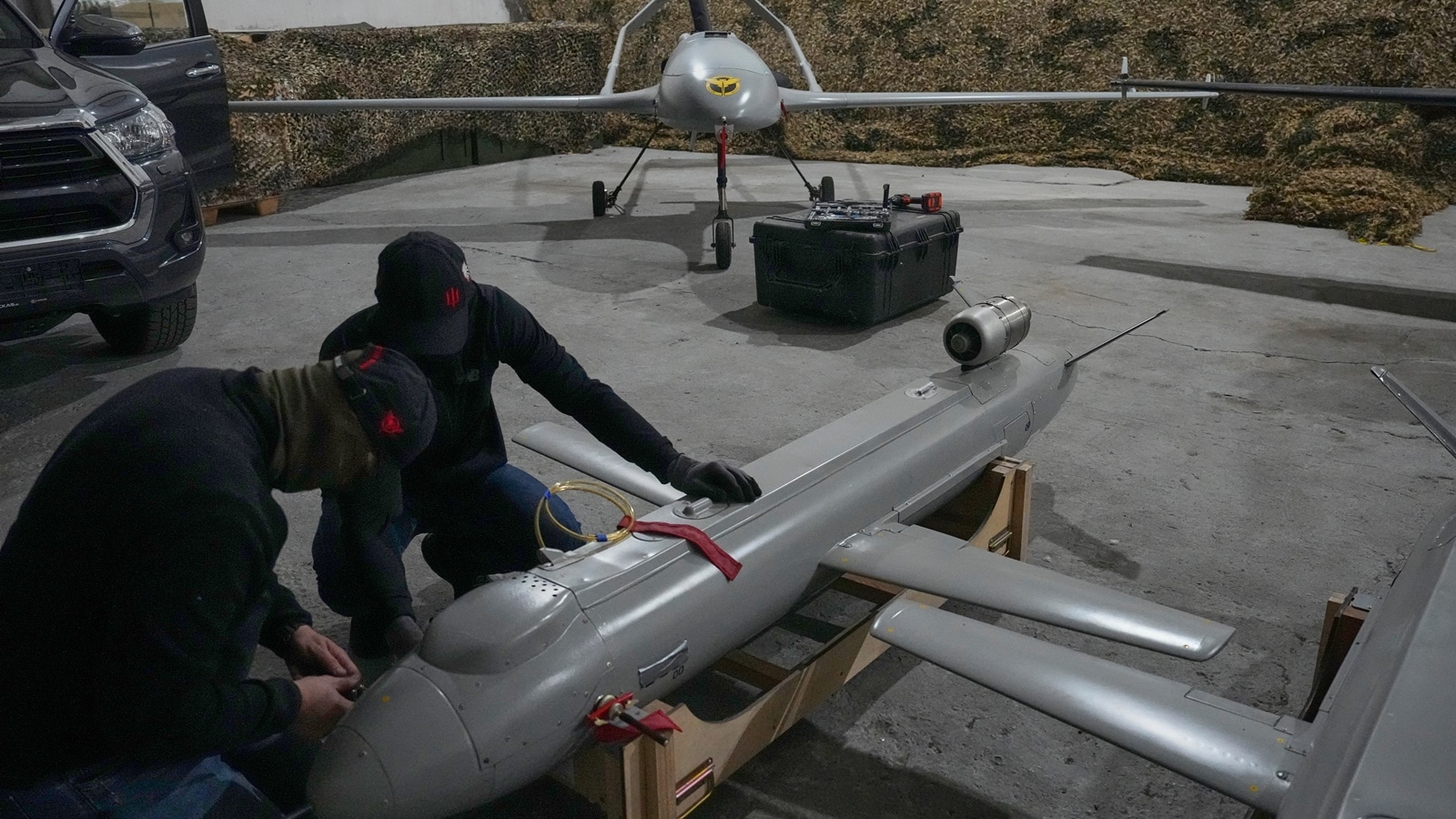
The mainstream media is obsessed with explosions. When a drone strikes an oil refinery deep inside Russian territory, or when headlines blare accusations about drone debris near the Zaporizhzhia nuclear plant, the foreign policy establishment falls into a predictable pattern. They track columns of smoke, recalculate global Brent crude prices, and debate the boundaries of cross-border escalation.
They are missing the entire point.
The current coverage of the Ukraine-Russia energy conflict treats infrastructure like a scoreboard. Hit a refinery, score a point. Deny a nuclear plant strike, protect a narrative. This is a fundamentally flawed way to view modern kinetic warfare. Drone strikes on static oil distillation towers make for great television, but they do not break a nuclear-armed state’s war machine. Conversely, the public relations theater surrounding nuclear facilities obscures a much more dangerous reality about grid vulnerability and localized energy blackmail.
We need to stop looking at smoke plumes and start looking at the structural physics of the global energy supply.
The Refining Illusion: Why Burning Oil Towers Changes Nothing
The lazy consensus among defense analysts suggests that by striking Russian oil refineries, Ukraine can choke the Kremlin's war budget and starve its front-line tanks of diesel. It sounds logical. It is also completely wrong.
I spent years analyzing the logistics of heavy industrial infrastructure. Here is what the armchair generals do not understand about a standard crude oil distillation unit (CDU): it is highly modular, remarkably resilient, and easily bypassed if efficiency is not your primary metric.
When a Ukrainian long-range drone hits an atmospheric distillation column, it creates a spectacular fireball. It dominates the 24-hour news cycle. But Russia is not a corporate enterprise trying to maximize quarterly margins for shareholders; it is a wartime economy.
- The Refining Surplus: Russia possesses vast overcapacity in refining. Even with 10% to 14% of its refining capacity temporarily knocked offline by drone strikes, the state can simply divert raw crude back into the export market or shift production to secondary, underutilized facilities deeper in the interior.
- The Diesel Lie: Tanks and armored personnel carriers do not run on premium, perfectly refined fuel. Military logistics hubs are built to utilize lower-grade, heavily stabilized fuels that can be processed in rudimentary, rapidly deployed skimming plants.
- The Repair Reality: Despite Western sanctions on specialized components, the global black market for industrial valves, pumps, and control systems is roaring. If a Russian refinery needs a specialized heat exchanger, it does not stop production indefinitely. It procures the part via intermediaries in the South Caucasus or East Asia within weeks.
To think that hitting a few steel towers in Rostov or Nizhny Novgorod will stop a tank assault in the Donbas is a dangerous fantasy. It mistakes tactical disruption for strategic paralysis.
The Nuclear Plant Shell Game
Then there is the constant, high-stakes finger-pointing over the Zaporizhzhia Nuclear Power Plant (ZNPP). The competitor narrative accepts the premise of the public hand-wringing: that a rogue drone strike could cause a Chornobyl-style meltdown, and that both sides are playing Russian roulette with a continent's safety.
Let's inject some blunt engineering reality into this discussion.
A modern VVER-1000 reactor—the type operating at Zaporizhzhia—is not a graphite-moderated Soviet relic like Chornobyl. The reactor core is housed inside a massive prestressed concrete containment vessel designed to withstand the direct impact of a crashing commercial airliner or a heavy artillery shell. A localized loitering munition carrying a few kilograms of high explosives hitting the roof of a containment dome does exactly nothing to the fuel rods inside.
The real danger at a nuclear facility during wartime has nothing to do with spectacular direct hits on the reactor itself. The threat is intentionally mundane: it is the grid connection.
A nuclear power plant requires immense amounts of external electricity just to keep its cooling pumps running when the reactors are in shutdown mode. If the external sub-stations are destroyed, the plant must rely on emergency diesel generators. If those generators fail or run out of fuel, that is when you get a Fukushima-style station blackout and subsequent core damage.
When officials argue over who flew a quadcopter into a cooling tower, they are participating in a curated PR stunt. The true vulnerability is the boring switchyard three miles away that connects the plant to the regional transmission lines. By focusing on the dramatic imagery of the plant itself, media outlets fail to educate the public on how energy blackmail actually works. The objective is not to cause an explosion; the objective is to force an adversary to expend blood and treasure defending a massive, non-functional concrete liability.
Dismantling the PAA Fallacies
The public discourse around this conflict is warped by flawed premises. Let's dismantle the most common questions cluttering the search engines right now.
Will Ukrainian attacks on Russian refineries cause a global oil shortage?
No. The premise assumes that destroying a refinery removes oil from the world. It does the opposite. When a Russian refinery stops working, Russia cannot store the excess unrefined crude indefinitely without ruining its wells. Therefore, it is forced to export more raw crude oil to buyers in India and China. The global supply of crude actually remains steady or increases; only the domestic Russian market for finished gasoline faces tight constraints. The economic pain is local, not global.
Can Russia protect its energy infrastructure with air defense?
Mathematically impossible. The Russian Federation spans eleven time zones. No nation on earth possesses enough S-400 or Pantsir-S1 air defense systems to ring-fence every pipeline, pump station, oil depot, and electricity substation. Ukraine has exploited this geographic reality by utilizing cheap, low-altitude carbon-fiber drones that slip beneath radar horizons. Russia’s defense strategy cannot be total coverage; it must be triage.
Why doesn't Ukraine just blow up the export pipelines to Europe?
Because infrastructure is a web of geopolitical leverage, not just steel tubes. Pipelines crossing Ukrainian territory still carry Russian gas to nations like Austria and Slovakia. Shutting them down completely would alienate the very European allies holding up Ukraine’s financial system. It is a cynical, cold-blooded equilibrium where both warring parties allow energy to flow because the economic consequences of a total severed connection are worse than the war itself.
The Uncomfortable Truth About Infrastructure Warfare
If you want to understand where this conflict actually breaks, look away from the oil fields and look toward the transformers.
The most effective, brutal form of energy warfare is the destruction of high-voltage electrical substations. Specifically, the autotransformers that step up voltage for long-distance transmission. These are not modular. They cannot be bypassed with a workaround patch. They weigh hundreds of tons, take months to manufacture, and require specialized rail cars just to transport.
When Russia systematically struck Ukraine's electrical grid, they weren't targeting fuel for tanks; they were targeting the collective willpower of a civilian population and the industrial capacity to repair military hardware. A city without diesel can survive on ingenuity. A city without electricity loses water, sewage, logistics, and manufacturing within 48 hours.
Ukraine's retaliatory strikes on Russian oil facilities are a asymmetric political response, not a symmetric military solution. It forces Russia to divert expensive air defense assets away from the front lines to protect commercial assets. It raises the internal insurance costs for Russian oligarchs. It embarrasses the Kremlin.
But do not mistake political theater for a decisive shift in military gravity.
The Actionable Reality
For international observers, energy security firms, and policy analysts, the lessons of this infrastructure war require a complete reset of risk metrics.
- Stop tracking crude volume; track grid frequency. The health of an adversary's war effort is measured in the stability of their electrical grid, not the temporary closure of a regional refinery.
- Disregard nuclear scaremongering. When a state mentions a nuclear plant threat, analyze the transmission lines leading into the facility, not the rhetoric coming out of the diplomats' mouths.
- Anticipate the pivot to components. The bottleneck in modern warfare is never the raw resource (oil or gas); it is the highly specialized, high-tech componentry required to regulate the flow. The side that secures its supply chain for industrial automation and heavy transformers wins the long-term war of attrition.
The competitor wants you to look at the fire. You need to look at the grid.