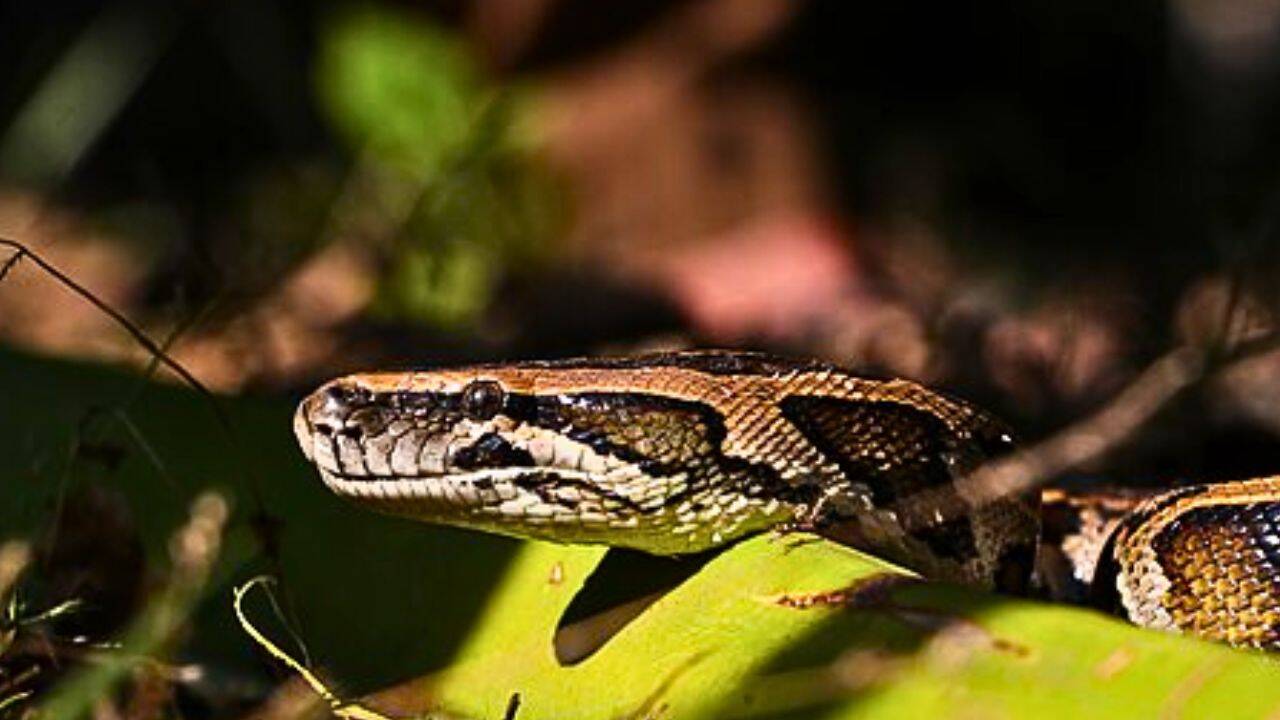
Another week, another press release about a breakthrough in environmental DNA tracking. Conservation biologists are popping champagne because someone managed to sequence python slime in a jar of swamp water from the Everglades. Headlines trumpet that scientists can now find Burmese pythons before eyes ever lay on them.
It is a comforting narrative. It makes for clean lab reports and steady grant funding. It also completely misses how field biology actually works.
I have spent years in the muck of southern Florida tracking invasive species management programs, watching millions of tax dollars wash into the mangrove swamps with zero measurable reduction in apex predator populations. The lazy consensus in conservation tech is that if we can just detect a organism better, we can defeat it. That logic collapses the moment you run into ecological reality. Finding out a python swam through a canal five hours ago does not get that python out of the water.
Let us define what environmental DNA actually is before we pretend it is an eradication tool. It is genetic material shed by organisms into their environment through skin cells, mucus, feces, or gametes. Water samples are filtered, DNA is extracted, and quantitative PCR assays flag the presence of target species sequences.
On paper, this sounds revolutionary. In practice, running water moves.
South Florida is a hydrological labyrinth. Canals pump water south, tides push saltwater inland, heavy rains flush wetlands, and sheet flow drags organic sediment across thousands of square miles of flat terrain. When researchers detect python DNA in a specific canal junction, they are dealing with a chemical ghost trail that could have originated miles upstream, drifted down on a current, or washed in from an adjacent levee during a heavy storm.
Knowing a molecule is present tells you nothing about the animal's current coordinates, size, sex, or reproductive viability. You cannot skin a DNA strand. You cannot remove a genetic fragment with a snake hook.
The proponents of this technology argue that early detection zones let us build localized containment perimeters. That sounds great in a PowerPoint presentation delivered at an academic symposium in Gainesville. Down in the water, a twelve-foot female python nestled deep inside a limestone solution hole or an abandoned alligator nest does not care about your water sample. She is laying sixty eggs, and your PCR assay is busy registering shed scales from three weeks ago that drifted past a monitoring station.
We are pouring capital into high-tech detection pipelines while low-tech field execution starves. Experienced handlers working with trained detector dogs and thermal imaging scopes pull actual, breathing serpents out of the brush every single day. They do not need a multi-week laboratory turnaround time to tell them a swamp has snakes in it. The swamp already has snakes in it. That is the baseline assumption you start with the second you step off the pavement.
Imagine a scenario where an agency spends two hundred thousand dollars deploying an automated eDNA sampling grid across a remote stretch of water conservation area. The lab results confirm high concentrations of python markers throughout the sector. Field crews deploy to the coordinates. They search for three days in knee-deep mud and sawgrass. They find two small hatchlings and one juvenile skin. Meanwhile, three miles away, an unmonitored adult male devours an endangered wading bird.
The data was accurate. The intervention was useless.
This is the dirty secret of modern conservation tech: measurement has become a substitute for management. It is easier to publish a paper on sensitivity thresholds and marker specificity than it is to admit that the Everglades are fundamentally altered and open-ended.
Burmese pythons are not a localized infestation you can quarantine with smart sampling. They are a permanent fixture of the subtropical food web. They adapted to an environment characterized by fluctuating water levels, impenetrable vegetation, and year-round warmth. They outcompete native predators because they occupy a niche that nothing else in the ecosystem matches.
Spending more money on sophisticated water testing does not change the physical difficulty of navigating a cypress dome at midnight. It just gives bureaucrats a shiny dashboard to look at while the biomass multiplies in the background.
If we want to talk about actual solutions, we have to stop treating detection as a victory. Detection is merely the admission ticket to a fight you are already losing. Until those genetic markers can be weaponized into a self-disseminating biological control or deployed alongside drastically scaled-up removal incentives for boots on the ground, eDNA remains an expensive academic hobby disguised as environmental protection.
Stop funding water samples. Start paying bounty hunters.